
Exit Glacier 2026: Hiking Trails & Harding Ice Field Guide (Seward)
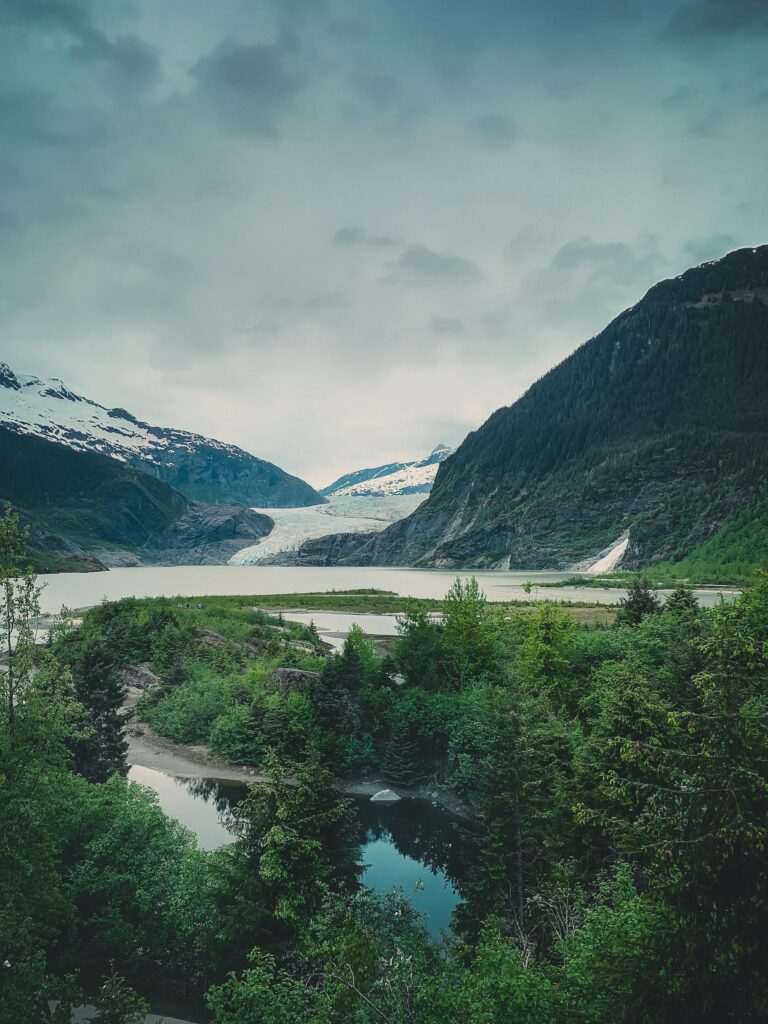
The Exit Glacier hike in Seward, Alaska is one of the few places in the world where you can walk up to an active glacier, touch the ice, and then — if you’ve got the legs for it — climb out of the forest and onto one of the largest ice fields in North America. Exit Glacier sits in Kenai Fjords National Park, 12 miles from downtown Seward and about 2.5 hours from Anchorage, and it offers trail options for every fitness level from a 45-minute flat loop to an all-day mountain sufferfest. Here’s everything you need to plan the visit.
Getting There
Exit Glacier Road branches off the Seward Highway about 3.5 miles north of downtown Seward. Follow it 9 miles to the end — the road’s paved the whole way. Parking at the nature center is free, which is unusual for a National Park site of this caliber. The lot fills on summer weekends by mid-morning, so arriving before 9 a.m. gives you the best chance of a spot without circling. The drive south on the Seward Highway is itself one of the great Alaska road trips — Turnagain Arm, Portage Valley, and the mountain scenery before Seward are all exceptional. If you’re coming from Anchorage by car, budget an extra hour for stops along the way.
Trail Options
Exit Glacier Loop — 1 Mile, Easy
The paved Exit Glacier Loop is the entry-level option — a flat, 1-mile walk from the nature center to the glacier’s edge and back. It’s accessible and well-signed, with interpretive markers noting where the glacier’s terminus stood in previous decades. The markers drive home how fast Exit Glacier’s been retreating: signs posted at year intervals show the ice pulling back dozens of meters in a single decade. Families with young kids do this loop regularly. It’s short but worth doing even if you’re planning a longer hike, since it brings you close to the ice face itself.
Overlook Loop — 2 Miles, Moderate
The Overlook Loop adds elevation and a wider perspective. It climbs above the glacier and returns via the moraine, giving you the kind of high-angle view that puts the scale of the ice in context. Figure 1.5–2 hours at a relaxed pace. The footing’s good throughout — some rocky sections but nothing technical. This is the right choice if you want a real hike without committing a full day.
Harding Ice Field Trail — 8.2 Miles, Strenuous
The Harding Ice Field Trail is the main event. It climbs 3,000+ feet from the visitor center to the surface of the Harding Ice Field — one of the largest ice fields in the United States, covering 700 square miles of the Kenai Mountains. The trail’s 8.2 miles round-trip with no flat sections after the first mile. Most hikers budget 6–8 hours. The effort is entirely worth it: the moment you crest the final ridge and see the ice field stretching to every horizon is one of those views that doesn’t register as real for a moment.
A few things to know before attempting it:
- Start before 8 a.m. Afternoon clouds frequently move in and obscure the ice field. The summit views are at their best in the morning.
- Snow persists into July. Even in mid-summer, snow covers the upper section of the trail. Microspikes are worth carrying from June through early August. Don’t rely on the trail being visible above treeline.
- Bring real layers. Temperatures at the ice field surface are 20–30°F colder than at the trailhead, and wind is reliably present. A warm midlayer and waterproof shell aren’t optional.
- Carry plenty of water. There’s no reliable water source on the upper trail, and the climb in sun is dehydrating. Two liters minimum.
What You’ll See
Exit Glacier itself is visually striking even from the parking lot — a tongue of dirty blue-white ice descending from the mountains, flanked by moraines and scraped bedrock. Up close, the crevasses and surface detail become apparent in a way that photos don’t prepare you for.
Wildlife is present throughout the trail system. Hoary marmots are common on the upper slopes and practically fearless — they’ll sit on boulders and watch you pass. Black bears use the lower valley, particularly in berry season (late August), so make noise on the wooded sections. Mountain goats appear on the cliffs above the ice field. Bald eagles work the river corridor below. If you’d like to kayak the fjords rather than view them from a boat, Liquid Adventures in Seward offers guided sea kayaking tours as an alternative way to explore the protected coves near the glacier fronts.
Visitor Center and Ranger Programs
The Exit Glacier Nature Center at the trailhead is staffed daily in summer and has exhibits on glacier dynamics, Kenai Fjords ecology, and the Harding Ice Field. Rangers run free interpretive walks on the lower trail throughout the day — check the schedule board at the entrance when you arrive. The programs are well done and add useful context even for experienced hikers. Restrooms and water are available at the visitor center.
Best Time to Visit
July through September is the prime window for Exit Glacier hiking. The Harding Ice Field Trail is fully accessible by late July in most years, with the snow line high enough that microspikes become optional. August is typically the most reliable month for summit views. September brings fall color to the lower trail and thinner crowds, but the weather becomes less predictable and early snow can close the upper trail by month’s end.
The lower trails and glacier face are accessible from May through October, and the nature center opens as soon as weather permits. Winter visitors hike the lower area on snowshoes, and the ice face is accessible year-round on foot (check with rangers for conditions).
Combining with a Full Seward Day
Exit Glacier pairs naturally with a Kenai Fjords boat tour out of Seward’s small boat harbor. Seward Ocean Excursions operates day cruises into the fjords to see tidewater glaciers, sea otters, orcas, and seabirds — a fundamentally different experience from the land-based glacier visit, and a strong combination for a full day in the area. Hike the glacier in the morning while you’re fresh, then board the afternoon cruise.
Practical Tips
- Entry is free. Kenai Fjords charges no entry fee for the Exit Glacier area specifically (the park pass applies elsewhere, but not here).
- Dogs aren’t allowed on trails. Leave them at the trailhead or back in Seward.
- Don’t climb the glacier without a guide. The ice face is accessible for viewing and photography at the signed viewpoints, but venturing onto the glacier itself without crampons and a rope team is dangerous. Exit Glacier Guides offers ice walks if you want to step onto the ice safely.
- Cell service is limited in the valley. Download offline maps and the NPS app before you leave Seward.
Frequently Asked Questions
How far is Exit Glacier from Anchorage?
Exit Glacier is about 130 miles from Anchorage — roughly 2.5 hours by car via the Seward Highway. It’s a full-day trip from Anchorage or an easy excursion if you’re staying in Seward.
Is the Harding Ice Field Trail worth it?
Yes — it’s one of the best day hikes in Alaska if you’ve got the fitness for it. The 3,000-foot climb is real work, but the ice field views at the top are genuinely spectacular and unlike anything accessible by shorter trails in the region.
Can you visit Exit Glacier in one day from Anchorage?
Yes. Leaving Anchorage by 7 a.m., you can hike the Harding Ice Field Trail and be back in Anchorage by early evening. It’s a long day — budget 12 hours door to door — but it’s entirely doable and regularly done.
Featured photo by Ben Jackson on Pexels.


No comments yet.