
Embroidery Classes in Anchorage 2026 — Hand Stitching and Needle Art Workshops
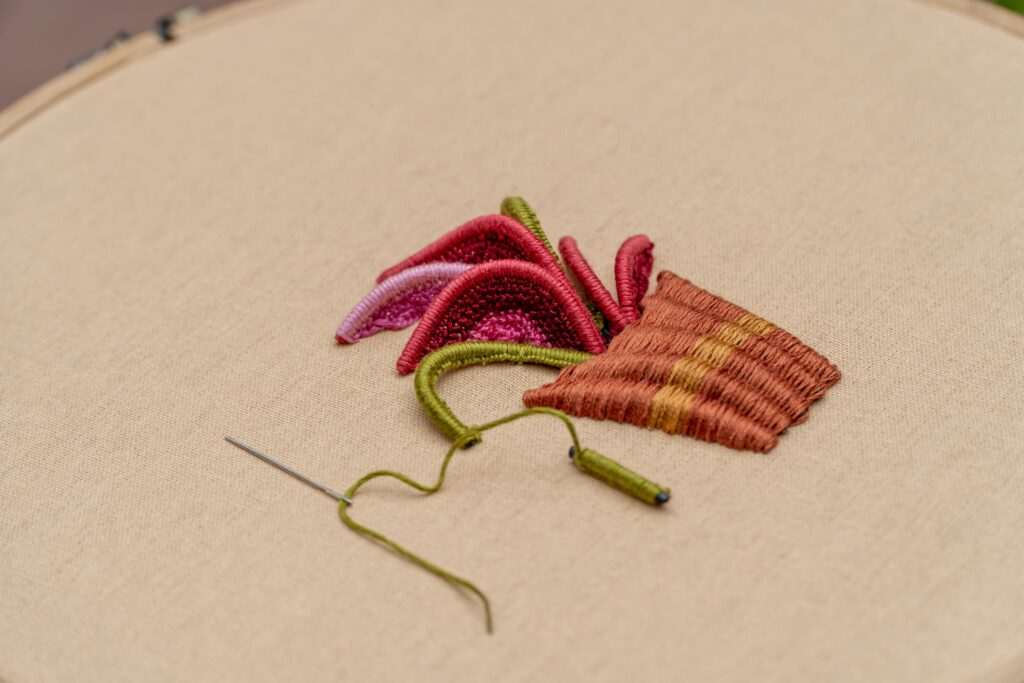
Embroidery — the art of decorating fabric with needle and thread — encompasses one of the broadest ranges of techniques in any needle art tradition, from the dense satin-stitch coverage of Chinese silk embroidery to the airy, visible-stitch aesthetic of contemporary hoop art. The craft’s current revival has moved it well beyond its association with grandmother’s samplers: embroidery hoops now appear as completed framed artworks, botanical illustrations in thread are collected and exhibited, and the tactile, meditative quality of stitching has attracted a new generation of practitioners who come to embroidery from modern art, illustration, and fiber arts backgrounds. Anchorage’s creative community has found a consistent audience for embroidery instruction, and the connection between needle art and Alaska’s visual culture — its wildlife, wildflowers, and landscape forms — makes embroidery a particularly expressive medium for Alaska-specific imagery. This guide covers embroidery workshops in Anchorage in 2026, the essential stitches and tools involved, and how to develop a continuing hand embroidery practice.
Hand Embroidery vs. Machine Embroidery
The two main branches of embroidery use fundamentally different processes and produce results with different character:
Hand embroidery places each stitch individually, producing results with visible thread texture, slight irregularity, and the evidence of a human hand that makes each piece unique. It requires only a needle, thread, fabric, and a hoop — the full toolkit costs under $20 to start. Hand embroidery scales from a few stitches on a shirt collar to complex multi-colored compositions requiring hundreds of hours. The meditative quality of hand stitching — the rhythm of needle through fabric, the gradual accumulation of a design — is a significant part of the appeal for many practitioners.
Machine embroidery uses a specialized sewing machine (or dedicated embroidery machine) with multiple thread colors loaded and a digitized pattern file to place stitches automatically. It produces consistent, repeatable results with high precision and speed — ideal for production of multiple identical pieces, technical precision, and very small stitch details. Machine embroidery requires significant equipment investment ($200–$5,000+ depending on the machine) and software skills for digitizing patterns. Most workshop instruction focuses on hand embroidery, which is both more accessible and more aligned with the contemporary fine craft embroidery movement.
Essential Stitches
A relatively small vocabulary of stitches covers the majority of hand embroidery applications. Learning these thoroughly before expanding to more complex techniques produces better results than attempting complex stitches before the fundamentals are solid:
- Backstitch: The fundamental outlining stitch — each stitch begins where the previous one ended, creating a continuous line with no gaps. The workhorse of hand embroidery; used for outlines, lettering, and detail lines in virtually every embroidery style. The starting point for all beginners.
- Satin stitch: Parallel stitches laid side by side to completely fill an area with smooth, dense coverage. The most important filling stitch for solid-color shapes — petals, leaves, geometric forms. Achieving even, smooth satin stitch with clean edges is the foundational filling challenge that most embroidery instruction builds toward.
- French knot: A small, raised knot formed by wrapping the thread around the needle before inserting it back through the fabric. Used for flower centers, texture, berries, eyes, and decorative dot clusters. The technique requires practice — too loose and the knot slips through; too tight and the thread breaks. Once mastered, French knots add irreplaceable texture dimension.
- Chain stitch: A series of interlocked loops forming a chain-like line. Wider and more textured than backstitch, suitable for outlines where more visual weight is desired. Also used as a filling technique when worked in rows (filling chain stitch).
- Stem stitch: A rope-like line stitch where each new stitch overlaps the previous one at a slight angle, producing a twisted cord effect. The standard stitch for curved outlines — flower stems, vines, body contours — where the twisting effect follows curves naturally.
- Lazy daisy (detached chain): A single chain stitch loop anchored at its tip, used to create individual leaf and petal shapes. Quick to execute and produces an organic, slightly textured petal that’s ideal for simple flower compositions.
- Long and short stitch: Alternating long and short satin stitches used to blend colors across a surface, mimicking the way color transitions occur in naturalistic painting. Used for realistic shading in botanical embroidery and animal portraits.
Hoops, Fabric, and Thread
Equipment selection matters more than beginners expect:
Hoops: The embroidery hoop holds fabric taut during stitching, preventing puckering. Wooden or bamboo hoops (available in 4–10 inch diameters) are the standard; plastic hoops with a tightening screw work well for machine-washable pieces since they grip better through washes. For hoops displayed as completed artwork, wooden hoops with a natural finish look best in framed pieces. Hoops should hold fabric drumhead-tight — re-tighten frequently during work as the fabric relaxes.
Fabric: Tightly woven, even-weave fabrics produce the cleanest stitch results. Kona cotton, linen, and cotton-linen blends are the standard choices for hand embroidery. Avoid stretchy or loose-weave fabrics, which distort under stitching tension. Pre-washing and pressing fabric before hooping removes any sizing that might affect thread adhesion.
Thread: DMC 6-strand cotton floss is the universal standard for hand embroidery — available in hundreds of colors, consistent quality, and widely available. Six-strand floss is separated into individual strands for use; most embroidery uses 2–3 strands for fine detail work and 4–6 strands for bold coverage. Silk thread produces a lustrous, more light-reactive finish; wool thread (especially Appleton crewel wool) produces raised, textured stitching used in crewelwork traditions.
Alaska Imagery in Embroidery
Alaska’s visual vocabulary translates particularly well into hand embroidery’s stitch language. Wildflower botanical embroidery — fireweed spikes, lupine clusters, forget-me-not bouquets — is the most popular Alaska subject in Anchorage workshops, where the connection between the local landscape and the stitched image gives the work a specificity that generic floral embroidery lacks. The annual Anchorage Native Arts & Culture Festival is an excellent source of inspiration for Alaska-specific embroidery subjects, showcasing traditional and contemporary designs rooted in the region’s visual traditions. Botanical embroidery with long-and-short stitch shading and satin-stitch petal fill produces results with genuine fine art quality.
Alaska wildlife subjects — raven profiles, bear silhouettes, salmon swimming upstream — work beautifully in both outline-only treatments (backstitch with minimal fill) and fully realized naturalistic renderings. The graphic, high-contrast quality of raven imagery suits simple backstitch and fill approaches; bears and salmon reward the more complex long-and-short shading that produces realistic fur and scale texture.
Embroidery Workshops in Anchorage
Anchorage’s embroidery workshop landscape includes beginner hoop art sessions (typically 2–3 hours, producing a small finished hooped piece), botanical embroidery workshops focused on Alaska wildflower subjects, and multi-session courses that develop a fuller stitch vocabulary over several weeks. The Alaska Fiber Arts community and Anchorage Weavers and Spinners Guild both connect embroidery practitioners and surface periodic workshop offerings. The Anchorage Market & Festival at Town Square Park also features fiber artists and occasionally hosts embroidery demonstrations during the summer season.
Workshop prices run $35–$75, with hoop, fabric, floss, and needle typically included. Participants leave with a finished (or nearly finished) small embroidered piece and a sense of the basic stitch constructions. Multi-week formats allow for more ambitious projects and more thorough stitch instruction than a single session can accommodate.
For home practice after a workshop, a starter embroidery kit (hoop, assorted DMC floss, fabric, needles, pattern transfer paper) costs $20–$40. The most important practice advice: keep stitching small, complete projects rather than attempting large complex pieces early — the satisfaction of a finished 4-inch hoop piece reinforces the motivation to continue more than an ambitious half-finished project does. Our free things to do in Anchorage guide covers the fiber arts events and community spaces where Anchorage’s embroidery community is most active. Our Anchorage hiking guide covers the trail environments — including Kincaid Park‘s meadow trails blazing with fireweed, lupine, and wild iris through the summer — where Alaska’s wildflowers and wildlife subjects are most accessible in person for direct observation and reference photography.
Photo by Pavel Danilyuk on Pexels.

No comments yet.