
Denali Park Road Bus Tour 2026: Everything You Need to Know Before You Go
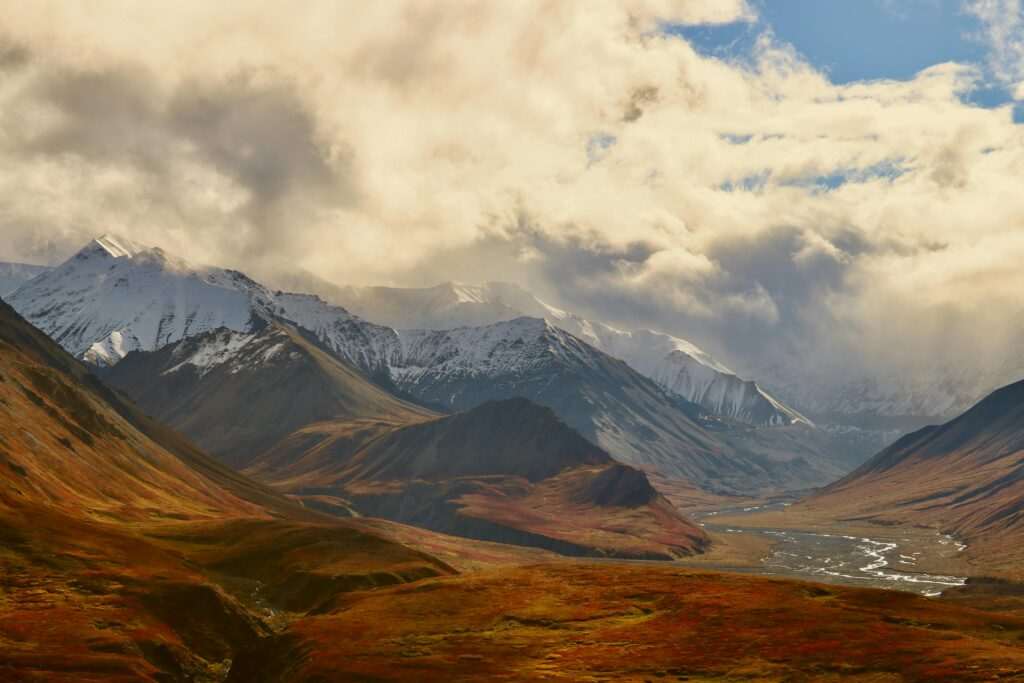
Denali National Park covers six million acres of wilderness — roughly the size of Vermont — yet only one road threads its interior. And for almost all of that road’s 92 miles, private vehicles are not allowed. The Denali Park Road bus system is not an inconvenience; it’s the experience. Riding it is how you get deep into one of the last truly intact wildlife ecosystems in North America, trading the speed of a car for hours of slow, wandering travel through grizzly bear country, open tundra, and some of the most dramatic mountain scenery on earth.
Here’s everything you need to plan your 2026 bus tour — which bus to choose, how to book, what to bring, and what to look for along the way.
Why Private Vehicles Can’t Go Beyond Mile 15
The vehicle restriction isn’t arbitrary. When wildlife researchers studied Denali in the 1970s, they found that the presence of many private vehicles — with their stops, starts, doors, and human activity — dramatically altered animal behavior along the road corridor. Bears avoided the road during peak traffic hours. Caribou changed their movement patterns. The Park Service made a consequential decision: limit road access to buses, preserve the wilderness character, and keep animals behaving naturally.
The result, fifty years later, is one of the finest wildlife-viewing roads in the world. Animals have largely habituated to the large green buses that pass steadily but quietly. A grizzly digging for ground squirrels a hundred feet from the road is not unusual. A wolf loping alongside the bus at a distance is a real possibility. None of this happens if you’re surrounded by sixty individual cars.
Private vehicles are permitted to Mile 15 (Savage River) without reservation. Beyond that, it’s bus-only — no exceptions.
The Two Bus Types: Which One Is Right for You?
Visitor Transportation System (VTS) Buses
The VTS buses are the right choice for most first-time visitors and anyone whose primary goal is wildlife viewing and scenery. These are narrated, ranger-guided experiences: the driver stops whenever wildlife is spotted, lets passengers off to photograph at pullouts, and provides running commentary on the landscape, ecology, and park history throughout the trip.
VTS routes run to several turnaround points along the road. The most popular options are:
- Toklat River (Mile 53) — The standard full-day VTS trip. Approximately 8 hours round-trip from the Wilderness Access Center. Passes through the most reliably productive wildlife habitat, including Polychrome Pass and the open tundra flats where grizzlies are frequently spotted.
- Eielson Visitor Center (Mile 66) — Offers views of Denali itself (on clear days) and reaches higher elevation alpine tundra. Round-trip is approximately 10–11 hours.
- Wonder Lake (Mile 85) — The full road experience; round-trip runs 12–13 hours. Only available on VTS buses during peak summer season.
Camper Bus
The Camper Bus runs the full length of the road to Wonder Lake (Mile 85) and serves backcountry hikers, backpackers, and campers. Unlike the VTS buses, the Camper Bus operates on a schedule rather than a narrated tour basis — it will stop briefly for wildlife, but it doesn’t linger. The key feature is on-request drop-off and pick-up anywhere along the road, allowing hikers to access trailless backcountry units for overnight or multi-day trips.
If you have a backcountry permit and camping gear, the Camper Bus is your vehicle. If you want a guided wildlife experience and aren’t camping overnight, choose VTS.
How to Book Your Denali Bus Ticket in 2026
All Denali bus reservations are made through reservations.gov — the official National Park Service booking platform. Bus seats sell out quickly, especially for the most popular mid-summer dates (late June through mid-August). Here’s how the booking window works:
- Reservations typically open in mid-December for the following summer season. Check the official Denali National Park website for the exact 2026 open date, as it shifts slightly year to year.
- The busiest travel dates (late June, July 4th week, early August) often sell out within hours of reservations opening. If you have a fixed travel window, be ready to book on opening day.
- Cancellations do appear, so check back if your first-choice date is full.
- Backcountry camping permits (required for off-road overnight trips) are a separate reservation process handled at the park’s Backcountry Information Center, which opens for the season when the park opens (typically late May).
What to Expect on the Road
The Denali Park Road is not a highway. It is a narrow, unpaved mountain road that winds across river gravel bars, climbs through alpine passes, and traverses cliffs with no guardrails and views that will make your stomach drop in the best possible way. The buses are experienced and well-maintained, but the ride is long and not always smooth. Plan accordingly.
Polychrome Overlook (Mile 46)
One of the most photographed stops on the road. The overlook sits above a sweeping panorama of the Alaska Range, with multicolored volcanic rock formations in the foreground and tundra valleys falling away below. On clear days, Denali itself — over 100 miles distant — is visible above the range. This is also prime Dall sheep country; scan the ridgelines with binoculars.
Toklat River (Mile 53)
A wide, braided glacial river valley with an open gravel bar that grizzly bears frequently use as a travel corridor. The rest stop here is a good place to stretch, eat lunch, and scan for bears on the far bank.
Eielson Visitor Center (Mile 66)
The best vantage point on the road for viewing Denali on clear days — the peak fills the sky when visible. Ranger programs run here in summer. Note that Denali is cloud-covered roughly 70% of the time, even in peak summer. The mountain reveals itself on its own terms; locals say you earn the view.
Wonder Lake (Mile 85)
The classic Denali reflection shot — a calm lake in the foreground, the full 20,310-foot massif filling the sky behind it — is taken from Wonder Lake when conditions align. It’s a long day to reach it and back, but for photographers and bucket-list travelers, it’s the image that defines the park.
Wildlife: What You’re Most Likely to See
The road corridor is the best wildlife-viewing real estate in the park. Species you have a genuine chance of seeing from the bus:
- Grizzly bears — Common throughout, especially in the Toklat and Stony Creek areas. Summer sightings are almost routine.
- Caribou — The Denali herd numbers around 2,000 animals. You may encounter dozens crossing the road or bedded in tundra meadows.
- Dall sheep — White dots on rocky ridgelines, especially visible near Polychrome and Highway Pass.
- Wolves — Less predictable but regularly sighted; the park hosts multiple packs. Any wolf sighting stops the bus.
- Moose — More common near the park entrance and in the spruce forests of the lower road.
First-Timer Tips for the Bus
- Window seat strategy: The road runs roughly east-west in the first half. Morning departures put the sun behind you on the outbound leg if you sit on the right (south) side. Ask drivers which side tends to offer better wildlife views on your specific route day.
- Pack food and water: There is no food service in the park interior. Bring a lunch, snacks, and enough water for a full day. The Toklat River rest stop has water and a basic visitor area, but don’t count on restocking.
- Dress in layers: The park interior can be 40°F and raining in July, or 65°F and sunny. Often both, the same day.
- Binoculars are non-negotiable: 8×42 or 10×42 are the standard recommendation. Wildlife is often spotted at distances where your phone camera is useless.
- Motion sickness: The road is winding and the bus isn’t smooth. If you’re prone to motion sickness, take medication before boarding and sit in a forward-facing window seat rather than middle rows.
- Camera settings: For shooting from a moving or stopped bus, use shutter priority (Tv/S) at 1/500s or faster for wildlife. Burst mode and image stabilization both help. Accept that some shots will be imperfect — the experience matters more than the image.
Getting to Denali from Anchorage
Denali National Park is approximately 240 miles north of Anchorage via the Parks Highway (Hwy 3) — roughly 4–4.5 hours by car. The Alaska Railroad runs a scenic route between Anchorage and the park entrance, with a departure time that makes same-day bus tours possible if you book carefully. Many visitors combine a 2–3 night stay near the park entrance (Healy, the park’s gateway town, has lodging options) with one or two bus tours, rather than doing the long road as a one-day trip from Anchorage.
Bus tours require an early start — most depart between 6:00 and 8:30 a.m. from the Wilderness Access Center near the park entrance. Build travel time accordingly.
The Denali Park Road bus isn’t just transportation — it’s the whole point. Set aside the day, pack your patience and your binoculars, and let the road take you somewhere most visitors never reach.
No comments yet.