
Cook Inlet Beluga Whales 2026: Spotting Them from the Seward Highway
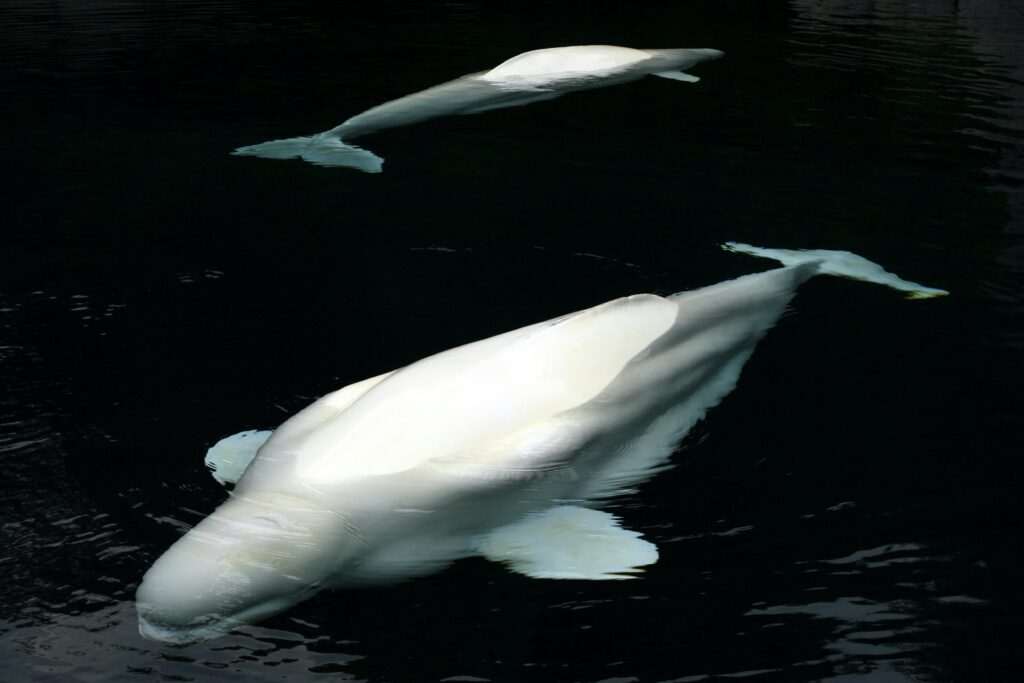
The white shapes appear without announcement. One moment the gray-green surface of Turnagain Arm is empty, the next there are a dozen of them — luminous, unhurried, moving against the incoming tide in a loose formation that suggests purpose. Cook Inlet beluga whales are not reliably visible from the Seward Highway, which is part of what makes a sighting feel like a gift rather than a scheduled attraction. But they appear often enough, in predictable enough circumstances, that a visitor who knows where to look and when has a genuine chance of watching one of the world’s rarest whale populations hunting salmon within sight of a major American city.
The Cook Inlet Beluga: A Population Apart
Cook Inlet belugas are not simply belugas that happen to live near Anchorage. They are a genetically distinct, geographically isolated population that has been separated from other beluga groups for thousands of years. The population is listed as endangered under the Endangered Species Act and numbers approximately 280 animals — a figure that has declined significantly from historical estimates of 1,300 or more in the mid-twentieth century. The causes of the decline include overhunting in earlier decades, reduced salmon prey, pollution, and vessel disturbance, though the exact weight of each factor continues to be debated among researchers.
The isolation of the Cook Inlet population is meaningful for wildlife viewers. These are not migratory animals passing through on their way to Arctic waters. They live here year-round, spending winters in the ice-covered upper inlet and moving into the shallower tidal arms in summer to follow the salmon runs. The belugas a visitor sees from the Seward Highway pullouts are the same animals that have inhabited these waters for generations — a population with its own behavioral patterns, its own acoustic culture, and a relationship with this specific place that is irreplaceable if lost.
Why Belugas Appear Near Anchorage
Salmon explain almost everything about beluga distribution in Cook Inlet during summer. As Chinook, sockeye, pink, and coho salmon stage in the inlet and push into the rivers to spawn, belugas follow the concentrations. Turnagain Arm and Knik Arm — the two shallow tidal extensions that bracket the Anchorage bowl — funnel salmon into predictable corridors, and belugas exploit this geography with what appears to be considerable tactical intelligence. Groups of whales have been observed working the shallow edges of tidal flats, herding fish against the shoreline in coordinated patterns, and positioning themselves ahead of incoming tides to intercept disoriented prey.
The bore tide connection is particularly striking. Turnagain Arm has one of the highest tidal ranges in North America, and the incoming tide advances as a visible wave — the bore — that rolls up the arm at speeds of 10 to 15 miles per hour. Fish caught in the bore’s turbulence become temporarily disoriented, and belugas have learned to exploit this. On days when the bore tide coincides with peak salmon runs, watching from a Seward Highway pullout can mean watching both phenomena simultaneously: the white wall of water advancing up the arm with white whales riding just ahead of it, working the disrupted fish in its leading edge.
Best Viewing Locations on the Seward Highway
The Seward Highway corridor between Anchorage and the community of Girdwood offers the most accessible beluga viewing in Alaska. The highway runs directly above the north shore of Turnagain Arm for roughly 40 miles, with multiple pullouts that provide unobstructed views of the water.
Beluga Point (Mile 110) is the prime location and the one most consistently recommended by Alaska wildlife agencies. The pullout sits on a rocky promontory directly above the arm, with a broad view of the tidal flats and the main channel. Interpretive signs explain the beluga population and the bore tide phenomenon. During peak summer season, it is not unusual to find other viewers stopped here who have already spotted whales, which concentrates the collective scanning effort and increases the odds of finding animals.
Bird Point (Mile 96.5) is slightly farther from Anchorage but offers an equally commanding view and somewhat more parking. The point extends into the arm, providing viewing angles both east and west along the channel. During peak salmon runs in late July and August, both Beluga Point and Bird Point can be productive within the same morning.
The pullouts between Mile 100 and Mile 108 are worth slow-rolling during whale season. Belugas sometimes appear close enough to shore to be visible from a moving vehicle, but pulling off to scan properly is far more effective.
Potter Marsh, at the north end of the Seward Highway corridor near Anchorage, sits at the edge of Turnagain Arm and has produced beluga sightings when animals work the shallows near the Anchorage end of the arm. It is primarily known as a birding destination, but the boardwalk over the marsh provides elevation and a view toward the arm that occasionally yields whale sightings as a bonus.
Timing: When and How to Look
July and August are the peak months for beluga sightings along the Seward Highway. The summer salmon runs that concentrate both fish and whales in the upper inlet are at their most intense during this window, and the long Alaska daylight hours mean that viewing opportunities extend throughout the day.
Incoming tides are consistently the most productive viewing periods. Belugas move with the incoming tide, following salmon that are pushed into shallower water as the flats flood. Planning a stop at Beluga Point or Bird Point to coincide with the two-hour window around an incoming tide significantly improves the odds. Tide tables for Anchorage are freely available online and at visitor centers.
Morning light — the hours between 7 and 10 AM — offers two advantages: calmer wind conditions (whitecaps make white whale detection far harder), and lower sun angle that illuminates the water surface differently than midday light. Polarized sunglasses help enormously by cutting surface glare. Binoculars are not strictly necessary for groups of animals working close to shore, but a 7×50 or 8×42 pair makes the difference between identifying shapes and actually watching behavior.
What you are looking for: white animals ranging from 10 to 15 feet in length, typically in groups of 5 to 15, moving in loose but coordinated formations. Adult belugas are white; juveniles are gray, darkening from the near-black of newborns to progressively lighter shades as they mature, reaching white at around 5 years old. A mixed group with gray animals is a family group — one of the more striking sightings available from the highway pullouts. Belugas surface frequently and roll gently rather than breaching dramatically. The white flash of a rolling animal against dark water is usually the first thing that catches the eye.
Conservation Rules: What Not to Do
Cook Inlet belugas are protected under both the Endangered Species Act and the Marine Mammal Protection Act, and the rules governing human interaction with them are legally enforced. The most important: do not approach within 100 yards of a beluga whale by any means — on foot, in a kayak, in a powerboat, or by drone. Aerial drone approaches are explicitly prohibited under the Marine Mammal Protection Act regardless of whether the drone operator intends to disturb the animals. The animals may appear indifferent to observers, but behavioral disruption is cumulative; repeated close approaches affect feeding efficiency and mother-calf bonding in ways that individual encounters obscure.
The practical implication for highway viewers is that road-based observation from the established pullouts is the appropriate way to experience these animals. The pullouts exist for this purpose, they keep observers at legal and respectful distances, and the elevated vantage provides better views than watercraft in shallow tidal conditions anyway. Bird Creek Trail near the south end of the Seward Highway corridor provides access to the shore, but NOAA guidelines recommend maintaining distance even from the beach when belugas are present nearby.
What a Sighting Means
Watching Cook Inlet belugas from a Seward Highway pullout is not a guaranteed experience — the whales move, the tides shift, and some days the arm is simply empty. That uncertainty is part of what makes a sighting carry weight. These are not aquarium animals conditioned to visitor presence but members of an endangered population doing what endangered populations do: finding food, raising young, navigating an environment that has changed significantly around them in the past half-century.
The roughly 280 animals in Cook Inlet represent a lineage that has inhabited these waters since before any road followed the arm’s north shore. The Seward Highway was built in the 1950s; belugas have been here for thousands of years. Watching a pod work the incoming tide from a pullout above Turnagain Arm connects a visitor to a version of this landscape that predates the one visible through the windshield — and that connection is what Alaska wildlife encounters at their best provide.
Photo: Putulik Jaaka / Pexels

No comments yet.