
Cross-Country Skiing Near Anchorage Alaska: Kincaid, Hillside & Russian Jack 2026
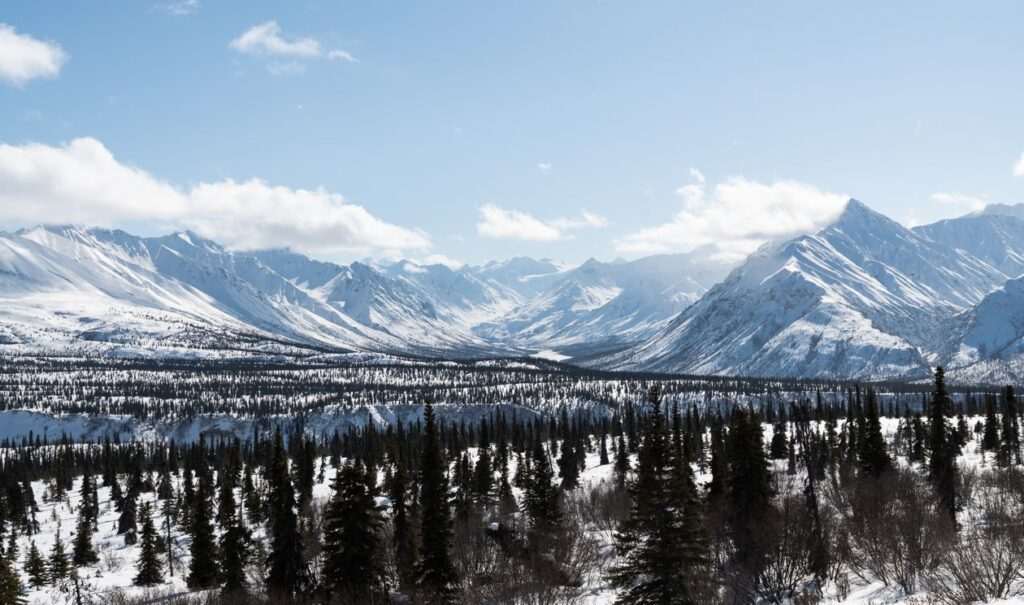
Anchorage is one of the best cross-country skiing cities in North America. That’s not a boast for the tourism brochure — it’s simply what you get when a city of 300,000 people sits at the base of the Chugach Mountains with more than 200 kilometers of groomed Nordic trails woven through its parks and greenbelts. Kincaid Park at the western end of the city has hosted World Cup Nordic competitions. Russian Jack Springs Park has lit trails for skiing after dark. The Hillside trail network connects to Far North Bicentennial Park for kilometers of continuous forest skiing. And Hatcher Pass, 90 minutes north, adds backcountry touring for those who want to leave the groomed trails behind. Here’s how to ski Anchorage in 2026.
Kincaid Park — The Flagship Venue
Kincaid Park is the anchor of Anchorage’s Nordic trail network and one of the finest cross-country skiing facilities in the United States. The park’s 50-plus kilometers of groomed trails run through boreal forest and open terrain at the western edge of the city, with views of Cook Inlet and the Alaska Range on clear days. The Kincaid Park Winter Sports Center is the hub for the skiing operation: trail maps, warming facilities, wax rooms, and rental equipment are all here.
Kincaid’s trail network is groomed for both classic and skate skiing throughout the winter season. The park has hosted multiple major Nordic competitions over the years, including biathlon World Cup events, and the trail layout reflects a course designer’s attention to varied terrain — you’ll find flat open sections for developing speed, rolling forest trails for sustained effort, and climbs with technical descents that reward experienced skiers. First-timers and children have beginner loops near the chalet that are gentler and well-suited to learning both techniques.
The Anchorage Nordic Ski Club (ANSC) grooms the Kincaid trail network and maintains a daily grooming report at their website — checking it the morning of a ski day tells you which sections are freshly groomed and what conditions to expect. Grooming typically runs through mid-to-late March depending on snowpack; the park opens to spring biking and hiking once the trails are no longer reliable for skiing.
Hillside Park and Far North Bicentennial Park
The Hillside Park Nordic Skiing Trails sit on the bench above East Anchorage, offering groomed Nordic trails with a different character than Kincaid — hillier terrain, more elevation change, and a forested setting that feels more mountain-adjacent. The Hillside trails connect to the Far North Bicentennial Park trail system, creating a continuous skiing corridor through East Anchorage that’s accessible from multiple trailheads.
The combined Hillside and Far North Bicentennial network is the go-to for Anchorage residents in the eastern part of the city who want nearby skiing without driving to Kincaid. The terrain suits intermediate skiers well — enough challenge to stay engaged, enough variety to explore on multiple visits. Some sections are ungroomed and suitable for backcountry-style classic skiing; ANSC maintains grooming in the main corridors but the outer trails rely on natural snow conditions.
Russian Jack Springs Park — Night Skiing in the City
Russian Jack Springs Park is Anchorage’s answer to the question of skiing after work in January. The park’s Russian Jack Springs Park runs approximately 9 kilometers under artificial lighting, making it the only major lit Nordic skiing venue in the Anchorage area. Trails are groomed for classic skiing and open in the evenings, turning what would otherwise be a dark winter night into a viable ski outing.
The terrain at Russian Jack is flatter than Hillside and more forested than Kincaid’s open sections — it’s beginner-to-intermediate territory that prioritizes accessibility over challenge. For new skiers learning classic technique, the lit evening environment removes the time pressure of winter daylight and allows a relaxed pace for working on form. Families with working schedules that don’t allow daytime skiing in the week find Russian Jack the most practical option during the short-daylight months of December and January.
Hatcher Pass — Backcountry Nordic Touring
For skiers who want to leave groomed tracks behind, Hatcher Pass offers backcountry Nordic touring in alpine terrain about 90 minutes north of Anchorage via the Glenn Highway and Palmer. The open bowls and ridge terrain that attract snowmobilers also provide untracked touring for Nordic skiers on wider backcountry skis — the Independence Mine area is the starting point for most touring routes. The terrain is beautiful and the views extensive, but Hatcher Pass has no groomed Nordic trails; you’re breaking your own track in whatever snow conditions exist.
Backcountry Nordic skiing at Hatcher Pass demands more preparedness than park skiing: avalanche awareness in the upper terrain, the ability to navigate in low-visibility conditions, and skis and bindings suited to ungroomed snow rather than the performance-focused equipment used on groomed trails. This is a step up in both skill and commitment from the in-town parks, and it rewards skiers who’ve developed solid technique on groomed trails first.
Classic vs. Skate Skiing
Classic skiing is the traditional technique: skis stay parallel in a set track, and the motion is a stride-and-glide alternating push from each ski. It’s accessible to beginners, comfortable on varied terrain, and what most people picture when they think of cross-country skiing. The groomed trails at Kincaid, Hillside, and Russian Jack all maintain classic tracks set into the snow alongside the groomed skating lane.
Skate skiing uses a V-shaped push off the inside edge of the ski — a faster, more athletic technique that resembles inline skating more than traditional skiing. It requires wider, firmer groomed snow (the skating lanes maintained alongside the classic tracks) and takes longer to learn but delivers considerably more speed. Both techniques are viable at all the major Anchorage parks; the choice depends on your experience level and what you’re looking for from the ski.
Rentals and Where to Get Them
Rental equipment for both classic and skate skiing is available at the Kincaid Park Winter Sports Center chalet. Several Anchorage ski and outdoor shops also rent Nordic equipment by the day, including options for both techniques and multiple fit categories. Rental packages typically include skis, boots, and poles. If you’re trying cross-country skiing for the first time, the rental staff at Kincaid can advise on technique and trail selection for your ability level — it’s worth asking before heading out on your first day.
Waxable vs. waxless classic skis is a choice that matters at Anchorage’s temperatures. Most rental fleets use waxless skis (fishscale base pattern) that work across a range of conditions without requiring wax preparation — appropriate for casual use. Skate skis always require glide wax; rental shops apply a base wax but conditions may call for fresh application, especially in colder or icy conditions.
Season and Trail Conditions
The Nordic skiing season in Anchorage typically runs from late November through mid-March, with December through February the most consistent window. Early season (November) depends on snowfall timing — some years the trails open before Thanksgiving, others require patience into December. Late season (March) offers longer daylight and often excellent spring skiing conditions as temperatures stabilize.
The Anchorage Nordic Ski Club publishes daily grooming reports at their website during the season — the most reliable source for current conditions at Kincaid, Hillside, and Russian Jack. Municipality of Anchorage parks staff also update conditions at city trailheads. Check before you go; Anchorage’s maritime climate can bring rain or ice events that significantly affect trail quality within 24 hours.
How many kilometers of groomed Nordic trails does Anchorage have?
Anchorage has more than 200 kilometers of groomed Nordic ski trails spread across Kincaid Park (50+ km), the Hillside/Far North Bicentennial network, Russian Jack Springs Park, and several smaller park systems. Kincaid alone has more groomed Nordic trail than many dedicated ski resorts. The trail network is maintained primarily by the Anchorage Nordic Ski Club (ANSC) and the Municipality of Anchorage, with daily grooming reports available online during the season.
Can beginners cross-country ski in Anchorage?
Yes — Anchorage’s park trail systems include beginner loops suited to first-time skiers. Kincaid Park has gentle terrain near the Winter Sports Center chalet, and Russian Jack Springs Park’s flatter lit trails are well-suited to learning classic technique in a low-pressure environment. Rental equipment is available at Kincaid’s chalet and at Anchorage ski shops. Starting with classic skiing rather than skate skiing is strongly recommended for beginners — classic is more intuitive and requires less coordination to get moving safely.
What’s the best cross-country skiing park near downtown Anchorage?
Russian Jack Springs Park is the closest major Nordic skiing venue to downtown Anchorage — about 10 minutes from the city center. It has lighted trails for evening skiing and beginner-appropriate terrain. Kincaid Park is 20 to 25 minutes from downtown and is the premier XC skiing destination with 50+ km of trails, but it requires a drive to the west end of the city. Hillside Park offers the best intermediate terrain on Anchorage’s east side. Most serious skiers rotate between all three during a winter visit.
When is the Nordic ski season in Anchorage?
The season typically runs late November through mid-March. December through February is the most reliable window for consistent groomed conditions. March often delivers excellent late-season skiing with longer daylight — the sun is back significantly by March in Anchorage, extending comfortable outdoor hours. November opening dates vary by year depending on early snowfall. Check the Anchorage Nordic Ski Club’s daily grooming reports before heading out, particularly in the shoulder weeks at the start and end of the season.
The scale and quality of Anchorage’s Nordic trail network surprises most visitors who come expecting a frontier city rather than a world-class skiing venue. Kincaid Park alone justifies the visit for any serious cross-country skier. Add Russian Jack’s night skiing, the Hillside terrain, and the Hatcher Pass backcountry option and you’ve got a winter skiing city that holds up against comparison with any Nordic destination in North America. Rent skis, check the grooming report, and pick a park for the morning — it’s that simple.
Featured photo by John De Leon on Pexels.

No comments yet.