
Beluga Whale Watching & Cook Inlet Wildlife 2026 — Anchorage Guide
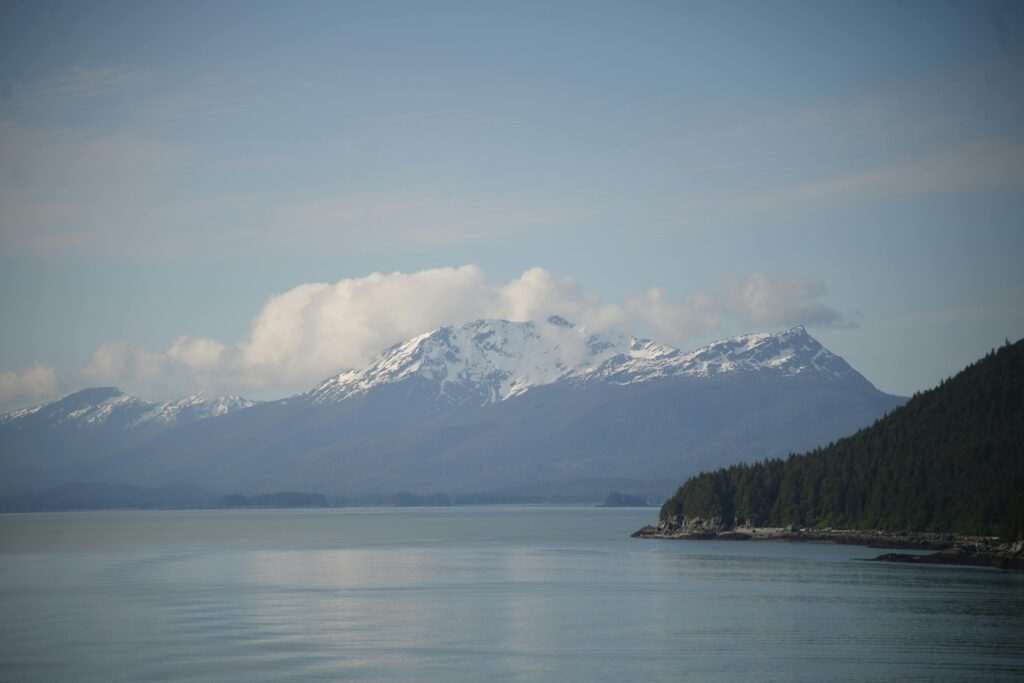
Fewer than 280 beluga whales remain in Cook Inlet, making them one of the most critically endangered marine mammal populations in the United States. What makes this extraordinary is where you can watch them: from a downtown fish ladder, from highway pullouts 15 minutes outside the city, from a paved coastal trail. Anchorage is one of the only places on Earth where you can see endangered belugas from an urban setting — no boat, no guide, no fee required.
Why Cook Inlet Belugas Are Unique
Cook Inlet’s beluga whales are a genetically distinct population, isolated from other beluga groups for more than 10,000 years. They are smaller than Arctic belugas, better adapted to the extreme tidal swings and glacial silt of upper Cook Inlet. Adults are bright white and unmistakable. Calves are born a muted grey-brown and gradually whiten over their first five years — if you see a grey shape swimming alongside a white adult, that’s a mother-calf pair.
The population has declined sharply since the 1970s, when an estimated 1,300 whales lived here. They are now listed as Endangered under the Endangered Species Act. NOAA Fisheries conducts annual aerial surveys; the most recent counts show fewer than 280 animals. Responsible shore-based viewing has no documented negative impact on the whales and is the approach NOAA recommends for this population.
When to Look: Peak Season and Timing
Belugas follow salmon. The best window is May through July, when king (chinook) salmon return to rivers throughout the inlet. Whales move up into the shallows with the incoming tide, often in small pods of 5–20 animals. Early morning and high tide are the most reliable conditions for spotting from shore. September sees some activity as silver (coho) salmon runs begin, but sightings drop off after August.
Cook Inlet has a dramatic tidal range — up to 38 feet in upper Turnagain Arm. Belugas actively use tidal movement to corral fish, so timing your visit around a rising tide gives you the best chance. Check NOAA tide charts for Anchorage before you go.
Best Viewing Spots in and Near Anchorage
Ship Creek Fish Ladder (Downtown Anchorage)
In June and early July, king salmon congregate at the Ship Creek fish ladder just blocks from downtown hotels. Beluga whales follow them in. The street-level fish viewing platform on 4th Avenue (near Whitney Road) is free to visit and has produced some of the most dramatic beluga sightings of any urban location in Alaska — white whales surfacing 50 feet from where you’re standing. Parking is free nearby. This is the most accessible spot in the city.
Point Woronzof and Earthquake Park
About 10 minutes from downtown, the bluffs at Point Woronzof overlook upper Cook Inlet directly. The connected Earthquake Park commemorates the 1964 Good Friday earthquake that dropped this entire section of land. From the bluff edge, scan the inlet on an incoming tide — belugas moving north toward Ship Creek pass through this zone. The park has paved paths, interpretive signs, and good sight lines in both directions along the coast.
Tony Knowles Coastal Trail — Westchester Lagoon
The Tony Knowles Coastal Trail runs 11 miles from downtown to Kincaid Park along the Cook Inlet shoreline. The stretch near Westchester Lagoon (accessible from 15th Avenue) puts you close to the water at high tide. Belugas have been spotted from this section of trail during peak salmon runs. You can combine whale watching with the broader wildlife of the lagoon — nesting Arctic terns, trumpeter swans, and beavers are resident through summer.
Beluga Point — Mile 110, Seward Highway
The highway pullout literally named for the whales. Beluga Point (Mile 110 on the Seward Highway, about 15 minutes south of Anchorage) is the most reliable roadside spot for Cook Inlet beluga whale viewing near Anchorage. The wide gravel pullout sits directly above Turnagain Arm, giving you elevated views across the water. May through July mornings are best. As a bonus, this is one of the best locations in Alaska to watch the Turnagain Arm bore tide — a wall of water that rushes in from the west with the incoming tide, sometimes carrying belugas ahead of it.
Turnagain Arm Highway Pullouts
The entire stretch of Seward Highway between Anchorage and Portage (Miles 90–117) borders Turnagain Arm. Multiple signed pullouts along this corridor offer views of the inlet. Dall sheep are frequently visible on the rocky cliffs directly above the road near Bird Point (Mile 101) and beyond. Combined with bore tide timing, this corridor can deliver beluga pods, sheep on the cliffs, and bald eagles in a single hour of driving. The Bird Creek Trail trailhead at Mile 101 has good inlet views and access to upper Chugach terrain.
Heading further south, the Potter Marsh Bird Sanctuary at Mile 117 (just outside Anchorage) has a boardwalk over wetlands and is excellent for shorebirds, waterfowl, and the occasional moose. While focused on the marsh, the adjacent road section does have occasional beluga sightings in the inlet beyond the flats.
Other Cook Inlet Wildlife to Watch For
Beluga whales share this ecosystem with a remarkable range of wildlife visible from the same vantage points:
- Harbor seals: Common in summer, especially near river mouths where they compete with belugas for salmon. Look for round grey heads bobbing at the surface.
- Bald eagles: Year-round residents along Ship Creek and the coastal trail. Concentrations increase during salmon runs.
- Dall sheep: Visible on steep cliffs above Turnagain Arm from Mile 101 south, particularly in summer when they descend to mineral licks.
- Moose: Wetlands along the Tony Knowles Trail and Potter Marsh are regular moose habitat. Cow-calf pairs are common in June.
- Arctic terns: Westchester Lagoon hosts a nesting colony. These birds migrate more than 40,000 miles annually between poles.
For broader wildlife experiences away from the inlet, the Chugach State Park — bordering Anchorage’s eastern edge — offers bear, moose, Dall sheep, and wolverine habitat just minutes from the city.
Conservation Notes and Responsible Viewing
Cook Inlet belugas are protected under the Marine Mammal Protection Act and the Endangered Species Act. Federal regulations prohibit approaching within 100 yards of a beluga in the water or otherwise harassing the animals. Shore-based viewing — which keeps humans stationary and well above the water — is consistent with these guidelines and the approach NOAA recommends.
Do not throw food, make loud noises directed at the water, or enter the water where belugas are present. The silt flats of Turnagain Arm are extremely dangerous — people have become trapped in the quicksand-like mud — and no wildlife viewing is worth the risk of leaving the paved pullout.
Practical Tips
- Binoculars: A 8×42 pair is ideal. White whales against grey water can be hard to pick out at distance without magnification.
- Tide chart: Download the NOAA Tides app before you visit. Plan to be at your spot 1–2 hours before high tide.
- Layers: Even in June, Turnagain Arm wind can drop the temperature sharply. Bring a windproof layer.
- Best month: June is the single most reliable month — king salmon runs peak and daylight is nearly 20 hours.
- Free access: Every viewing spot listed above is free. Ship Creek, Beluga Point pullout, Earthquake Park, and the coastal trail all have free parking.
Few places in the world let you see critically endangered whales for free, from a sidewalk, in a city. The Cook Inlet beluga encounter is one of Anchorage’s most quietly remarkable experiences — the kind that stops locals mid-commute when a pod drifts by the Ship Creek ladder in June.
Featured photo by Ben Jackson on Pexels.


No comments yet.