Alaska Remote Fishing Lodges 2026: Planning a Fly-In Wilderness Fishing Trip
There is a specific kind of Alaska fishing trip that exists outside the reach of any day charter or guided river walk from the road system. It involves a floatplane, a lake no highway touches, a lodge that exists solely because it was built there, and fishing pressure measured in parties rather than hundreds of people per day. Remote fly-in fishing lodges represent Alaska fishing at its most complete — not just as an angling experience but as total immersion in wilderness that the road-accessible Lower 48 version of “fishing” cannot replicate. This guide covers how to plan a fly-in lodge trip in 2026: the regions, the species, the costs, the booking timeline, and the questions worth asking before you commit to one of the more significant travel investments a visiting angler is likely to make.
How a Fly-In Lodge Trip Works
The basic logistics: you fly from Anchorage (or a regional hub like King Salmon, Dillingham, or Kodiak) on a floatplane or bush plane to a remote lodge that has no road access. The aircraft is typically a de Havilland Beaver, Cessna 206, or similar bush plane, operated by an Anchorage-based floatplane company like Rust’s Flying Service or the lodge’s own charter operation. Flight times from Anchorage to the most popular remote fishing regions range from 30 minutes to 2.5 hours depending on destination.
Most remote lodges offer all-inclusive packages that bundle lodging (typically private or semi-private cabins), all meals, a licensed fishing guide, a skiff or jet boat for on-water transportation, your Alaska fishing license, and in many cases all tackle. What’s typically not included: floatplane transportation to and from the lodge, alcoholic beverages, fish processing and vacuum-packing, and shipping frozen fish home — these costs can add $500–$1,500 per person to the base package price and should be confirmed before booking.
Lodge stays typically run 5-7 nights, though some lodges offer 3-night short packages. The rhythm is structured: wake early, guided fishing from roughly 7 AM to 6 PM with a shore lunch break, dinner at the lodge, repeat. The fishing day is long and physically demanding. Most lodges use jet boats or skiffs to access multiple water systems from a central location, meaning each day may cover different rivers or lake arms rather than fishing the same water repeatedly.
Target Species by Region
Bristol Bay — Sockeye Salmon and Trophy Rainbow Trout. The Bristol Bay watershed — encompassing the Nushagak, Kvichak, Naknek, Togiak, and Alagnak river systems — is the most celebrated remote fishing region in Alaska and arguably in the world. The sockeye salmon run through Bristol Bay is the largest in the world by biomass, producing runs of 30–60 million fish in peak years. Lodge-based sockeye fishing in July offers extraordinary numbers — double-digit hookups in a day are routine. The same watershed produces world-class rainbow trout fishing, particularly in September and October when rainbows gorge on salmon eggs and flesh in post-spawn rivers. Trophy-class rainbows of 24–30 inches are caught regularly at top Bristol Bay lodges. Most lodges are accessed from King Salmon or directly from Anchorage.
Iliamna Lake — World-Class Trophy Rainbows. Iliamna Lake, accessible by floatplane from Anchorage in about 90 minutes, feeds rivers that host some of the largest wild rainbow trout populations on earth. The Kvichak River, draining Iliamna to Bristol Bay, and the Alagnak (Branch River) both flow through lodge-accessible territory where 25-inch rainbow trout are ordinary fish. Several lodges operate directly on Iliamna’s shores, using the lake’s connected river network for different daily fishing targets. The combination of salmon runs and resident rainbow populations makes Iliamna-area lodges productive from June through October.
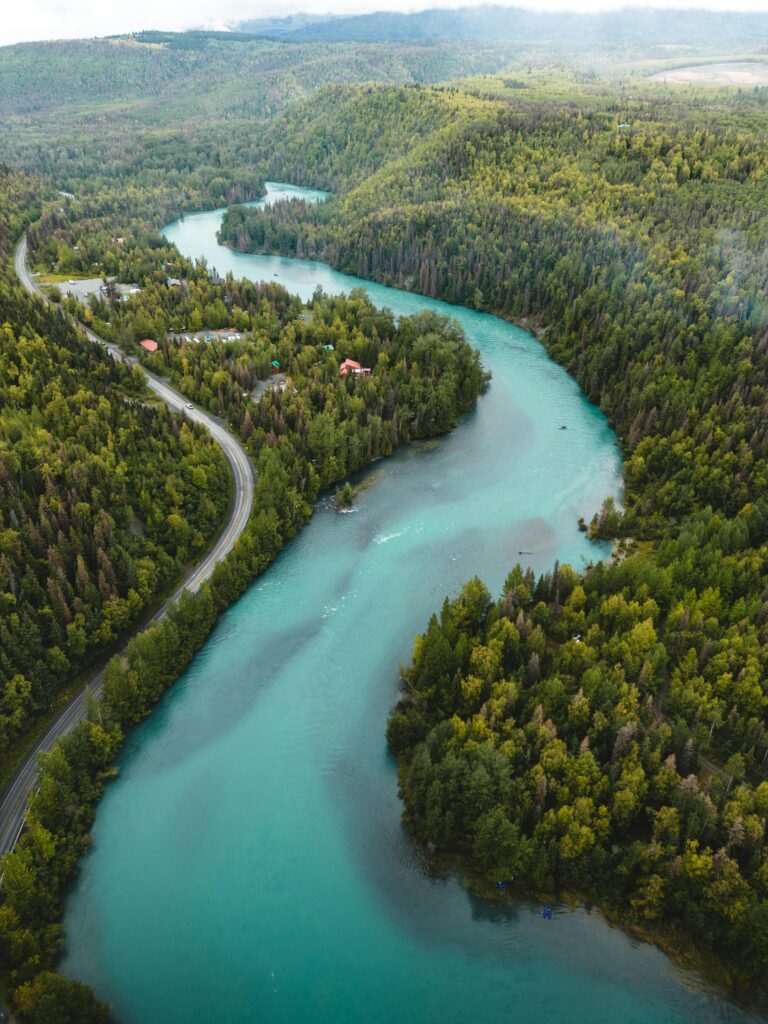
Kenai Peninsula — King Salmon. The Kenai River hosts the world-record king salmon — a 97-pound fish caught in 1985 that still stands. While the Kenai itself is road-accessible, several lodge operations on the upper Kenai system and adjacent drainages offer full-service guided king salmon fishing from mid-May through July in quieter settings. Peninsula lodges often combine king salmon access with silver salmon in August and September. Unlike Bristol Bay, Kenai Peninsula lodges are close enough to Anchorage to reach by ground or short flight, making them a reasonable option for shorter stays.
Southeast Alaska — Steelhead and Halibut. Southeast Alaska’s rainforest coast offers a fundamentally different lodge experience. The primary species are winter and summer steelhead in remote river systems accessible only by floatplane, plus offshore halibut fishing from coastal lodges. Several Sitka-based and Prince of Wales Island lodges specialize in combination halibut/salmon packages that blend saltwater and freshwater fishing in the same week. Steelhead lodges in the Tongass are among the most exclusive in Alaska — permit lottery systems control some of the best rivers, and lodge-based access may be one of the only practical ways to fish them.
What It Costs
Remote fishing lodge pricing in Alaska spans a wide range. The broad structure:
- Entry-tier lodges ($500–$900/person/night, all-inclusive): Typically smaller, owner-operated operations with shared cabins, a single skiff, and limited water variety. Quality varies significantly.
- Mid-range lodges ($900–$1,500/person/night): The functional sweet spot for most serious visiting anglers — multiple guides, private or semi-private cabins, consistent quality, and access to multiple water systems.
- Premium lodges ($1,500–$3,000+/person/night): Top-tier operations with private guide ratios of one guide per two anglers or better, helicopter access to additional waters, gourmet meals, and accommodations equivalent to upscale wilderness resorts.
A standard 5-night mid-range Bristol Bay lodge package runs $5,000–$7,500 per person before floatplane transfers. Add roundtrip charter air from Anchorage ($400–$800) and fish processing/shipping ($300–$600 for a typical week’s catch) and a quality fly-in lodge trip budgets at $6,000–$9,000 per person all-in. Groups of four sharing a guided skiff typically represent the best value per person.
How Far in Advance to Book
The booking timeline for Alaska’s top remote lodges is not a casual consideration. Lodges at the premier tier — particularly Bristol Bay operations with peak July sockeye dates or trophy rainbow weeks in September — are typically booked 12–24 months in advance. Some lodges have multi-year waitlists for specific peak dates. Planning a 2026 trip means initiating conversations with lodges in early-to-mid 2025 at the latest for desirable weeks; peak July dates at well-regarded lodges may already be filled for 2026 by the time you read this.
Mid-range lodges and shoulder-season dates (early June or late September) typically have shorter booking windows of 6–12 months. If flexibility on destination and timing is possible, good lodge experiences can be booked 3–6 months out by working with a fishing travel specialist who tracks inventory across multiple operations. Outfitters like Alaska Fishing Adventures can help match trip parameters to available lodge inventory without the overhead of contacting dozens of individual lodges directly.
What to Pack
Floatplane weight limits are real and enforced. Most bush planes serving remote lodges impose strict luggage limits — commonly 40–50 pounds of checked gear per person, including fishing equipment. This changes packing strategy significantly from a normal fishing trip.
Essentials that must fit within the weight limit: waders and wading boots (heaviest items), rain jacket and rain pants (non-negotiable in any Alaska drainage), layering system for 40°F–65°F day temperatures, polarized sunglasses, and personal medications. Most lodges provide rods, reels, and flies, so bringing personal gear is a choice rather than a requirement — though dedicated anglers typically prefer their own tackle.
For gear preparation before departure, Big Ray’s Outdoor Gear in Anchorage carries a full range of Alaska fishing and outdoor gear and can fill any packing gaps before your floatplane connection. The store is a reliable final stop for forgotten items or last-minute additions that couldn’t be shipped.
Questions to Ask When Comparing Lodges
The lodge selection process benefits from direct comparison on a few specific points that brochures often don’t address clearly:
- Guide-to-angler ratio: One guide per two anglers is standard; one guide per angler is premium. The difference in on-water instruction and fish-finding is significant.
- Guided vs. unguided water: Does the lodge have exclusive or semi-exclusive access to certain waters, or are guests fishing the same water as other lodges and independent anglers?
- Catch-and-release policy: Many top lodges operate strict or near-strict catch-and-release programs for native rainbow trout while allowing retention of salmon. Confirm this aligns with your priorities.
- Fish processing and shipping: Can the lodge vacuum-pack and freeze your catch? Do they coordinate frozen fish shipping to your home address, and what does it cost? A week’s worth of salmon fillet, shipped home properly, is a significant part of the value proposition for many anglers.
- Cancelation and weather policy: Remote Alaska travel is weather-dependent. What happens if floatplane access is delayed by weather? Does the lodge credit days lost to weather?
The answers to these questions reveal as much about a lodge’s operational quality as any number of testimonials or photography.
Photo: Tomáš Malík / Pexels



No comments yet.