
Anchorage Winter Activities 2026-2027: Skiing, Dog Mushing and More
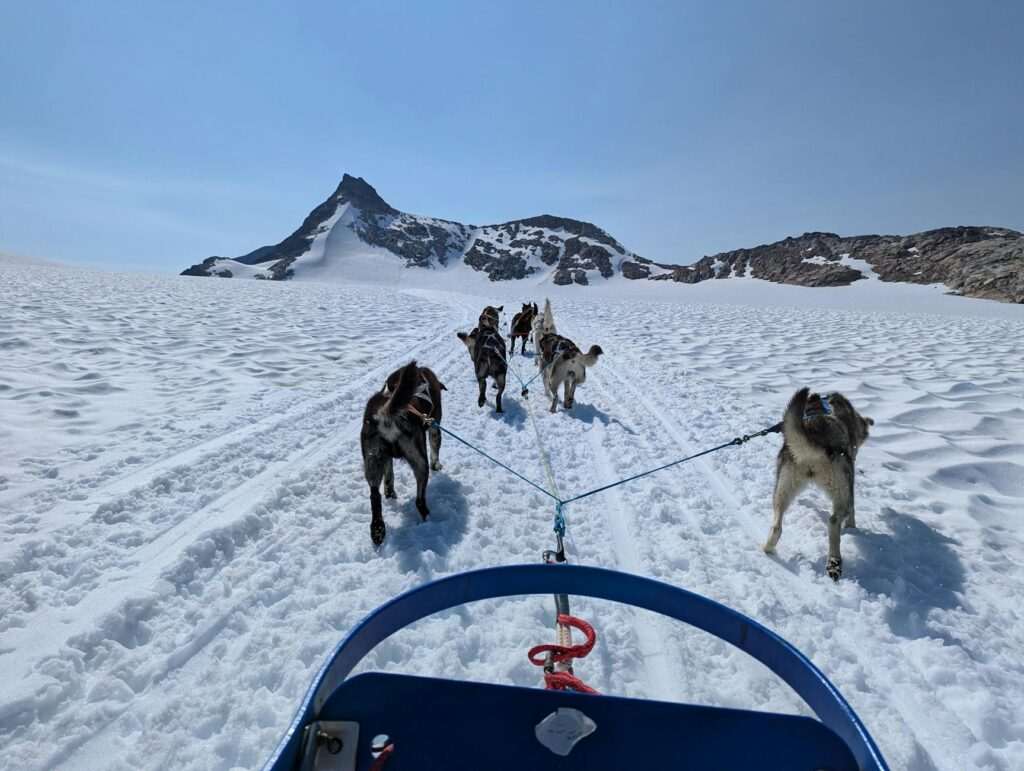
Anchorage in winter is a different city — quieter, darker, colder, and in many ways more distinctly Alaskan than the packed summer season. The Chugach Mountains turn white by October, Kincaid Park becomes a Nordic ski venue, the aurora appears on clear nights, and in early March the Iditarod Trail Sled Dog Race starts in downtown Anchorage before the mushers head north toward Nome. For visitors willing to layer up, Anchorage in winter delivers experiences that simply don’t exist in summer. Here’s what to do from October through March in 2026–2027.
Alyeska Resort: Skiing and Snowboarding
Alyeska Resort in Girdwood — 40 miles southeast of Anchorage on the Seward Highway — is the primary alpine ski destination for the region and the only full-service ski resort in Southcentral Alaska. The mountain rises 2,500 vertical feet from the valley floor, with 76 runs covering beginner terrain at the base to double-black ridge lines. The tram runs from mid-mountain to the 2,750-foot summit for non-skiers wanting the summit views and the Seven Glaciers restaurant at the top.
Day pass rates for the 2026–27 season run approximately $99–119 per adult, with discounts for children and seniors. Alyeska typically opens in late November and operates through mid-April, snow conditions permitting. Night skiing runs on weekends through the season on a section of lit terrain. The resort village at the base has lodging, rentals, a ski school, and restaurants — it operates as a self-contained destination and many Anchorage visitors combine a ski day at Alyeska with a Girdwood night. Our Girdwood day trip guide covers the village, dining, and non-ski activities at the base.
Cross-Country Skiing: Kincaid Park and Russian Jack Springs
Kincaid Park on Anchorage’s southwest edge maintains 40+ miles of groomed cross-country ski trails through the winter — the same trail network that hosts national-level skiing events and feeds into the Tony Knowles Coastal Trail at its north end. Skiing is free at Kincaid, though the summer chalet is closed off-season. The trails range from gentle beginner loops through spruce forest to challenging terrain on the coastal bluff sections. Fat bikers share some trails; skiers have dedicated corridors. Peak grooming runs December through February; March conditions vary with freeze-thaw cycles.
Russian Jack Springs Park in midtown Anchorage has a smaller groomed Nordic trail network ideal for beginners and visitors who want accessible cross-country skiing close to downtown hotels. The park also has a small ski lodge with warming facilities open on winter weekends. The Anchorage Nordic Ski Association maintains current grooming reports for both parks online — worth checking before driving out.
Snowshoeing Flattop Mountain
Flattop Mountain’s summer hiking trail becomes a snowshoeing route from November through April, and the winter ascent is a different experience from the summer hike — quieter, with snow-covered terrain and views that extend further on cold clear days when atmospheric haze is minimal. The lower trail to the sub-summit bowl is manageable in snowshoes for intermediate-fitness visitors; the upper scramble section to the true summit requires caution on packed snow and is recommended only with experience on winter terrain. Microspikes are an alternative to snowshoes on packed-out trails in late winter. See our Flattop Mountain guide for trailhead access and parking at Glen Alps. The Glen Alps lot still charges the $5 state park fee in winter.
Aurora Viewing
Anchorage’s latitude (61°N) puts it within the aurora oval during periods of solar activity — from September through March, clear nights with active geomagnetic conditions produce displays visible even within the city on dark nights. The best nearby viewing requires escaping the city’s light dome:
- Kincaid Park (southwest): The coastal section of Kincaid facing the dark western horizon of Cook Inlet gives minimal light pollution and a full sky view.
- Eklutna Flats (Glenn Highway north): 26 miles from downtown, the flat wetlands give a wide open sky above dark terrain with the city glow behind you.
- Turnagain Arm (Seward Highway south): Pull-offs along the arm face south with the dark inlet below and minimal obstructions — good for wide aurora photography.
Forecast apps recommended for Anchorage aurora watching: Space Weather (NOAA), My Aurora Forecast, and the University of Alaska Fairbanks Geophysical Institute’s aurora forecast. The standard rule: KP index 3 or higher with clear skies above Anchorage typically produces visible aurora at ground level. The peak display windows are usually midnight through 2 a.m. Dress for temperatures 15–25°F below daytime highs — wind chill on the inlet bluffs accelerates heat loss significantly.
Iditarod Trail Sled Dog Race Start
The ceremonial start of the Iditarod Trail Sled Dog Race runs through downtown Anchorage on the first Saturday of March — a downtown event that draws crowds along 4th Avenue to watch mushers and their teams depart for Nome. The ceremonial start is a public street event, free to watch from the sidewalk. Teams depart the start line in Centennial Park at 2-minute intervals; the procession runs through downtown to the southern checkpoint. It’s a genuine Alaska cultural event — the dogs are impressive at close range, and the crowd is a mix of Anchorage locals and serious Iditarod followers from around the world.
The official restart (where race time actually begins) happens the following day in Willow, 75 miles north — accessible via the Parks Highway for visitors who want to see the real competitive start. Our sled dog kennel tours guide covers kennel visits near Anchorage for visitors who want close contact with sled dog teams outside of race season.
Ice Skating at Westchester Lagoon
Westchester Lagoon freezes reliably by late December and is maintained as a skating surface by the Municipality of Anchorage through February. The lagoon’s large surface accommodates recreational skaters and hockey players simultaneously, with plowed lanes around the perimeter and an open center area. Skating at the lagoon is free; no skate rentals available on-site. The adjacent parking lot off West 15th Avenue provides free vehicle access. The lagoon sits at Mile 1.5 on the Tony Knowles Coastal Trail — a winter walk on the packed-snow trail surface to the lagoon and back from downtown is a good combination with skating.
Winter Wildlife: Moose and Eagles
Winter concentrates Anchorage’s urban moose in ways summer doesn’t. With Chugach snowpack pushing moose down to lower elevations, they browse willows in neighborhood parks, along the greenbelt corridors, and in the Campbell Creek riparian zone through midtown. Moose density in urban Anchorage peaks from November through March. They’re most active at dawn and dusk — and frequently encountered on the Coastal Trail’s wooded sections, in the Russian Jack Springs Park area, and in South Anchorage residential neighborhoods. Maintain 50 feet of distance at all times; winter moose with depleted energy reserves can be more reactive than summer animals.
Bald eagles congregate near open water through winter — Ship Creek stays partially unfrozen near the tidal section and holds eagles fishing at the edge of the ice. Potter Marsh and the Campbell Creek estuary are reliable eagle locations through February.
What to Wear
Anchorage winter temperatures typically run 0°F to 25°F from December through February, with periodic cold snaps to -15°F or lower. Wind chill on exposed ridges and the inlet bluffs can push effective temperatures significantly lower. Base layer (wool or synthetic), mid-layer (insulated fleece or puffy), and waterproof/windproof shell is the standard system. Waterproof insulated boots are the single most important item — cold feet end outdoor days quickly. Powder Hound Ski & Bike Shop in Midtown carries fat bike rentals, cross-country ski gear, microspikes, and winter outerwear for visitors who need to gear up on arrival.
Planning Tips
- Drive conditions: Glenn and Seward Highways have studded tire seasons — most rental cars in winter are studded. Confirm tire type when renting.
- Daylight: December solstice gives Anchorage about 5.5 hours of daylight. Plan outdoor activities around a narrow midday window and use the long evenings for aurora watching.
- Hotel availability: Winter is off-peak for most Anchorage hotels — rates drop 30–50% from summer and booking 1–2 weeks ahead is typically adequate.
The Alaska Public Lands Information Center on 4th Avenue maintains current winter trail conditions, aurora forecast links, and Iditarod start schedule information.
For downhill skiing and snowboarding within an hour of the city, Alyeska Ski Resort in Girdwood is Southcentral Alaska’s premier mountain, with 304 inches of annual snowfall and terrain suited to every level.
No comments yet.