
Best Scenic Viewpoints in Anchorage 2026: Overlooks & Panoramas
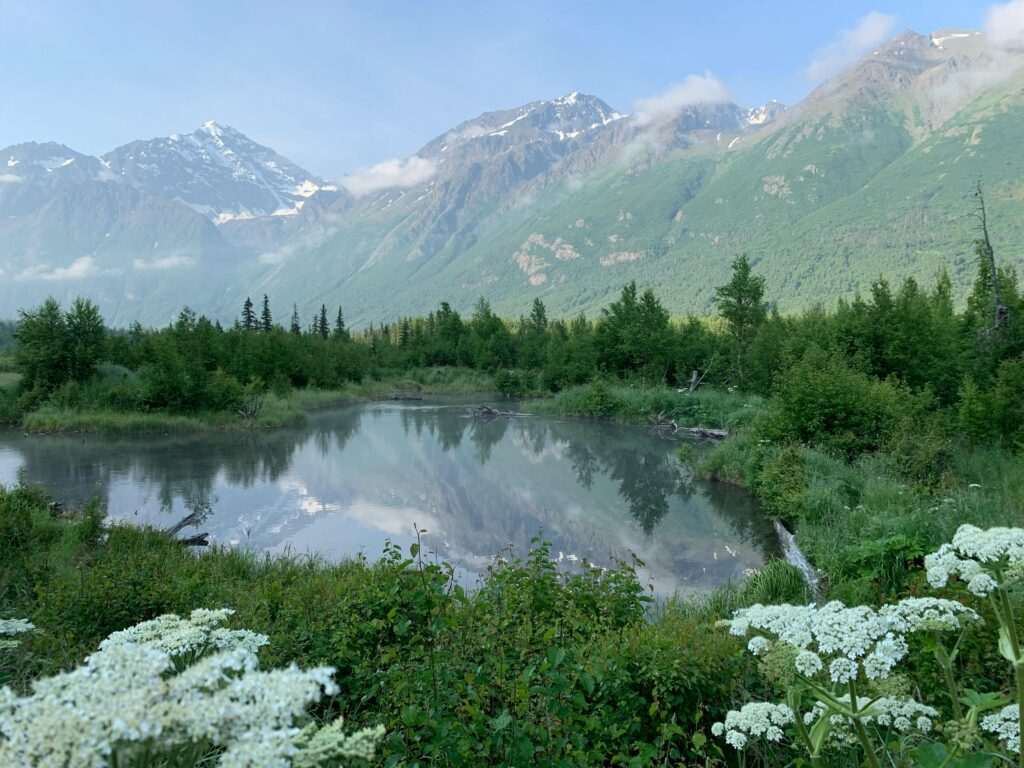
Anchorage has a geographic situation that most cities would kill for: the Alaska Range to the north, the Chugach Mountains rising directly behind the city, and Cook Inlet to the west with Denali visible on clear days 130 miles away. The challenge isn’t finding views — it’s knowing which require a hike and which you can reach in five minutes from your hotel. Here’s a practical guide to the best scenic viewpoints in and around Anchorage in 2026, from drive-up overlooks to summit scrambles.
Glen Alps Overlook — The Classic City View
The Glen Alps trailhead at the end of Upper Huffman Road is the most-photographed viewpoint near Anchorage, and for good reason: from the parking area at 2,100 feet, you look out over the entire Anchorage bowl — the city grid, Cook Inlet, and the Alaska Range on the far horizon — without hiking a step. The view is free (or covered by a State Parks parking pass), and the lot is open from dawn to 10 p.m. in summer.
Glen Alps is also the starting point for Flattop Mountain, the most-climbed peak in Alaska. The 1.3-mile hike to the 3,510-foot summit adds a 360-degree view that includes the Kenai Mountains to the south, the Matanuska-Susitna Valley to the north, and the full sweep of Cook Inlet to the west. Total time: 1.5–2 hours round-trip. The upper portion involves some Class 2–3 scrambling on loose shale — appropriate for reasonably fit hikers who don’t mind exposure.
Earthquake Park — Cook Inlet at Ground Level
Earthquake Park on the western edge of Anchorage sits at the edge of the bluff left by the 1964 Good Friday Earthquake — the largest recorded in North American history at magnitude 9.2 — which dropped this section of shoreline several feet and exposed the now-forested shoreline terrain visible below. The park has interpretive panels covering the earthquake’s impact, but the main draw for visitors is the Cook Inlet view: open water to the west, Sleeping Lady (Mount Susitna) across the inlet, and on clear days, Denali filling the northern skyline. Free, with a parking area. No hike required.
Tony Knowles Coastal Trail
The 11-mile coastal trail runs from downtown Anchorage to Kincaid Park along the Cook Inlet bluff, passing Earthquake Park, Point Woronzof, and several unmarked overlooks with open inlet views. The trail is paved and flat, so the viewpoints along it are accessible to cyclists and families with strollers as well as hikers. The best western sky views from the trail come in the evening, when the summer sun over Cook Inlet produces the kind of light that makes Anchorage feel like a genuinely spectacular place to be. Our bear viewing near Anchorage guide covers Point Woronzof specifically as a beluga whale watching spot when the tide is right.
Flattop Mountain Summit
For visitors willing to put in the work, Flattop is the benchmark Anchorage viewpoint. The summit view differs from the Glen Alps parking area primarily in adding the south-facing Kenai Peninsula peaks and removing the intermediate ridgeline that blocks part of the inlet view from below. In good July light with clear air, you can see Denali to the north, the Alaska Range arc to the west, the Chugach Mountains surrounding you on three sides, and Cook Inlet below. It’s a relatively short hike with an outsized payoff.
Anchorage Hillside — Drive-Up Skyline Views
The Hillside neighborhood east of the city has several residential streets that dead-end at informal pullouts with city-and-inlet views that most visitors never find. The roads off Toilsome Hill Drive and O’Malley Road above the main residential areas give good western exposure without the Glen Alps parking congestion on summer weekend mornings. These aren’t official viewpoints — they’re the places locals park to watch the aurora or the sunset — but they’re accessible and worth knowing.
Turnagain Arm Pullouts — Highway Views
The Seward Highway south of Anchorage runs along the base of the Chugach Mountains above Turnagain Arm, with multiple formal and informal pullouts giving views across the arm to the Kenai Mountains on the far side. Beluga Point at Mile 110 is the signed viewpoint, but McHugh Creek, Bird Point, and Windy Corner all offer exceptional scenery and often fewer cars than Beluga Point. Our Turnagain Arm bore tide guide covers the pullout timing for bore tide viewing along this stretch — the same spots serve as wildlife and mountain views at other times.
Point Woronzof — Sunsets and Inlet Panorama
Point Woronzof, off the coastal trail between downtown and Kincaid Park, has a dedicated parking area and a westward-facing bluff view that positions you directly across from Mount Susitna. The inlet view here includes more open water than the downtown overlooks, making it the preferred aurora viewing spot for locals on nights when the northern lights appear over the water. It’s also a reliable sunset location from June through August when the sun sets late and low over the inlet.
Planning Your Viewpoint Day
The Alaska Public Lands Information Center in downtown Anchorage has Chugach State Park maps and can advise on current trail conditions for Flattop and the Glen Alps corridor. Far North Bicentennial Park on the east side of the city connects to the Chugach State Park trail network and gives access to a different set of hillside viewpoints without the Glen Alps crowd. For those combining viewpoint-seeking with cycling, Downtown Bicycle Rental puts you on the coastal trail with an unobstructed Cook Inlet view from the first mile.
Photo by Felix Mittermeier on Pexels.



No comments yet.