
Anchorage Museum at Rasmuson Center 2026 — Alaska History, Art & What to Expect
Most visitors to Anchorage plan their trip around the landscape — the mountains, the glaciers, the wildlife. The Anchorage Museum at Rasmuson Center offers something different: a rigorous, well-funded institutional answer to the question of what Alaska actually is and how it came to be. Located at 625 C Street in downtown Anchorage, the museum is the largest in Alaska, occupying a city block with a 2009 expansion that significantly enlarged its galleries and added the natural light-filled architecture that now defines the building’s character. It is a genuinely world-class facility by any standard, and it is one of the few places in Alaska where the history, art, and culture of the state are presented with the depth and care that the subject deserves. Plan at least two hours; three is better.
The Building and Orientation
The Anchorage Museum’s 2009 expansion, designed by David Chipperfield Architects, more than doubled the museum’s footprint and introduced the glass facade and skylit atrium that now anchor the visitor experience. The building’s interior is open, bright, and navigable — there is none of the labyrinthine disorientation that characterizes older museum layouts. The main entrance on C Street deposits visitors into a lobby with clear sightlines to the primary gallery wings, the café, and the gift shop. Free WiFi is available throughout the building. The café, operated by a local hospitality partner, serves coffee, light lunches, and pastries and is a practical midday stop whether or not you are visiting the galleries.
The museum is open Tuesday through Sunday, typically 9 AM to 6 PM in summer (late May through September); hours contract in the off-season. Verify current hours at anchoragemuseum.org before your visit, as holiday and shoulder-season schedules vary. Admission runs approximately $20 for adults, $15 for seniors and students, with children under 12 admitted free. Alaska residents receive discounted admission with proof of residency. The museum participates in the Blue Star Museums program offering free admission to active-duty military families in summer.
Alaska History Gallery
The Alaska History Gallery is the museum’s foundational collection and the most comprehensive presentation of Alaska’s history available to the public in any single location. The gallery moves chronologically from pre-contact Alaska Native cultures through the Russian colonial period, the 1867 American purchase from Russia (famously called Seward’s Folly at the time), the Klondike Gold Rush and its transformation of Alaska’s economy and population, World War II’s strategic role of Alaska as the Pacific Northwest’s defense front, the postwar push for statehood achieved in 1959, and the transformative discovery of oil at Prudhoe Bay in 1968 and the construction of the Trans-Alaska Pipeline.
The presentation is honest about difficult history — the impact of colonization on Alaska Native peoples, the Japanese occupation of the Aleutian Islands during WWII, and the ways in which resource extraction shaped Alaska’s development — without being polemical. Objects in the collection include tools, clothing, documents, photographs, and artifacts that ground the narrative in material reality rather than text alone. For a visitor who arrived in Alaska knowing little of its history, the History Gallery provides context that significantly deepens every subsequent experience in the state. The Aleutian Campaign exhibit — covering the only World War II battle fought on North American soil, when Japanese forces occupied Attu and Kiska Islands in 1942-43 and American forces mounted costly campaigns to retake them — is particularly well-presented and largely unknown to mainland American visitors. The oil discovery and pipeline section covers the logistical and political dimensions of one of the largest construction projects in history, including the environmental debates and the Native land claims settlement that preceded pipeline approval.
Art of the North
The Art of the North galleries hold the museum’s Alaska and circumpolar art collection, ranging from 19th-century expeditionary landscapes through the work of contemporary Alaska artists working in painting, sculpture, printmaking, and mixed media. The collection’s anchor is the work of Sydney Laurence (1865-1940), who painted Denali — then called Mount McKinley — more than any other artist in history and whose atmospheric oils of Alaska’s landscape established the visual vocabulary through which the state was understood by the outside world for much of the 20th century. Seeing Laurence’s large-format Denali canvases in person, where the scale and paint surface are fully visible, is different from any reproduction.
The circumpolar art holdings include work from Indigenous artists across Alaska, Canada, Greenland, and Russia, providing a comparative view of Arctic cultural expression that is rarely assembled in a single institution. Contemporary Alaska artists represented in the collection include painters, sculptors, and mixed-media artists whose work engages with Alaska’s landscape, environment, and cultural history. The Art of the North galleries are a significant draw for visitors with art interests and provide a cultural dimension to Alaska that is entirely absent from the outdoor tourism itinerary. Alaska’s art history is less known outside the state than it deserves: the late 19th and early 20th century produced a generation of landscape painters working in extraordinary and largely undocumented territory, and the museum’s collection is the most accessible place to engage with that tradition alongside the contemporary work it influenced.
Smithsonian Arctic Studies Center
The Smithsonian Arctic Studies Center at the Anchorage Museum is a partnership between the museum and the Smithsonian Institution that makes Alaska Native cultural objects from the Smithsonian’s Washington collections available in Alaska — often for the first time since their original collection in the 19th and early 20th centuries. The center holds approximately 600 objects drawn from Smithsonian holdings, displayed with context provided by Alaska Native community members who participated in their curation and interpretation.
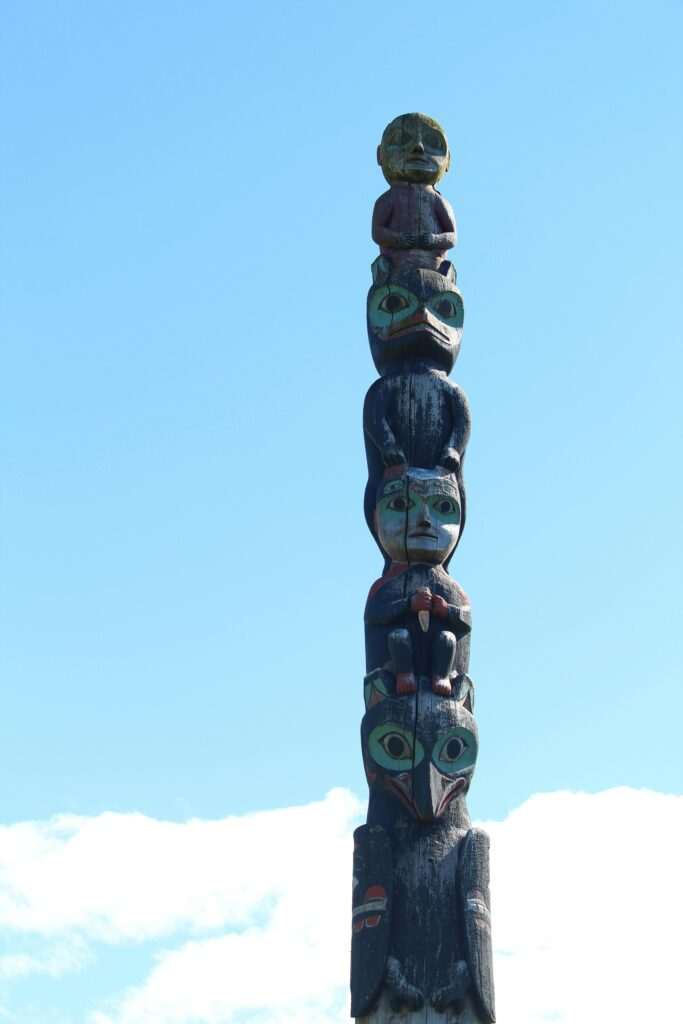
This is one of the most significant collections of Alaska Native material culture on public display anywhere, and it is presented with a level of community involvement and interpretive care that distinguishes it from older ethnographic displays. Masks, tools, clothing, ceremonial objects, and everyday items from Yup’ik, Inupiaq, Athabascan, Aleut, Tlingit, Haida, and Tsimshian cultures are represented. The center is not a satellite exhibit but a substantive scholarly and community institution housed within the museum; visiting it is different from seeing objects in a conventional ethnographic gallery because the interpretive framework is partly written from the inside. The digital access component allows visitors to explore additional Smithsonian Alaska holdings not on physical display. The center also conducts active repatriation work with Alaska Native communities — its role is ongoing scholarly and cultural engagement, not simply display.
Discovery Center and Family Programming
The Discovery Center occupies a dedicated section of the museum with hands-on science exhibits oriented toward children and families. Exhibits cover Alaska’s natural systems — geology, ecology, weather, wildlife — with interactive components that are genuinely engaging for younger visitors. The Discovery Center is the museum’s primary draw for families with children under 12 and is well-maintained and thoughtfully designed. It shares the building but operates somewhat separately from the adult gallery wings, allowing families to route their visit differently from solo or adult visitors.
The museum runs a regular schedule of public programming — lectures, film screenings, curator talks, community events — particularly during the summer season. Check the museum’s event calendar on its website before your visit; programming is often worth building your schedule around if timing allows.
Special Exhibitions
The Anchorage Museum maintains an active special exhibitions program, rotating major shows through its temporary gallery spaces. Past special exhibitions have addressed topics ranging from Alaska environmental change and Indigenous cultural resilience to international art movements with Alaska connections. Check anchoragemuseum.org for the current exhibition schedule, as specific shows cannot be predicted in advance. The special exhibition galleries are included in general admission and are typically the most visually arresting spaces in the museum during any given season.
The Gift Shop
The museum gift shop is one of the best sources for quality Alaska Native art reproductions, books, and locally made goods in Anchorage. The shop carries a deliberately curated selection that leans toward original and limited-edition works by Alaska artists, quality reproductions of objects in the collection, and a strong Alaska-focused book section covering history, natural history, art, and literature. It is one of the few places in Anchorage where souvenir shopping produces items of genuine aesthetic and cultural value rather than mass-produced novelty goods. Budget extra time if you are interested in books or original art. The Alaska-focused bibliography section is one of the strongest in any retail setting in the state — titles covering Alaska history, natural science, Indigenous culture, and literature are well-represented and include small-press publications not available in general bookstores.
Combining the Museum with Downtown Anchorage
The Anchorage Museum’s location at 625 C Street puts it within easy walking distance of most downtown hotels, the Saturday Market (operating weekends from May through September at 3rd Avenue and E Street, two blocks away), and the Tony Knowles Coastal Trail, accessible from Elderberry Park at the western end of 5th Avenue. A full downtown Anchorage day might combine the museum in the morning, lunch at the museum café or a nearby restaurant, the Saturday Market if timing allows, and a late-afternoon walk on the Coastal Trail. The Imaginarium Discovery Center, a separate children’s science facility within the museum building, can extend a family visit by an additional hour or more. The museum validates parking in several nearby garages; ask at the front desk. Bicycle parking is available outside the C Street entrance. The museum is fully ADA-accessible throughout all gallery levels.
The Anchorage Museum is where Alaska stops being scenery and starts being a place with a history, a politics, a set of contested meanings, and a body of art that has been trying to articulate all of that for over a century. It is, in the best sense, a museum that takes its subject seriously.
No comments yet.