
Glassblowing Classes in Anchorage 2026 — Alaska Art Studios & Aurora-Themed Glass
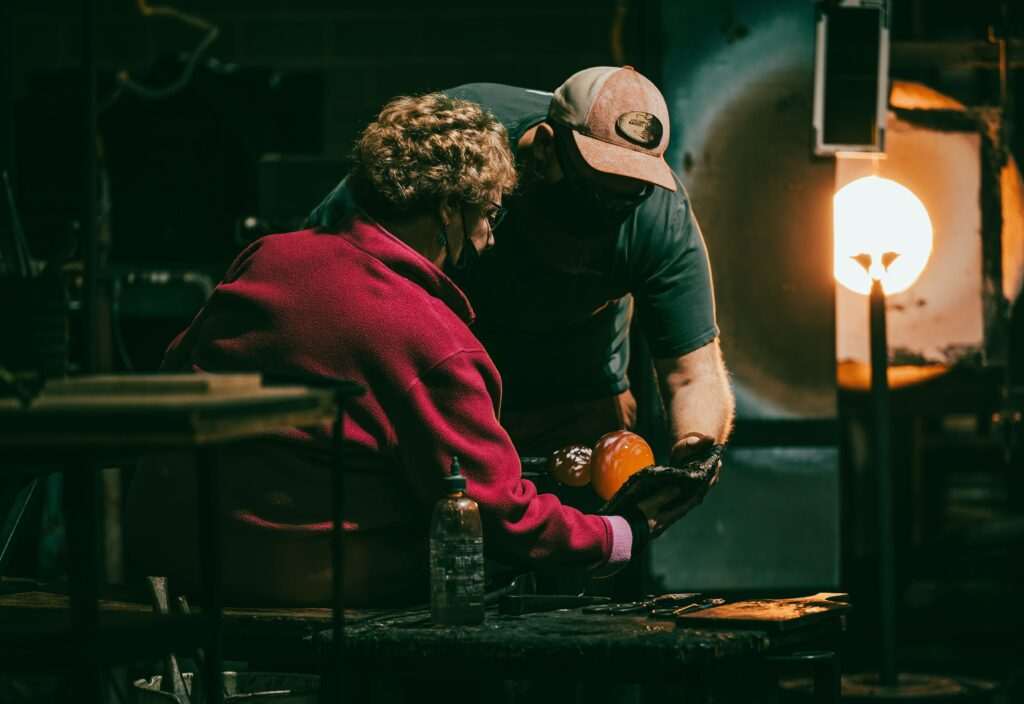
Glassblowing is one of those activities that sounds intimidating until you try it. The furnace roars at 2,000 degrees, the molten glass glows orange on the end of the blowpipe, and the instructor explains that you have about 90 seconds before it cools too much to work. Then you blow, slowly and steadily, and watch a bubble form in the glass — something you made with air from your own lungs in material that was liquid moments ago. It is immediately, viscerally satisfying in a way that almost no other craft activity matches. In Anchorage, a handful of glass studios offer exactly this experience to beginners, typically in a one-to-two hour session that ends with a finished piece to take home. For visitors looking for a creative Alaska souvenir that is genuinely one of a kind, a glassblowing class delivers something that no gift shop can replicate.
Glassblowing Studios in Anchorage
Anchorage supports a small but serious glass art community. The city’s arts scene has grown steadily over the past two decades, and glassblowing — one of the most equipment-intensive studio crafts — has found a home in several dedicated facilities that serve both serious artists and curious first-timers.
Fireside Studio Glass
Fireside Studio Glass is one of Anchorage’s most established glassblowing operations, offering both drop-in beginner sessions and structured classes for advancing students. Beginner sessions run approximately 90 minutes to two hours and guide participants through the fundamental sequence: gathering molten glass from the furnace onto a blowpipe, inflating the gather, shaping the form with tools and gravity, adding color if desired, and transferring the finished piece to the annealing oven for slow cooling. Participants leave with a completed vessel — typically a small bowl, ornament, or paperweight — wrapped and ready to travel.
The studio recommends booking beginner sessions at least a week in advance; weekend slots fill quickly, particularly in summer when visitor traffic peaks. Wear natural fiber clothing (synthetics can catch sparks) and closed-toe shoes. The studio provides safety glasses and instruction; no prior experience is required or expected.
Alaska Glass Art Guild
The Alaska Glass Art Guild connects visitors with member artists who open their studios periodically for public workshops and open-house events. Guild studios vary in size and specialty — some focus on blown glass vessels, others on kiln-formed work (fused and slumped glass), and a few specialize in flamework (working with smaller glass tubes over a bench torch). Guild events are sometimes listed on the Anchorage arts calendar and represent an opportunity to meet working Alaska artists in their studios rather than in a commercial workshop setting.
Check the guild’s website or local arts listings for current open-studio schedules, as they vary by artist availability and season. Summer and fall tend to see more public events; winter schedules are lighter but sometimes include holiday-themed glass ornament workshops that are particularly popular.
What a Beginner Glassblowing Session Involves
Most Anchorage glass studios follow a similar format for beginner sessions. Understanding the sequence in advance makes the experience less overwhelming when you are standing in front of a 2,000-degree furnace for the first time.
The Gather
The session begins with the instructor demonstrating a gather — inserting the end of a long metal blowpipe into the furnace’s glory hole and rotating it steadily to collect a cylinder of molten glass. The glass at working temperature looks like thick orange honey and behaves similarly: it flows and sags if the pipe stops rotating. Participants do their own gather under instructor supervision, which immediately teaches the importance of constant rotation.
Blowing and Shaping
Once a gather is on the pipe, the instructor shows how to blow a bubble — sealing one end of the pipe with your thumb, bringing the other end to your lips, and blowing with measured, consistent pressure. Too hard and the bubble collapses; too soft and nothing happens. Most beginners feel the right pressure within one or two attempts. The instructor then guides shaping: using wet wooden tools, gravity, and reheating sequences to push the form toward the intended shape.
Color and Finishing
Adding color involves rolling the hot gather over crushed colored glass (called frit) or applying colored glass rods to the surface. The colors change dramatically as the glass cools from orange-hot to room temperature — what looks like a muddy brown-green at working heat often reveals as deep teal or forest green once cold. This transformation is one of the most satisfying surprises of the glassblowing process, and it is particularly relevant to Alaska-themed work: aurora colors — greens, purples, and electric blues — are a specialty of several Anchorage studios that have developed palettes inspired by the northern lights.
Annealing
Finished pieces go directly into an annealing oven — a kiln held at around 900°F — to cool slowly and evenly over 12 to 24 hours. Rapid cooling causes thermal stress fractures that can shatter the piece days later. This means participants cannot take their piece home on the same day in most cases; studios arrange pickup the following day or ship finished pieces directly to a home address, which is useful for visitors who are moving on from Anchorage.
Alaska-Themed Glass Art
Alaska’s natural light environment makes it one of the most compelling subjects for glass art. The northern lights’ greens and purples translate remarkably well into glass color combinations — the same light-refracting properties that make aurora borealis visible in the night sky give glass pieces an inner luminosity that photographs poorly but is stunning in person. Several Anchorage studios have developed signature aurora-palette work that has become a recognizable Alaska glass art genre.
Midnight sun themes — warm amber, gold, and rose glass colors referencing the long summer evening light over Cook Inlet — are another common Anchorage studio specialty. Birch trees rendered in white and silver glass, salmon in orange and red, and abstract representations of the Alaska Range in cool blue-grey tones round out the palette of Alaska-inspired glass work available in Anchorage studios. For visitors who want to take home something distinctive from Alaska, a piece created in a local studio — whether made by your own hands in a workshop or purchased from a gallery showing professional work — connects to the place in a way that commercial souvenir items cannot.
Gallery Sales and Open Studio Events
Anchorage’s glass art studios typically maintain gallery spaces alongside their working facilities where finished work is available for purchase. Prices range from $25–$50 for small ornaments and paperweights to several hundred dollars for larger blown vessels and sculptural pieces. Gallery hours are often linked to workshop schedules rather than conventional retail hours — call ahead to confirm the gallery is open before visiting.
Several Anchorage studios participate in the annual First Friday art walk, a monthly evening event that opens galleries and studios citywide to the public. First Friday events in December and November often feature glassblowing demonstrations and holiday-themed pieces that draw significant crowds. Check the Anchorage arts district calendar for current First Friday programming.
Combining Glassblowing with Other Anchorage Activities
A morning glassblowing session — most studios schedule beginner sessions at 10 or 11 a.m. — leaves the afternoon open for outdoor exploration. From downtown Anchorage, the Tony Knowles Coastal Trail is a 15-minute walk from most studio locations and provides 11 miles of paved coastal path for cycling, running, or walking along Cook Inlet. The contrast of a morning spent working with fire and molten glass followed by an afternoon on a coastal trail above the inlet is a quintessentially Anchorage combination of indoor craft and outdoor landscape.
For visitors combining an arts-focused Anchorage day with wildlife viewing, Alaska Wildlife Conservation Center near Portage, about 50 miles south, offers a half-day add-on that pairs naturally with an afternoon departure after a morning glass session. The center’s brown bears, muskox, and bison are viewable at close range from boardwalk paths — a different kind of Alaska handcraft entirely, but one that fills the same instinct for genuine, hands-on engagement with the place.
For visitors who want a longer outdoor adventure to frame a midday glassblowing class, Chugach State Park trailheads are accessible within 20 minutes of downtown Anchorage. A morning hike on the lower Flattop Mountain or Near Point trails followed by a 2 p.m. glass session makes an excellent summer day that covers both physical and creative dimensions of what Anchorage offers.
Frequently Asked Questions
Do I need any experience to take a glassblowing class in Anchorage? No. Beginner sessions at Anchorage studios are designed for complete first-timers. The instructor guides every step of the process; your only job is to follow instruction and stay calm near the furnace. Most people create a recognizable finished piece on their first session.
How long does a beginner glassblowing session take? Typically 90 minutes to two hours, including orientation, the blowing session itself, and finishing. Add pickup time the next day to collect your annealed piece, or arrange shipping if you are leaving Anchorage before the piece is ready.
What should I wear to a glassblowing class? Natural fiber clothing (cotton, wool, denim) rather than synthetics, which can catch sparks. Closed-toe shoes are required — no sandals or open footwear near furnaces. Avoid loose sleeves. The studio provides safety glasses.
Can children take glassblowing classes in Anchorage? Most studios set a minimum age of 8–10 for beginner sessions, with parental supervision required for younger participants. Some studios offer dedicated family or youth sessions with smaller group sizes and additional instructor oversight. Confirm age requirements directly with the studio when booking.
How much do glassblowing classes cost in Anchorage? Beginner sessions typically run $75–$120 per person as of 2026, depending on the studio and whether you create one or two pieces. This includes all materials, instruction, and use of equipment. Finished pieces are included in the session price at most studios.
No comments yet.