
Anchorage Alaska Weather, Seasons & Climate Guide 2026
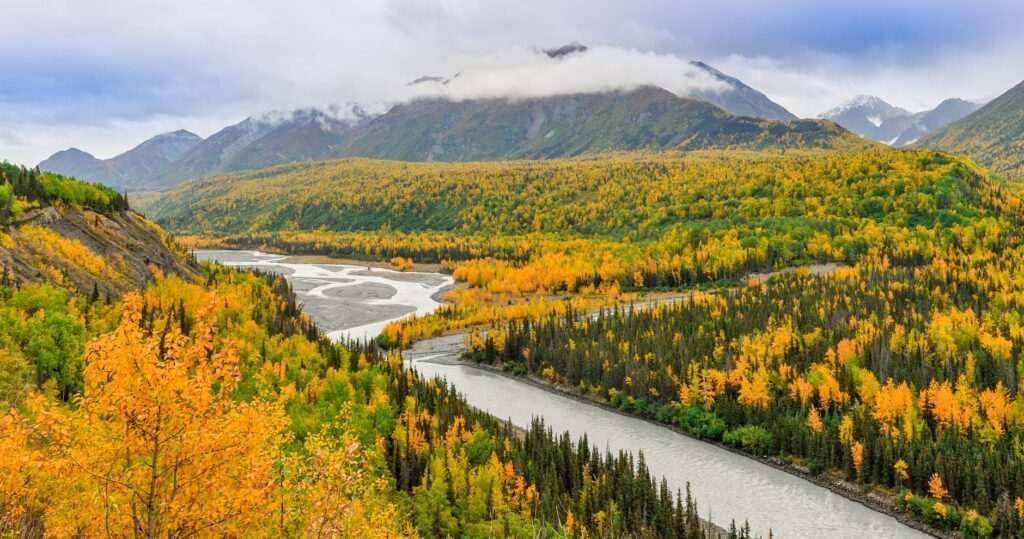
Anchorage sits at 61 degrees north latitude — about the same as Oslo, Norway — in a subarctic climate zone that is considerably milder than that latitude suggests, largely because of the moderating influence of Cook Inlet and the Gulf of Alaska to the south. The result is a city with real seasons, genuine winter cold, a spectacular summer, and weather patterns that reward preparation without requiring the extreme survival gear outsiders sometimes expect. This guide covers what visitors actually need to know about Anchorage’s climate in plain terms, month by month.
Anchorage’s Climate: The Basics
Anchorage receives roughly 16 inches of annual precipitation — less than Seattle, less than New York — but that low number is somewhat misleading, because the city also receives about 75 inches of snow per year. Much of that precipitation falls as snow rather than rain, and the Chugach Mountains to the east create a rain shadow that keeps downtown Anchorage relatively dry compared to communities on the wet side of the range. The dominant climate characteristic visitors notice first isn’t cold or precipitation — it’s the extreme variation in daylight. Anchorage swings from 19.5 hours of daylight at the June solstice to 5.5 hours in late December, a 14-hour swing that shapes daily life more than temperature does.
Month-by-Month Temperature and Conditions
| Month | Avg High | Avg Low | Conditions |
|---|---|---|---|
| January | 22°F (-6°C) | 9°F (-13°C) | Deep winter; heavy snow possible; 6 hrs daylight |
| February | 27°F (-3°C) | 13°F (-11°C) | Cold and stable; best aurora conditions; Fur Rondy festival |
| March | 35°F (2°C) | 19°F (-7°C) | Warming slowly; Iditarod start; spring skiing |
| April | 46°F (8°C) | 28°F (-2°C) | Breakup begins; mud season; migratory birds return |
| May | 57°F (14°C) | 38°F (3°C) | Green-up; wildflowers; daylight extending rapidly |
| June | 65°F (18°C) | 47°F (8°C) | Midnight sun peak; warmest days; hiking season opens |
| July | 66°F (19°C) | 50°F (10°C) | Peak summer; driest month; salmon runs begin |
| August | 63°F (17°C) | 47°F (8°C) | Summer winds down; first hints of fall color by late month |
| September | 52°F (11°C) | 37°F (3°C) | Fall foliage peak; aurora returns; first snowfall possible |
| October | 37°F (3°C) | 24°F (-4°C) | Freeze-up; snowpack establishes; dark evenings return |
| November | 26°F (-3°C) | 14°F (-10°C) | Full winter conditions; skiing begins; 7–8 hrs daylight |
| December | 21°F (-6°C) | 9°F (-13°C) | Coldest month; 5.5 hrs daylight; holiday lights everywhere |
Spring (April–May): Breakup Season
Breakup — the Alaska term for the arrival of spring — is both a meteorological event and a cultural phenomenon. Ice on rivers and lakes breaks apart and flows downstream, creating dramatic scenes at Ship Creek and in the river systems visible from the Glenn Highway. April begins the mud season that gives breakup its less romantic reputation: the ground thaws from the top down, trails become saturated, and the combination of snowmelt and soft ground makes off-trail travel genuinely messy. Roads develop potholes at an accelerated rate; Anchorage residents accept this as an annual rite.
By mid-May the situation reverses dramatically. The city greens up fast — the extended daylight drives plant growth at a pace that startles visitors from temperate climates. Wildflowers appear in the foothills. Migratory birds arrive at Potter Marsh and Westchester Lagoon in significant numbers. Temperatures by late May are genuinely pleasant for outdoor activity: 50–60°F days are common, daylight extends past 10 p.m., and the trails have firmed up enough for hiking. May is one of the less crowded months for tourism, which makes it good value for visitors who can accept some weather variability.
Summer (June–August): The Midnight Sun
Anchorage summer is defined by the midnight sun — the period around the June solstice when the sun sets at 11:42 p.m. and rises again at 4:21 a.m., leaving the sky in continuous twilight that never reaches true darkness. This is simultaneously one of Alaska’s most marketed features and one of its most practically disorienting ones. The immediate effect on visitors is lost time: it is genuinely difficult to know when an evening has ended, and a walk that starts at 9 p.m. can extend three hours without any felt sense of being out “late.” Blackout curtains in hotel rooms are not optional — they are necessities.
Temperatures peak in July, Anchorage’s warmest and driest month, with average highs around 66°F. The warmest days reach into the low 70s; temperatures above 80°F are rare enough that air conditioning is uncommon in older buildings. Evenings cool considerably, and visitors from warmer climates typically underestimate how much jacket a 50°F evening requires when the sun is still high in the sky. Rain falls mainly as short afternoon showers rather than all-day events; July and August together are the wettest summer months. The summer hiking season is at full capacity from late June through August, with trails dry, long daylight hours extending the usable day, and wildlife active throughout. Top options include Flattop Mountain (the most climbed peak in Alaska) and the broader Chugach State Park trail network.
Fall (September–October): Alaska’s Hidden Season
September is the argument for making Anchorage a shoulder-season destination. The Chugach Mountains turn gold and red as birch and cottonwood foliage peaks, creating a backdrop that rivals more famous fall foliage destinations at a fraction of the crowd density. Temperatures are cool but manageable — 40–55°F days — and the return of meaningful darkness (sunset by 8 p.m. in early September, by 7 p.m. by month’s end) means the aurora borealis becomes visible again for the first time since April. September aurora viewing requires clear skies but not extreme cold; it is the most accessible aurora season for visitors who don’t want to deal with January temperatures.
October transitions to winter conditions. First snowfall can occur as early as late September on the Hillside; valley snowpack typically establishes in October or November. By late October, Anchorage is functionally in winter: freezing temperatures overnight, shortening days, and the compressed quality of light that defines the Alaska fall-to-winter transition. Outdoor activity shifts toward winter disciplines — the Kincaid Park Nordic skiing community begins watching the NSAA grooming calendar, ice fishing enthusiasts monitor lake freeze-up, and the Chugach front range accumulates the snowpack that will last until April.
Winter (November–March): Cold, Dark, and Surprisingly Livable
Anchorage winter is cold by lower-48 standards but moderate by Alaska standards. Interior Alaska cities like Fairbanks and Tok see temperatures of -40°F and colder; Anchorage typically bottoms out around -10°F to -20°F on the coldest nights, with the majority of winter days in the 10–30°F range. The Cook Inlet acts as a heat reservoir that prevents Anchorage from experiencing the extreme cold of the Interior. What Anchorage winter does deliver is darkness: at the December solstice, the sun rises at 10:14 a.m. and sets at 3:42 p.m., giving the city just 5 hours and 28 minutes of daylight. Sunrise and sunset both happen while many people are at work, meaning some residents go multiple days without seeing direct sunlight.
The functional response to this is the robust winter culture that Anchorage has developed: the Fur Rendezvous winter carnival in February, the Iditarod sled dog race start in early March, world-class Nordic skiing infrastructure, ice skating, and the social life that concentrates indoors when outdoor conditions aren’t cooperative. Aurora borealis viewing peaks in February and March, when clear nights combine with long darkness and geomagnetically active conditions. February is the optimal month for serious aurora photography — stable cold temperatures, reliable snowpack for foreground interest, and peak darkness combined with rising solar activity in the current solar cycle.
Extreme Weather Events
Anchorage sits in one of the most seismically active regions on earth. The 2018 magnitude 7.1 earthquake — centered near Anchorage and felt strongly across Southcentral Alaska — caused significant infrastructure damage to roads and buildings but no fatalities, a testament to the building codes developed after the 1964 Good Friday earthquake. Earthquakes are a routine part of Anchorage life; small tremors occur regularly and residents treat them as background noise until the shaking becomes notable. Visitors will likely encounter several minor tremors during any extended stay without needing to do anything about them.
Wildfires affect interior Alaska significantly most summers, with smoke reaching Anchorage on days when winds carry it from the Kenai Peninsula or Mat-Su Valley fire zones. The city itself is not typically at wildfire risk, but air quality can deteriorate during active fire seasons. Wind events — particularly the Turnagain Arm bore tide winds and occasional Chinook-like warming events — can bring sudden temperature swings and gusts that affect outdoor plans.
Packing List by Season
Summer (Jun–Aug): Light layers (T-shirts plus a fleece), waterproof shell jacket, waterproof hiking footwear, sunscreen (the sun angle is low but exposure accumulates), sunglasses, blackout sleep mask. Bug repellent for hiking above treeline in June and July.
Fall (Sep–Oct): Warm mid-layers (down or fleece), waterproof shell, hat and gloves, waterproof boots. Aurora viewing requires warm sitting-still clothing — considerably warmer than walking-active clothing.
Winter (Nov–Mar): Insulated base layers (merino wool or synthetic — never cotton), fleece or down mid-layer, insulated waterproof outer layer, insulated waterproof boots rated to -20°F or colder, wool socks, insulated mittens over liner gloves, balaclava or neck gaiter, hat covering ears. Hand and foot warmers are worth carrying. Dress for the temperature you’ll encounter outdoors — building interiors are typically warm, which means dressing in removable layers.
Spring (Apr–May): Waterproof footwear is mandatory for breakup mud conditions. Mid-layers for temperature variability; waterproof shell. Traction devices (Yaktrax or similar) for lingering ice patches in April.
Frequently Asked Questions
Is Anchorage cold in summer?
No — Anchorage summers are genuinely mild. July average highs are around 66°F, with warm days reaching the low 70s. Evenings cool to the 50s, which visitors from warm climates sometimes find unexpectedly brisk. Light layers and a jacket are all that summer days require.
Does it snow in June?
Rarely in the city itself, though snow on the Chugach Mountain peaks is visible throughout June. The last measurable snowfall in Anchorage typically occurs in April or early May. A late-May snowfall is unusual but not unprecedented.
When does it get dark in summer?
Around the June solstice, the sun sets at 11:42 p.m. and the sky never reaches full darkness — just a prolonged twilight. True darkness (astronomical night) doesn’t occur in Anchorage from approximately mid-May through late July. By late August the nights are fully dark again.
What is the best time to see the northern lights in Anchorage?
February and March offer the best combination of darkness, clear skies, and geomagnetic activity. September and October are also excellent — the aurora returns as soon as meaningful darkness does, and temperatures are far more manageable than mid-winter. Aurora viewing requires clear skies; Anchorage’s cloud cover makes it less reliable than Fairbanks, but the Hatcher Pass area north of the city provides higher elevation and clearer skies on many nights.
How does Anchorage compare to the rest of Alaska in terms of weather?
Anchorage is Alaska’s most temperate major city. Fairbanks winters average 20–30°F colder. Southeast Alaska cities like Juneau and Ketchikan receive three to four times Anchorage’s annual precipitation. The Alaska Panhandle has milder winters but dramatically more rain. Anchorage sits in the moderate middle — cold enough to be Alaska, temperate enough to be genuinely livable year-round.
Featured photo by Jonas Robrecht on Pexels.


No comments yet.