
Alaska Pollock 2026: The World’s Most-Eaten Fish & Where to Try It Fresh Near Anchorage
You have almost certainly eaten Alaska Pollock without knowing it. The fish that powers the McDonald’s Filet-O-Fish, Subway’s fish sub, countless frozen fish sticks, and virtually every California roll in the continental United States came from the Bering Sea — possibly landed at Dutch Harbor, processed aboard a factory trawler, and shipped across the Pacific before appearing on your plate under the name “imitation crab” or “whitefish.” Alaska Pollock is the largest single-species fishery in the world by volume. It feeds more people annually than any other fish on the planet. And almost no one visiting Anchorage can identify it. This guide covers what Alaska Pollock actually is, why it ended up inside products that never say “pollock” on the label, whether the fresh version justifies attention, and where to find it in Anchorage if you want to try the world’s most-eaten fish with full awareness of what you’re eating.
What Alaska Pollock Is
Alaska Pollock (Gadus chalcogrammus) belongs to the cod family — the same family as Atlantic cod, Pacific cod, and haddock. Like its relatives, it produces white, flaky flesh with a mild flavor and low fat content that makes it versatile in the kitchen and highly amenable to processing. Unlike salmon, which generates most of its flavor from fat, pollock’s appeal comes from its clean, neutral base that absorbs seasoning and sauce readily.
The fish inhabits the eastern Bering Sea, Aleutian Islands corridor, and Gulf of Alaska in enormous abundance. A mature Alaska Pollock runs 12–18 inches and weighs under 2 lbs — small by Pacific fish standards, but present in volumes that make the individual size largely irrelevant. Biomass surveys have estimated the Bering Sea pollock population at tens of millions of metric tons. The commercial fleet targets these populations in a trawl fishery operating primarily out of Dutch Harbor on Unalaska Island and processing ports in Kodiak, Anchorage, and Seattle.
The World’s Most-Caught Fish
The Alaska Pollock fishery operating in US waters holds the distinction of being the largest single-species commercial fishery on Earth by weight. Annual US harvest runs approximately 1 to 1.4 million metric tons depending on stock assessments and catch limits set by NOAA Fisheries. No other single-species fishery approaches this volume in US waters.
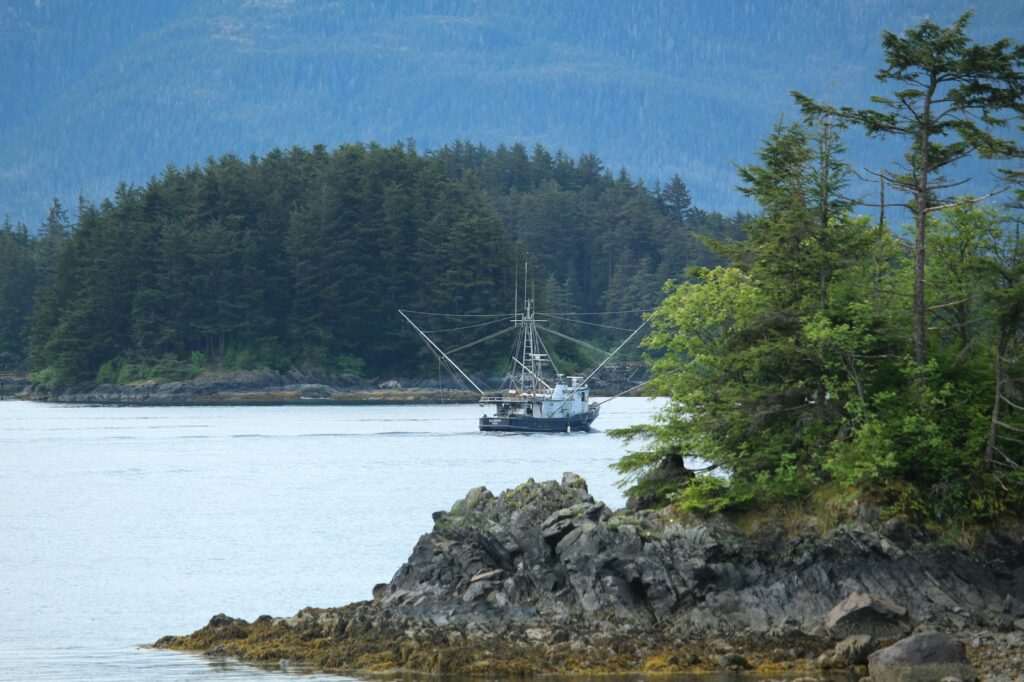
The fishery operates under the Bering Sea and Aleutian Islands (BSAI) groundfish management plan, administered by the North Pacific Fishery Management Council and NOAA Fisheries. Two pollock seasons divide the annual quota: the “A season” from January through March and the “B season” from June through October. Factory trawlers — large vessels that process, freeze, and package fish entirely at sea — dominate the modern fleet. These ships can process millions of pounds of pollock per trip, transforming whole fish into frozen fillets, surimi base, and fish oil without ever returning to port between harvest and product completion.
Sustainability and MSC Certification
Alaska Pollock holds Marine Stewardship Council (MSC) certification as a sustainably managed fishery — the same certification applied to the Copper River salmon fishery and other well-managed Alaska fisheries. The US pollock fishery has maintained this certification since 2005, a recognition of the rigorous annual stock assessments and precautionary catch limits that have prevented the overfishing collapse seen in Atlantic cod in the 1990s. NOAA Fisheries sets the pollock annual catch limit below the level that would put the stock under strain, and independent observers aboard fishing vessels verify catch composition and bycatch rates.
For visitors concerned about sustainable seafood purchasing, the Monterey Bay Aquarium’s Seafood Watch program rates US wild-caught Alaska Pollock as a “Best Choice” — the highest possible recommendation. Eating pollock from this fishery has among the lowest ecological impact of any commercially available fish.
Why You Have Already Eaten It Without Knowing
The mild flavor, low cost, and high volume availability of Alaska Pollock made it the backbone of the processed white-fish market in the United States. The products where it appears without the species name prominently displayed:
McDonald’s Filet-O-Fish
The Filet-O-Fish, introduced nationally in 1965, uses wild-caught Alaska Pollock in its current formulation. The sandwich sells roughly 300 million units per year in the US alone, making McDonald’s one of the world’s largest single purchasers of Alaska Pollock. The fish in the sandwich comes from MSC-certified Bering Sea fisheries — a fact McDonald’s has highlighted in its sustainability reporting. For visitors curious about tasting pollock for the first time, the Filet-O-Fish represents an accessible if unremarkable entry point; the processing, breading, and sauce substantially mask the fish’s natural character.
Imitation Crab (Surimi)
Surimi — the Japanese term for processed fish paste — represents the most elegant reinvention of Alaska Pollock. The manufacturing process grinds deboned pollock to a paste, washes out the water-soluble proteins, and combines the remaining myofibrillar protein with starch, crab flavoring, and natural red coloring to create the imitation crab sticks and leg-shaped pieces that appear in California rolls, seafood salads, and crab dips across the US and Japan. The result convincingly mimics the texture of crab meat at a fraction of the cost. Japan consumes the largest volume of surimi globally; the US market runs primarily through sushi rolls and grocery deli departments.
Fish Sticks, Fish Sandwiches, and Casual Dining
Gorton’s fish sticks, Long John Silver’s menu, supermarket frozen fish filets, and fish and chip shops throughout the country rely heavily on Alaska Pollock as the primary input. The species name rarely appears on casual restaurant menus — the dish says “whitefish,” “flaky fish,” or simply “fish” — but the species behind most US-market white-flesh fish products in the fast and casual tier runs heavily toward pollock. Cod and haddock appear in premium fish and chips (particularly at New England-style establishments), but pollock supplies the volume market.
Is Fresh Alaska Pollock Worth Trying?
Fresh pollock surpasses the version most Americans have experienced through processed products. The texture — delicately flaky with a clean, neutral flavor — responds well to simple preparations: pan-seared with butter and herbs, beer-battered for fish and chips, or poached for fish tacos. The flesh holds together adequately for cooking without the firmness of halibut or the richness of salmon, making it ideal when you want a light fish preparation that lets other flavors lead.
The reason fresh pollock rarely appears on Anchorage restaurant menus traces directly to the industrial structure of the fishery. Factory trawlers process and freeze pollock at sea because getting perishable fresh pollock from the Bering Sea to coastal Alaska markets quickly enough for fresh sale requires a cold chain infrastructure that the economics of a low-margin commodity fish struggle to support. Fresh halibut, fresh salmon, and fresh cod flow through the Anchorage market because the premium prices justify the effort; fresh pollock, priced far lower, presents a logistical challenge that most retailers and restaurants bypass by defaulting to frozen.
When fresh pollock appears — at fish markets with high turnover or directly from fishing vessels — it rewards the find. The flavor rewards a simple preparation that would overwhelm a stronger fish.
Where to Find Pollock in Anchorage
- New Sagaya City Market: The most likely source for fresh pollock in Anchorage. The seafood case rotates based on availability; ask the counter staff what wild-caught Alaska groundfish they have in stock — pollock, cod, and rockfish rotate through the fresh case depending on season.
- 10th and M Seafoods: A specialty Alaska seafood shop on 10th Avenue; primarily known for salmon and halibut but carries a broader groundfish selection than most grocery stores.
- Carrs/Safeway and Fred Meyer: Frozen pollock fillets reliably in stock in the seafood freezer section; fresh pollock appears intermittently. The frozen product from these stores, while not peak-quality, represents the fish as most of the world eats it.
- Anchorage Saturday Market: Weekend vendors at the summer market sometimes sell smoked or fresh-packaged Alaska groundfish including pollock products. Our Anchorage Saturday Market guide covers market hours and vendor availability for visitors timing a weekend visit.
- Fish and chip restaurants: Several Anchorage restaurants serve battered Alaska pollock in traditional fish and chip format — ask servers to confirm the species if the menu says “whitefish” rather than specifying. The better fish and chip establishments in Anchorage often source locally caught Alaska species rather than imported cod.
Alaska Pollock vs Other White Fish: How It Compares
| Fish | Flavor Profile | Texture | Typical Price (fresh, per lb) |
|---|---|---|---|
| Alaska Pollock | Very mild, clean, neutral | Delicate, flaky | $6–$10 (when available) |
| Pacific Cod | Mild, slightly sweet | Firm, large flakes | $10–$16 |
| Alaska Halibut | Clean, mild but distinctive | Very firm, dense | $25–$40 |
| Pacific Rockfish | Mild with slight sweetness | Medium-firm, smaller flakes | $10–$18 |
| Copper River Sockeye | Rich, distinctive salmon | Medium-firm, moist | $15–$25 |
For visitors who want to explore the full range of Alaska seafood, pollock serves as the accessible, affordable entry point — the fish that shows what Alaska’s waters produce at the commodity level, before you move to the premium salmon and halibut that command attention. Our Copper River salmon guide covers the other end of the Alaska seafood spectrum: the premium seasonal product that commands $35–$50/lb and sells out on the first commercial opener.
Alaska Seafood Beyond Pollock: Expanding Your Anchorage Food Experience
Pollock opens a door to the broader Alaska seafood landscape — a fishery-driven economy where species change by season, geography, and fishing method. The Kenai Peninsula produces some of the best accessible sport fishing and fresh seafood in Southcentral Alaska. Our Homer day trip guide covers the Sterling Highway drive to Homer, where fresh halibut off the Kachemak Bay commercial fleet and local seafood markets make food a primary draw alongside the dramatic landscape. The Kenai National Wildlife Refuge surrounds some of the most productive salmon habitat in Alaska, providing context for the fishery systems that also support pollock populations further west and north. For visitors planning a Seward excursion, fish and chip establishments in Seward routinely serve local pollock and cod alongside the salmon that dominates the visitor-market narrative — our Seward day trip guide covers the full Seward food scene alongside the town’s outdoor activity options.
The Alaska Public Lands Information Center on 4th Avenue stocks information about Alaska’s fisheries management alongside its public lands mission — staff there can answer questions about where specific species are caught, in season, and available in the Anchorage market. For visiting the outlying harbors and fish docks where pollock and other Alaska groundfish move through the supply chain, Enterprise Rent-A-Car at Anchorage Airport provides vehicle access for the Seward, Homer, and Kenai Peninsula drives where the Alaska seafood economy becomes most directly visible.
Anchorage is the ideal starting point for Alaska travel. Visitors can get trip-planning assistance at the Alaska Public Lands Information Center, walk the Tony Knowles Coastal Trail before heading further afield, or pick up a vehicle at Enterprise Rent-A-Car Anchorage Airport for self-drive Alaska exploration.



No comments yet.