
Glenn Highway Scenic Drive 2026 — Stops, Wildlife & Day Trips from Anchorage
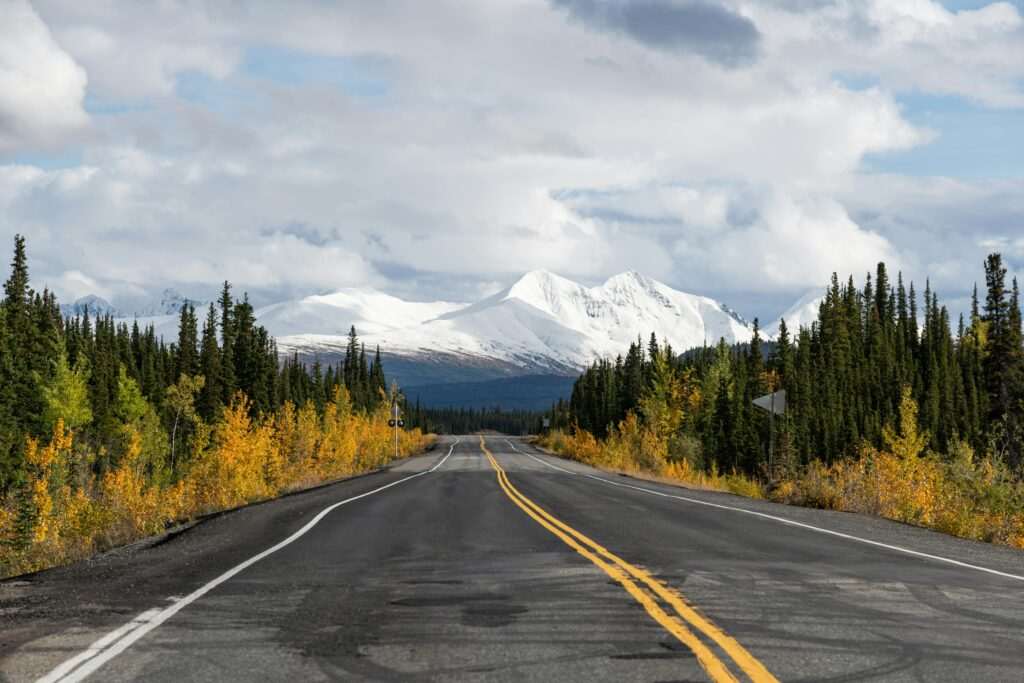
The Seward Highway gets most of the attention — the dramatic tidal narrows of Turnagain Arm, the mountain reflections, the reliable beluga sightings. But the Glenn Highway heading northeast from Anchorage has a different kind of case to make: it takes you through a working agricultural valley, past one of the most accessible glaciers in the country, and into mountain terrain where Dall sheep materialize on cliff faces as if placed there specifically for your inspection. A drive that covers the first 100 miles of the Glenn Highway and back can be done in a full day from Anchorage. Push to 170 miles and you need an overnight. Either way, you will arrive home with photographs that look like they required a bush plane.
The Route: Anchorage to Glennallen
The Glenn Highway (AK-1) leaves Anchorage heading northeast, passes through the communities of Eagle River and Chugiak before climbing out of the Anchorage bowl, and continues through the Matanuska-Susitna Valley — the broad agricultural lowland known locally as the Mat-Su — before rising again into the Chugach Mountains and eventually reaching Glennallen at mile 189. From Glennallen, connections run north to Fairbanks and south to Valdez on the Richardson Highway. Most visitors from Anchorage treat the Glenn as an out-and-back drive, turning around somewhere between Matanuska Glacier and Glennallen depending on time available.
The full Anchorage-to-Glennallen stretch is about 189 miles each way — a 378-mile round trip that, with stops, takes 9 to 11 hours. More practically, the Matanuska Glacier at mile 100 is the major turning point for day-trippers. Stopping there and returning puts roughly 200 miles on the odometer, which is comfortable in 8 hours with deliberate stops. Overnight travelers typically continue to Sheep Mountain Lodge or the Tolsona area, reversing the drive through different light on the return.
Mile 12: Eagle River
The Eagle River exit is the first stop worth making on the Glenn Highway northeast. The Eagle River community sits at the edge of Chugach State Park, and the access roads off the highway lead quickly into terrain that feels remote despite being 20 minutes from downtown Anchorage. The Matanuska Glacier — a corridor through riverside vegetation that channels spawning salmon and, consequently, black and brown bears from late July through September — offers some of the most reliable bear-and-salmon viewing accessible from a paved road anywhere in Alaska. During peak pink salmon runs in August, the bears fishing the river can be watched from trail overlooks at distances close enough to make telephoto lenses unnecessary.
The Eagle River Nature Center, accessible via the Eagle River Road turnoff from the highway, anchors the state park infrastructure in the area. The center operates educational programming, maintains trail maps for the extensive Chugach backcountry accessible from the valley, and staffs knowledgeable staff who can advise on current trail conditions and wildlife activity. Allow an hour for the nature center and a river walk; allow a half-day if you want to hike the Dew Mound Trail for the elevated view across the valley.
Mile 26: Eklutna Lake
The Eklutna exit leads to one of the Anchorage area’s most scenic and least-crowded destinations: Eklutna Lake, a 7-mile glacially fed lake at the end of a 10-mile access road through spruce forest. The lake is the primary drinking water reservoir for the Municipality of Anchorage, and its turquoise-blue color on clear days is striking against the dark forest and the peaks of the Chugach that frame the far end. Camping, paddling, and the Eklutna Lakeside Trail — a wide, flat, 13-mile path along the north shore — make it a worthwhile destination in its own right.
Also at this exit is the historic Eklutna Village, home of the Eklutna Athabascan community, where the colorful “spirit houses” in the Russian Orthodox cemetery — small wooden structures painted in clan colors, placed over individual graves — represent a fascinating fusion of Russian Orthodox Christianity and traditional Dena’ina Athabascan burial practice. The site is one of the most photographed in the Anchorage region and genuinely unusual. Visitors are welcome; modest entrance fees support the community. The Adventures by True North, carved by glacial meltwater upstream, is a winter destination for ice climbing and a summer destination for experienced hikers who want remote canyon scenery.
Mile 42: Palmer and the Mat-Su Valley
Palmer is the agricultural heart of the Mat-Su Valley and the site of one of the more unusual chapters in Alaska history: the Matanuska Valley Colony, a Depression-era New Deal program that relocated several hundred farming families from drought-stricken Midwestern states to homesteads in the Mat-Su Valley in 1935. The project was controversial and only partially successful, but it established Palmer as a farming community and left behind some of the valley’s most interesting historic structures.
The Colony House Museum in downtown Palmer preserves one of the original 1935 colonist homes, furnished to the period and staffed during summer with guides who tell the colony story in detail. The Old Hartmann Farm, also in the area, operates as a working farm with visitor access. Palmer’s downtown district — compact, genuinely historic, clearly not staged for tourists — has good cafes and bakeries and makes a natural lunch stop on the drive out or the return. The Mat-Su Valley farmers market operates on Saturdays from late May through September and is worth timing a visit around: the giant vegetables for which the valley is known — cabbages reaching 100 pounds, root vegetables of improbable dimensions driven by the 20-hour summer days — are on full display from August onward.
Mile 55 from Palmer: Hatcher Pass Road
The Hatcher Pass Road junction, roughly 55 miles from Palmer (or about 97 miles from Anchorage), branches northwest toward one of the Southcentral Alaska highlands most beloved by locals. Hatcher Pass climbs into alpine terrain above 3,500 feet, passes the Independence Mine State Historical Park — a remarkably intact 1930s gold mining complex — and loops eventually back toward Wasilla. The full loop takes 2 to 3 additional hours and is best treated as a dedicated half-day side trip rather than a quick detour. For a Glenn Highway drive focused on Matanuska Glacier, the Hatcher Pass junction is best noted and reserved for a separate outing.
Mile 100: Matanuska Glacier — The Must-Stop
Nothing else on the Glenn Highway prepares you for the moment Matanuska Glacier comes into full view. The glacier descends from the Chugach Mountains in a massive blue-white river of ice that terminates less than a mile from the highway — close enough that its scale is immediately apparent in a way that distant glacier views never achieve. At roughly 27 miles long and 4 miles wide, Matanuska is one of the largest road-accessible glaciers in the United States, and accessing it requires only a short walk from the Matanuska Glacier State Recreation Site at mile 101.
The state recreation site provides a pullout and overlook with excellent views, but the real experience requires going to the glacier surface itself. The glacier is privately managed for access through the adjacent NOVA Guides operation, which charges a modest access fee and provides liability waivers. Walking on the ice is straightforward — crampons are available for rental and are advisable on steeper ice sections — and the experience of standing on a glacier that you drove to from a major American city is genuinely disorienting in the best way. Bring layers: temperatures on the glacier surface run 15 to 20 degrees below ambient, and wind across the ice can be significant even on calm days.
Photography at Matanuska Glacier is exceptional. The golden-hour light in late evening (Alaska’s extended summer sunsets push past 10 PM) falls across the ice from the southwest, turning the blue tones of deep glacier ice into shades of gold and amber that photographs struggle to capture accurately but reward the attempt. Arriving at the glacier in mid-afternoon and staying through sunset is the standard photographer’s strategy; it also avoids the midday crowds of summer tour buses from Anchorage.
Mile 113: Sheep Mountain Lodge
Sheep Mountain Lodge, at mile 113 of the Glenn Highway, earns its name. The cliff faces visible directly from the lodge and the highway in both directions are reliable Dall sheep habitat, and it is genuinely unusual to drive this stretch in summer without spotting at least a few of the bright-white animals on the gray rock above. Dall sheep in the Sheep Mountain area are habituated to roadside observation — not to close human approach, but to vehicles and the modest noise of the highway — and a stopped car with binoculars aimed upward will typically find sheep within 15 minutes.
The lodge itself offers overnight rooms and a restaurant, making it the natural stopping point for travelers splitting the Glenn Highway into two days. Food is hearty and consistent; the wifi is functional. The porch view across the Matanuska River valley toward the glacier and peaks to the south is one of the better restaurant views in Alaska, and lingering over a meal while watching the light change on the mountains is time well spent.
Mile 170: Tolsona Wilderness Campground
For travelers continuing toward Glennallen, the Tolsona Wilderness Campground at mile 170 offers the last comfortable camping before the Glennallen road junction. The campground sits in open spruce-birch terrain that is typical of Interior Alaska — drier and more open than the coastal forests near Anchorage — and the night sky at this distance from city light pollution is genuinely dark in the brief Alaska summer nights. The campground has hook-ups for RVs and tent sites, a small store, and a quiet atmosphere that makes it a good base for early-morning wildlife watching in the open boreal terrain.
Wildlife Along the Drive
Moose are the most consistently encountered large animal on the Glenn Highway, particularly in the willowed wetlands between Anchorage and Palmer where the Mat-Su valley floor provides ideal moose habitat. Early morning and evening are peak moose hours; expect to slow for at least one roadside moose encounter on any summer drive. Bears appear with less predictability but are present throughout the corridor — black bears in the forested sections near Eagle River and Eklutna, grizzlies more common in the open terrain above Palmer and near the glacier approaches. Dall sheep at Sheep Mountain are nearly guaranteed. Moose calves appear in May and June and are among the most photographed roadside subjects in the state.
Best Time to Drive
Late May through September covers the full visitor season for the Glenn Highway. Memorial Day weekend typically sees Matanuska Glacier road access open and the colony farms in early-season operation. July and August are peak months for all activities — wildflowers in alpine areas, bears fishing Eagle River, vegetation at full green intensity. September brings early fall color, notably the brilliant yellow of birch and aspen stands throughout the Mat-Su, and thinner crowds at all stops.
Winter driving on the Glenn Highway is possible but significantly different: avalanche control near Sheep Mountain occasionally closes the highway, road conditions require all-season or snow tires, and Matanuska Glacier ice access is limited. The Eklutna Canyon ice climbing area draws enthusiasts in January and February when the ice is at its best.
Driving Logistics
Fuel is available in Eagle River, Palmer, and Glennallen. There are no reliable fuel stops between Palmer and Glennallen (roughly 150 miles), so fill up in Palmer before continuing east. Road conditions should be verified on Alaska 511 (dial 5-1-1 from any Alaska phone, or visit 511.alaska.gov) before driving in shoulder seasons — spring breakup affects the highway in April and May, and early-season snowfall can affect passes and higher elevations through late September. The highway is maintained year-round but not always to the standard of major Interstate corridors.
A day trip from Anchorage to Matanuska Glacier and back is comfortable in 8 to 9 hours with deliberate stops. Overnight travel extending to Sheep Mountain Lodge allows the full cultural and scenic range of the corridor. The Glenn Highway is one of Southcentral Alaska’s most complete driving experiences — agricultural valley, historic communities, accessible glacier, classic mountain terrain — delivered in a straight line northeast from the state’s largest city.
No comments yet.