
Alaska Midnight Sun Guide 2026 — What to Expect, How to Sleep & Best Solstice Activities
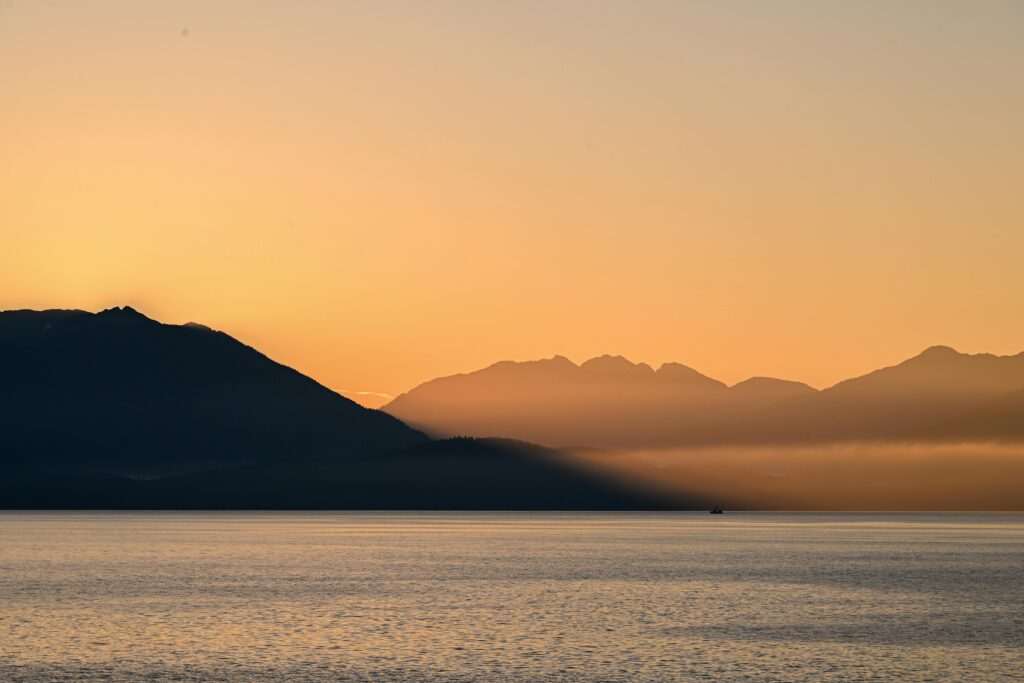
The first thing most visitors notice is that they cannot fall asleep when they expect to. They draw the curtains at what feels like bedtime and find that light seeps around every edge. They check their phones: 11:30 PM. The sky outside the window is the color of late afternoon. This is the Alaska midnight sun, and it is one of the most disorienting — and ultimately one of the most exhilarating — aspects of a summer visit to the state. Understanding what is actually happening, why it happens where and when it does, and how to take advantage of it rather than simply being confused by it transforms the experience from a jet-lag amplifier into a genuine reason to visit in summer specifically.
The Science Behind the Light
The midnight sun is a consequence of Earth’s axial tilt. The planet tilts approximately 23.5 degrees relative to its orbital plane, meaning that during the Northern Hemisphere’s summer, the northern polar regions are tilted toward the sun. Above the Arctic Circle — located at approximately 66.5 degrees north latitude — the sun remains above the horizon for at least one full 24-hour period around the summer solstice. The further north you go, the longer this period extends, reaching months-long polar day near the pole itself.
Anchorage sits at 61 degrees north — inside the subarctic zone, below the Arctic Circle, but far enough north that the effects are dramatic. On the summer solstice (June 20 or 21 in 2026), Anchorage sees approximately 19 hours and 21 minutes of actual daylight. But the more remarkable figure is the total period of usable light: the sun sets just before midnight and rises again just after 2 AM, and during the intervening period, the sky never goes fully dark. Civil twilight — defined as the period when the sun is within 6 degrees below the horizon and the sky is bright enough to see clearly without artificial light — connects sunset to sunrise without interruption. The practical result is a city where, in late June, it is impossible to find genuine darkness without effective window coverings.
True midnight sun — the sun visibly above the horizon at the stroke of midnight — requires traveling north of the Arctic Circle. Fairbanks, at 64.8 degrees north, experiences several weeks of continuous sun around the solstice. For visitors specifically seeking the sun-on-the-horizon-at-midnight experience, Fairbanks is the destination. Anchorage delivers something more subtle and arguably more livable: a summer that never gets dark, where 10 PM hikes happen in full light and midnight dinners are eaten in what looks and feels like early evening.
The Light Calendar: When Does It Start and End
The midnight sun phenomenon in Anchorage builds gradually from late April, when sunsets start pushing past 9 PM, through the solstice peak in late June, and diminishes progressively through summer and into fall. The key dates for visitors planning around maximum daylight:
Late May: Sunsets around 10:30 PM; civil twilight to midnight. Evenings are visibly bright but darkness returns around 1 AM. The light is golden and extraordinary from about 9 PM onward.
June solstice (peak): Sunset 11:42 PM, sunrise 4:20 AM. Civil twilight through the night. The sky at midnight has the quality of early evening — blue-gray overhead, warm gold at the horizon. This is the most extreme daylight period of the year.
Mid-July: Sunsets moving back toward 10:30–11 PM. Still remarkably bright but the gradual compression of light has begun. By late July, an hour or two of genuine dusk occurs around midnight.
August: Sunsets around 9–9:30 PM by mid-August. The golden-hour light now occurs at more conventional evening times, and true darkness returns for a few hours around 1–2 AM. September brings sunsets at 8 PM and the restoration of a normal-feeling day-night cycle.
Sleeping in the Midnight Sun: Practical Strategies
The sleep disruption that comes with Alaska summer is real and predictable, and the visitors who manage it best are those who prepare before arrival rather than improvising after two nights of inadequate rest. The core issue is that human circadian rhythms respond primarily to light, and light at 11 PM tells your brain it is afternoon.
Most Anchorage hotels understand this completely — the city has been hosting summer visitors for generations — and provide blackout curtains as a standard room amenity. Confirm this when booking, and if your accommodation does not have them, a travel sleep mask provides an adequate substitute for the first night or two. Long-term visitors and residents frequently add additional blackout measures: tape along curtain edges, towels along the bottom gap. The improvised solutions work.
Melatonin — the hormone the pineal gland normally produces in response to darkness — is widely used in Alaska summer as a sleep aid. A low dose (0.5 to 1 mg) taken 30 to 60 minutes before intended sleep time is more effective than the high doses commonly sold, and it works best when combined with the physical darkness of a blacked-out room. Avoiding screens for 30 minutes before bed reduces the conflicting light signal. The visitors who adjust fastest are those who commit to a fixed sleep schedule regardless of what the sky looks like, treating 10 PM as bedtime even when it looks like 4 PM outside.
How the Midnight Sun Affects Daily Life
Alaska summer reshapes the daily rhythms of visitors in ways that are broadly pleasant once the initial disorientation passes. Appetite tends to shift: the sustained daylight suppresses the hormonal cues that normally signal evening hunger, and many visitors find themselves less hungry at conventional dinner times and more inclined toward later, lighter meals. Energy levels run higher than at home, particularly in the evening hours when the long-angle light combines with cooler temperatures and lower tourist crowds to produce ideal conditions for activity.
The psychological effect of extended light is genuinely positive for most visitors. The sense that the day has not ended — that there is always more time, more light, more possibility — is one of the distinctive pleasures of Alaska summer and a significant reason why some visitors return specifically for the solstice period. The compressed darkness of Alaska winter produces the inverse effect; summer’s excess of light is partly the compensating gift.
Solstice Activities: Making the Most of the Light
The most direct way to celebrate Alaska’s midnight sun is to use the evening hours the way Alaskans do: as a second afternoon. The Tony Knowles Coastal Trail is fully lit at 10:30 PM in late June, the Cook Inlet reflections are at their most spectacular in the low-angle evening light, and the trail is lightly used compared to midday. A walk or run at 10 PM in Anchorage on a solstice evening — the mountains lit gold, the inlet flat and silver, the city going about its business in what looks like early evening — is a quintessential Alaska summer experience that costs nothing.
The Mayor’s Midnight Sun Marathon captures the phenomenon directly in sporting form: the race starts at 8 PM on the Saturday nearest the solstice and finishes — at 26.2 miles — well after midnight, in undiminished daylight. Running a marathon through Anchorage’s coastal trail system while the sun maintains its position near the horizon is genuinely surreal and has made the race one of the most distinctively Alaskan events on the running calendar.
The Ship Creek salmon fishing area in downtown Anchorage operates in this context with particular absurdity: anglers casting for king salmon under the lights of a city’s office towers at 11 PM in broad daylight. Ship Creek’s king salmon run peaks in late May and June, and the late-evening fishing sessions — when the lower sun angle reduces glare and the cooler temperatures improve fish activity — are among the most productive of the day. Catching a king salmon in downtown Anchorage at midnight in full light is the kind of experience that requires some explanation when you show people the photographs.
Midnight hikes on Flattop Mountain and the Powerline Pass corridor in Chugach State Park draw regular summer crowds of locals who treat the late-evening hours as prime hiking time. The elevation views from Flattop at 10 PM — looking west across Anchorage to Cook Inlet with the low sun painting everything gold — are among the most accessible dramatic views in the region. The trailhead parking lot fills on solstice evening with a mix of families, photographers, and solstice-celebrants who have simply claimed the evening as their own.
The Fairbanks Option: True Midnight Sun
For visitors who want the sun genuinely and unambiguously above the horizon at midnight, Fairbanks is the destination. Alaska’s second city sits at 64.8 degrees north — above the Arctic Circle’s practical influence if not technically above the line — and experiences continuous daylight for approximately three weeks around the solstice. The Midnight Sun Festival in Fairbanks, held on the solstice weekend, is a community celebration involving a baseball game that starts at 10:30 PM and ends under full sun well after midnight, a tradition dating to 1906. Flying to Fairbanks from Anchorage takes 45 minutes; the round trip adds a day to a Southcentral Alaska itinerary and is worth it for visitors whose primary interest is the full arctic light experience.
Photography: Alaska’s Endless Golden Hour
Landscape photographers who visit Alaska in summer for the first time typically experience a period of disorientation followed by sustained elation. The golden hour — that brief window of warm, low-angle directional light that photographers in most latitudes compete fiercely for twice a day — lasts three to four hours in Anchorage in late June. The sun angles across the landscape from the northwest after 9 PM, hitting mountains, water, and glaciers from a direction that produces the warm modeling and shadow detail that makes landscape photographs memorable rather than merely technically competent.
The practical strategy: plan your most ambitious photography for the 9 PM to midnight window. Use the middle of the day for logistics, driving, and activities that don’t depend on light quality. Eat dinner early. Be at your chosen location — Turnagain Arm, Flattop Mountain, the Tony Knowles trail — when the light starts to warm at 9 PM, and stay as long as the conditions reward it. In late June, they will reward it until midnight or beyond. Bring extra batteries; the long shooting sessions drain them, and you do not want to miss the best light of the evening because a battery died at 10:30 PM.
Adapting to the Light: Local Perspective
Alaska residents who have lived through many summers offer consistent advice: lean into the light rather than fighting it. The instinct to impose a mainland schedule on Alaska summer — to be in bed by 10 PM, to treat 6 AM as early — works against the environment. Anchorage in summer runs on a shifted clock. Restaurants are full at 9 PM. Hiking trails are busy at 8 PM. The farmers market is active at 6 PM on sunny evenings. Visitors who adjust their internal clocks toward this rhythm — sleeping later, staying out later, treating 10 PM as the beginning of the best part of the day — consistently report that Alaska summer delivers more than they expected. The midnight sun is not an inconvenience to be managed; it is the feature.



No comments yet.