
Alaska in November 2026: First Snow, Aurora Season & the Off-Season Advantage
November is when Alaska’s most popular season ends and its most atmospheric one begins. The summer visitors are gone. The daylight drops from nine hours to six over the course of the month. Temperatures fall below freezing and stay there. The first serious snow arrives, and the city transforms — quieter, colder, more honest about what it actually is most of the year.
For the right kind of traveler, this is exactly the point.
What November Looks and Feels Like
Anchorage’s November is a study in accelerating transition. At the start of the month, daylight lasts about nine hours and temperatures hover between 25°F and 40°F. By month’s end, daylight has dropped to roughly six hours, and temperatures run from 10°F to 25°F, with nighttime lows frequently in single digits. Fairbanks, further north, runs 15–20 degrees colder and loses daylight more steeply.
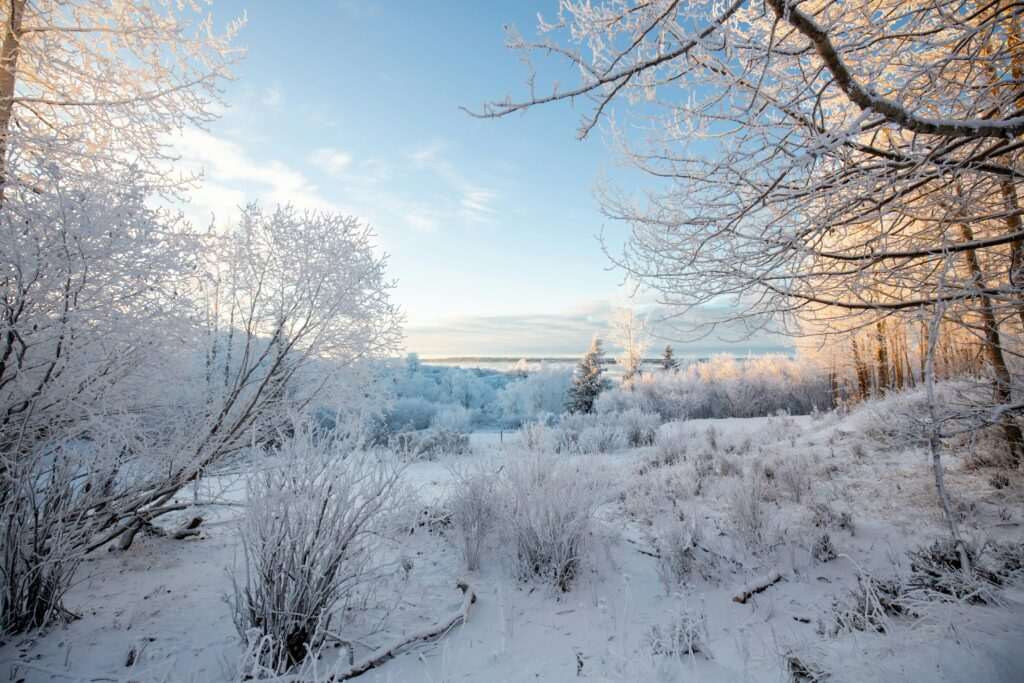
First significant snowfall in Anchorage typically arrives in October and builds through November, but the accumulation that stays — the snow that doesn’t melt — tends to establish itself in early to mid-November. When it does, the transformation of the city is immediate and significant. The Chugach Mountains above Anchorage go from brown and grey to white. The birch trees, stripped of leaves since September, are suddenly coated in hoarfrost on cold clear mornings, their branches silver and intricate against a blue sky.
The light in November is extraordinary. The sun travels low across the southern sky even at noon, producing golden-hour quality light for most of the day. Photographers who understand this treat November as a gift; the soft, angled light that you chase for twenty minutes at sunset in summer is simply how the day looks in November.
The Aurora Advantage
Aurora borealis requires two things: geomagnetic activity and darkness. November provides darkness in abundance — full dark by 4 p.m. and not light again until 9 or 10 a.m. That’s a viewing window of sixteen or seventeen hours every night, compared to the narrow few-hour windows available in September or early October.
Aurora activity follows an 11-year solar cycle, with the current cycle near its solar maximum through 2025–2026 — meaning above-average geomagnetic activity and more frequent strong aurora events. November 2026 falls within this elevated activity window, making it an especially promising year for northern lights viewing.
From Anchorage, the best viewing requires getting away from city light pollution — a 20–30 minute drive north toward the Matanuska Valley or south toward Turnagain Pass puts you under significantly darker skies. The Hatcher Pass road, if accessible (check road conditions — it may be closed in deep winter), provides outstanding northern sky views. For aurora focused trips, Fairbanks sits under the auroral oval and has fewer cloudy nights than Southcentral Alaska, making it the more reliable choice for dedicated viewers.
Use the NOAA Space Weather Prediction Center app or SpaceWeatherLive for 3-day Kp index forecasts. Any Kp of 3 or higher is worth an attempt from outside Anchorage; Kp 5+ is typically visible from within the city despite light pollution.
Alyeska Resort: Opening Season
Alyeska Resort in Girdwood typically opens in late November — sometimes Thanksgiving week, sometimes the weekend after, depending on snowpack. Opening-season Alyeska is a different experience than peak-winter Alyeska: fewer lifts operating, limited terrain, and crowds that are a fraction of January or February. It’s also cheaper. Early-season lift tickets are lower than mid-winter rates, lodging at the Hotel Alyeska drops from its winter peak, and the resort village feels like a locals’ ski hill rather than a destination resort.
If the mountain opens, a November ski day at Alyeska has a particular quality — fresh snow, short lift lines, the Chugach peaks above lit by the same low-angle light that makes all of November beautiful. Check Alyeska’s snow report and opening announcements (typically released 1–2 weeks before opening) before planning a trip around ski access, as opening dates shift with snowfall.
The November Quiet: What It Gets You
Alaska’s tourism infrastructure operates at minimum capacity in November. This translates directly into traveler advantages that don’t exist in summer:
- Hotel rates: Anchorage hotels in November (outside Thanksgiving weekend) run 40–60% below summer peak rates. Downtown properties that cost $200+ in July are available for $90–$130. The same quality of room, significantly less money.
- Restaurants: Walk-in tables at Anchorage’s best restaurants are readily available on weeknights and most weekends. In July, the same spots require reservations days in advance. The service is unhurried and attentive in the way it can’t be when the kitchen is turning 300 covers a night.
- Activities: What’s operating has capacity. Dog sled tours, snowmobile outfitters, and winter guide services that fill up weeks in advance in February are bookable on short notice in November.
- Flights: Anchorage airfare in November is typically at or near its annual low, with frequent sale fares available on Alaska Airlines routes from Seattle, Portland, and other West Coast hubs.
What’s Open and What’s Not
November is a genuine transition month — summer operations are closed, but not all winter operations are yet running at full capacity. Knowing what to expect prevents disappointment:
Open in November:
- Anchorage Museum (year-round, reduced hours)
- Alaska Native Heritage Center (check fall/winter hours)
- Restaurants, breweries, and coffee shops (all operating normally)
- Aurora viewing (no infrastructure required — just get dark)
- Alyeska Resort (from late November, conditions permitting)
- Ice skating at the Ben Boeke Ice Arena and outdoor rinks
- Snowshoeing and cross-country skiing once snow establishes (no guide required)
Not operating in November:
- Summer wildlife cruises and kayak tours (Kenai Fjords, Prince William Sound)
- Most flightseeing and glacier landing operations (some operate year-round; verify)
- Many hiking trails accessible (but unmarked backcountry and summer-only routes are snowy and potentially dangerous without winter gear)
- Some visitor centers (national park and state park facilities often on winter hours or closed)
Veterans Day Weekend
The Veterans Day holiday (November 11, federal holiday) creates a natural travel window, particularly for West Coast visitors. Anchorage is a short enough flight from Seattle, Portland, and San Francisco that a four-day Veterans Day weekend allows a meaningful Alaska experience. Flights and hotels over this window see moderate price increases from the November baseline but remain well below summer rates. The aurora is running. The snow is typically established. Alyeska may or may not be open depending on the year — but even without skiing, the holiday weekend in November Anchorage rewards the visit.
The Atmosphere of Early Alaska Winter
There’s a particular quality to Anchorage in early winter that doesn’t exist in any other month. The hoarfrost that forms on clear cold nights coats every branch, fence post, and railing in intricate ice crystals — in morning sunlight, the entire city glitters. The Chugach Mountains are white above town. The inlet is grey and still, reflecting the low sky. The streets are quiet in the way they aren’t in summer, when cruise ship passengers and rental cars fill every corridor.
It looks like a place that has decided what it actually is. In summer, Alaska can feel curated for visitors — the wildlife cruises, the glacier tours, the salmon-catching setups. In November, the scaffolding is down. What’s left is the landscape, the cold, the extraordinary light, and a city of 300,000 people who chose to live here and mostly find it exactly right.
What to Pack
Temperatures range from 10°F to 35°F in Anchorage during November, with Fairbanks running significantly colder. Essential items:
- Insulated waterproof boots rated to at least -10°F — the difference between comfortable winter walking and misery
- Merino wool base layers (top and bottom) — wool regulates temperature across a wide range and doesn’t retain odor through multi-day use
- Down or synthetic insulated mid-layer
- Windproof waterproof outer shell — Anchorage gets wet snow, not powder
- Insulated gloves plus liner gloves for layering
- Hat covering ears; balaclava or neck gaiter for colder days and evening aurora watching
- Microspikes for walking on ice — Anchorage sidewalks and parking lots ice over quickly and are not always sanded
November in Alaska isn’t for everyone. But for travelers who want the state without the crowd, the winter without the full commitment, and a landscape doing something extraordinary with a small amount of light — it’s exactly right.

No comments yet.