
Alaska Glacier Trekking 2026: Walk on Ice with a Guide Near Anchorage
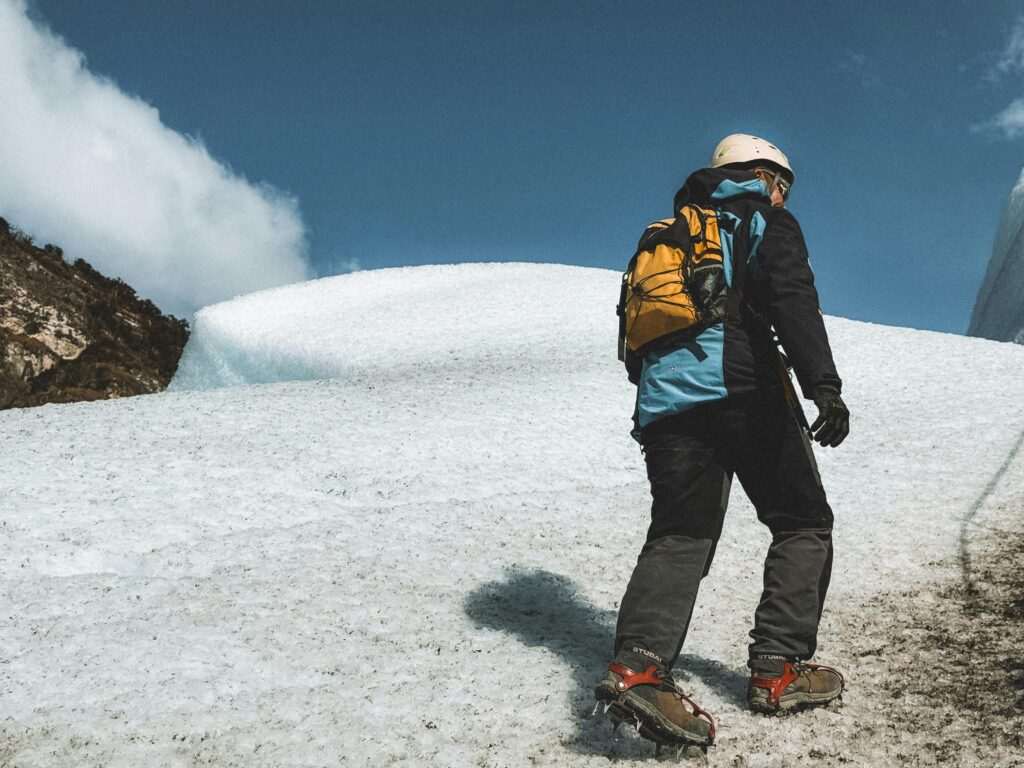
There’s a specific moment that happens when you step onto a glacier for the first time — when crampons bite into blue ice, and you realize you’re standing on something that has been accumulating and moving for hundreds of years. It’s quiet up there. The scale is wrong in a way that takes time to recalibrate. And the ice itself is remarkable up close: ancient compressed bubbles, meltwater streams carving channels through translucent blue, the occasional crevasse opening into darkness. Viewing a glacier from a boat or helicopter is impressive; walking on one changes you.
Here’s where to do it near Anchorage and what to expect.
Matanuska Glacier: The Standard
The Matanuska Glacier is the most accessible major glacier in the United States accessible by car — 27 miles wide at its terminus, originating in the Chugach Mountains, and reachable from Anchorage in about 2.5 hours on the Glenn Highway. You can see it from the road before you arrive; the white and blue expanse fills the valley ahead of you for miles.
MICA Guides is the primary guided tour operator at the Matanuska, running everything from 2-hour introductory glacier walks to full-day trekking adventures and multi-day expeditions. The introductory walk is the right entry point for first-timers: crampons fitted at the base, safety briefing, guide-led route across the glacier surface through blue ice formations, meltwater streams, and past crevasse features. The guides explain the glacier’s movement, the ice formation process, and what the visual features reveal about the glacier’s history.
The experience requires moderate fitness — you’ll be walking on uneven terrain in crampons for 2–4 hours depending on the tour — but no technical skill or prior experience. Most people in reasonable fitness can complete the introductory trek. Book in advance; summer dates fill up.
Root Glacier at Kennecott: Wilderness Context
Root Glacier sits at the edge of the abandoned copper mining town of Kennecott in Wrangell-St. Elias National Park — the largest national park in the United States, twice the size of Switzerland. Getting to Kennecott requires flying to McCarthy (small aircraft from Anchorage or driving 6+ hours to the McCarthy Road end), which puts it in a different trip category from Matanuska, but the combination of glacier and historic ghost town is one of Alaska’s truly special experiences.
Root Glacier trekking is guided out of Kennecott, and the ice here has a different character from Matanuska — more remote, less trafficked, with a genuine wilderness feel. The glacier reaches into the valley below the old mine buildings, and hiking out onto the ice with the red-painted mine structures behind you creates a visual that’s hard to forget. Kennecott deserves a 2-day minimum; the glacier combined with a tour of the mine buildings and the surrounding landscape is easily worth the extra travel.
Knik Glacier: ATV-Assisted Access
Knik Glacier is northeast of Anchorage near Palmer, accessible via ATV from the end of a gravel road. Several local operators run ATV and guide packages that take you across the outwash plain to the glacier face. The approach is a uniquely Alaskan experience — ATVs crossing river braids to reach a wall of ice — and the glacier itself is impressive at close range.
The Knik experience is less established than Matanuska for full glacier trekking but worthwhile for those who want to combine ATV adventure with glacier access in a single day close to Anchorage.
Mendenhall Glacier in Juneau: Ice Cave Season
If your Alaska itinerary includes a trip to Juneau (1.5-hour flight from Anchorage), the Mendenhall Glacier offers guided ice cave tours that are among the most stunning accessible experiences in the state. The blue ice caves form inside the glacier as meltwater carves caverns — walls and ceiling of compressed ice in impossible shades of blue, lit naturally through the overlying ice. These tours require a boat, hike, and glacier walk to reach the caves, and conditions vary by season. Book months ahead for summer dates.
What Glacier Trekking Involves
Crampons: Fitted on-site by the guide service. These are step-in ice traction devices that lock onto your boot soles. They make moving on ice intuitive — the spikes bite the surface with each step, providing security that builds confidence quickly.
Terrain: Glacier surfaces are not uniform. You’ll traverse flat consolidated ice, cross meltwater streams on natural ice bridges, walk around moulin (vertical drainage shafts), step over small crevasse features, and climb and descend ice pressure ridges. The guide routes the group around hazards; your job is to follow the route and watch your footing.
Ice axes: Provided for advanced treks and ice climbing add-ons. Not required for introductory glacier walks.
What to wear: Waterproof boots (your boots go inside crampon baskets — any sturdy waterproof hiking boot works), waterproof pants, warm base and mid-layers, and a wind/rain outer layer. Even on a warm Anchorage day, the glacier surface runs significantly colder and wind is common. Gloves are worth bringing regardless of forecast.
Season and Conditions
Matanuska Glacier trekking operates year-round (ice climbing in winter, trekking in summer), with the main trekking season running June through September. July and August have the warmest access conditions and the most dramatic meltwater features. September offers smaller crowds and fall color on the surrounding mountains.
Conditions on the glacier change daily with temperature and recent precipitation. Your guide service will communicate any access adjustments.
Pricing
Introductory guided glacier walks at Matanuska typically run $75–$150 per person for 2–3 hour tours, including crampons and guide. Full-day programs run higher. Ice climbing add-ons are priced separately. Kennecott-based tours are priced with the understanding that getting to McCarthy involves travel costs beyond the tour itself.
Walking on a glacier is not the same experience twice. Each visit is different — different ice formations revealed by the seasonal melt, different light, different weather. Alaska’s glaciers are in measurable retreat, which adds a layer of urgency to the experience that’s worth acknowledging: this is a phenomenon that exists at a scale and accessibility today that won’t persist indefinitely.


No comments yet.