
Moose Watching Near Anchorage Alaska 2026
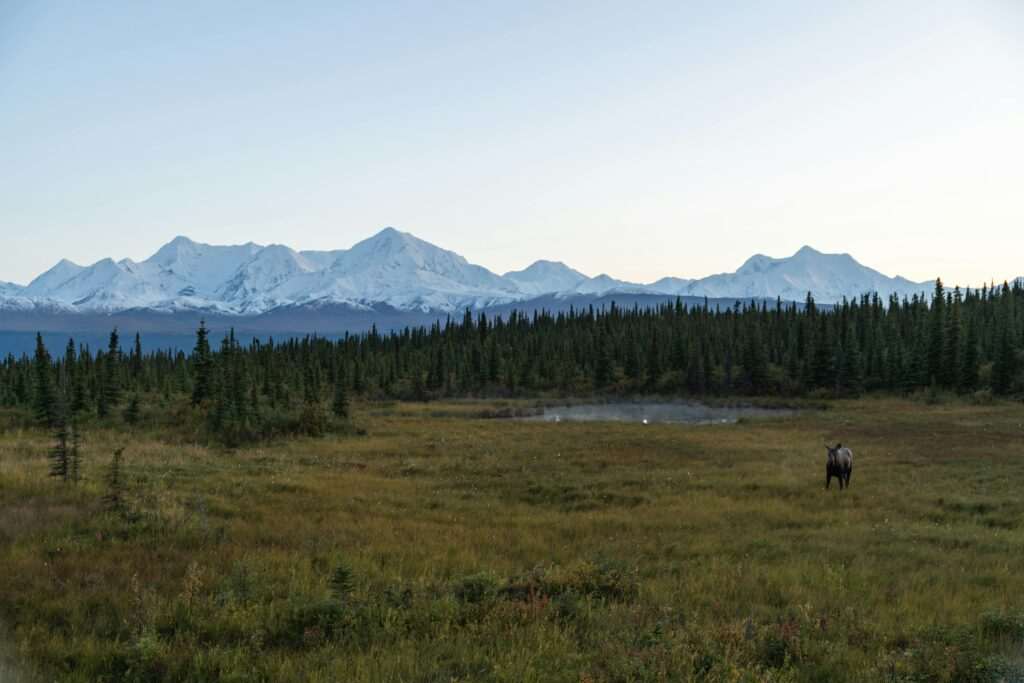
Anchorage has more moose per square mile than any other city in North America. That’s not a tourism slogan — it’s a genuine wildlife management fact that shapes daily life here in ways that surprise first-time visitors. Moose walk through residential neighborhoods, stand in the middle of bike trails, and appear in city parks at any hour of the day. For visitors, this translates to wildlife encounters that are extraordinary by Lower 48 standards and entirely routine by Anchorage ones. You don’t need a backcountry permit or a guided tour; you need to know where to look and how to stay safe when you find one. Here’s where to go for moose watching near Anchorage in 2026.
Why Anchorage Is Exceptional for Moose Watching
Alaska’s moose population is the largest in the world — roughly 175,000 to 200,000 animals — and the Southcentral population around Anchorage benefits from protected habitat in Chugach State Park, the Matanuska-Susitna Valley, and the city’s extensive greenbelt corridor. Moose here are urban-adapted, which means they’re less skittish around humans than their backcountry counterparts but no less dangerous. They move through the city freely, which puts them in front of visitors without any effort on the visitors’ part.
The result is that moose watching near Anchorage is less about dedicated wildlife tours and more about knowing the right spots and timing. Most productive encounters happen in the early morning and at dusk, when moose are actively feeding. Birch and willow thickets, wetland edges, and the vegetated buffer zones around the city’s trail network are where they spend the majority of their time.
Best Spots to See Moose Near Anchorage
Kincaid Park
Kincaid Park on the southwest edge of Anchorage is the city’s most reliable moose-watching location. The park’s 1,400 acres of coastal bluff forest and the connected trail network provide exactly the habitat moose prefer — dense spruce and birch, willow thickets, and relatively low foot traffic compared to midtown greenbelts. Encounters on the trail are common enough that the park posts moose activity notices, and spotting one during morning hours is more likely than not. The Tony Knowles Coastal Trail, which connects downtown to Kincaid, passes through similar moose-friendly vegetation in its middle sections near Westchester Lagoon.
Chugach State Park Trailheads
The lower trailheads accessing Chugach State Park from Anchorage’s hillside are productive moose territory, especially in the forested sections between the parking lots and the treeline. The transition zone between city and mountain — where birch forest gives way to open tundra — is exactly where moose feed in the early season. The Campbell Creek greenbelt running through south Anchorage toward the Chugach boundary is another consistently productive area. Moose density is highest in September and October when bulls are in rut and moving widely, but sightings occur year-round throughout the lower Chugach corridor.
Potter Marsh
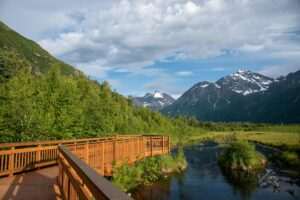
Potter Marsh, about 10 miles south of downtown on the Seward Highway, is primarily known as a birding destination but it’s also one of the most reliable moose-watching spots near Anchorage. The wetland habitat — shallow water, sedge flats, and willow thickets — is exactly what moose seek in summer when they wade into marshes to eat aquatic vegetation and escape insects. The boardwalk running through the marsh puts you at water level with good sightlines across the wetland. Moose sightings here peak in late spring through midsummer, when cows with calves use the marshy areas extensively.
Earthquake Park and the Coastal Trail Corridor
Earthquake Park, on the north end of the Tony Knowles Coastal Trail, sits adjacent to dense birch and spruce vegetation where moose are regularly spotted at the forest edge. Walking the coastal trail north or south from Earthquake Park in the early morning puts you in optimal moose territory during the hour after sunrise, when animals are still active before the day’s heat and trail traffic pick up.
The Anchorage Greenbelt
Anchorage’s connected greenbelt system — Chester Creek Trail, Campbell Creek, and the forested strips running through midtown — produces moose encounters in the middle of the city. Residents report moose in their yards and driveways regularly, and the greenbelt paths function as movement corridors the animals use year-round. If you’re staying anywhere in Anchorage’s midtown or hillside neighborhoods and walking the local trail network, moose encounters are genuinely possible within blocks of your hotel.
Best Times to See Moose
Early morning — the hour before and two hours after sunrise — is the most productive window for moose activity. Animals that fed through the night return to cover as light increases, and the movement makes them visible at trail edges and wetland margins. Evening, from about two hours before sunset through dusk, produces a second feeding window. Midday encounters happen but are less frequent, particularly in warm summer months when moose seek shade and water.
Seasonally, three windows stand out. Late May and early June brings cow moose with newborn calves — the most striking encounters, though also the most dangerous, since cows are intensely protective. September and October brings the rut, with bulls carrying full antler growth and traveling widely. Winter moose are easy to spot against snow and concentrate near willow stands — a different but equally rewarding experience.
Moose Safety: What You Need to Know
Moose injure more people in Alaska each year than bears do. This isn’t because moose are more aggressive by nature — it’s because people underestimate them. A bull moose in rut is genuinely unpredictable. A cow with a calf is protective in ways that can turn a calm encounter into a charge in seconds.
Never approach a moose. If one is on the trail ahead, stop, give it room, and wait for it to move. Don’t try to pass within 50 feet. If it’s between you and where you need to go, take a different route.
Watch for warning signs. Laid-back ears, raised hackles, stomping, and head-lowering are all pre-charge behaviors. If you see these, create distance immediately and use a tree or solid object as a barrier.
If a moose charges, run and use cover. Get distance and put something solid between you and the animal. Moose charges are often bluffs, but you can’t count on that.
The Alaska Wildlife Conservation Center south of Anchorage on the Seward Highway has captive moose in large natural enclosures — a useful option if you want guaranteed close viewing without the unpredictability of wild encounters, or if you want to observe moose behavior in a controlled setting before heading out on trails.
What to Bring
Binoculars are essential. The viewing distance you should maintain from moose makes naked-eye observation frustrating, and binoculars let you observe behavior and details without reducing your safety margin. A 300mm or longer telephoto lens serves the same purpose for photography — far better than trying to get close.
Bear spray is standard carry on any Anchorage trail and is effective on moose as well. It’s a useful last resort if a moose charges at close range and you can’t create separation. Early morning walks in September and October, when bulls are rutting, are the highest-risk window for unexpected encounters.
Dress for the conditions. Dawn moose-watching in Anchorage in September means temperatures in the 40s. Waterproof footwear lets you access the wetland margins around Potter Marsh and Chester Creek without soaking your feet in dew-covered vegetation.
Where is the best place to see moose in Anchorage?
Kincaid Park is the most reliable location — 1,400 acres of coastal bluff forest with dense moose habitat and trail access from downtown via the Tony Knowles Coastal Trail. Potter Marsh, 10 miles south on the Seward Highway, is excellent in summer when moose wade in the wetlands. The lower Chugach State Park trail corridors on the city’s east side produce consistent sightings, particularly in the forested sections. Early morning visits to any of these locations give you the best odds across all seasons.
What time of year are moose most active near Anchorage?
Late May and June bring cow moose with newborn calves — the most dramatic visual encounters, though also the most important to observe from a safe distance. September and October is the rut, when bulls are most visible and most active across the landscape. Winter moose sightings are common and photogenic against snow, but the animals are less mobile. Year-round sightings in the city’s greenbelt are a feature of Anchorage that has no parallel elsewhere in the country.
Is it safe to watch moose near Anchorage?
Yes, with appropriate distance and behavior. Moose injure more people in Alaska than bears, primarily because people get too close or walk between a cow and her calf. The key rules: maintain at least 50 feet of distance, watch for warning signs (laid-back ears, head-lowering, stomping), and be ready to retreat behind a solid object if a moose shows aggression. Don’t try for a closer photo, don’t feed them, and don’t try to pass one blocking a trail — wait for it to move. Carried bear spray is a worthwhile precaution on fall trail hikes during rut season.
Do you need to leave the city to see moose near Anchorage?
No — moose in Anchorage are genuinely urban animals and the city’s trail network produces consistent sightings without any backcountry access. Kincaid Park, the Tony Knowles Coastal Trail, and the Chester Creek and Campbell Creek greenbelts all produce regular encounters within city limits. Potter Marsh is a 10-minute drive from downtown. No wilderness permit or guided tour is required — just standard moose-safety awareness and an early start.
Moose watching near Anchorage is one of the genuinely unusual pleasures of visiting this city — the intersection of urban trail infrastructure and authentic Alaska wildlife that you won’t find anywhere else. Kincaid Park in the early morning, Potter Marsh in midsummer with a cow and calf wading in the shallows, a bull moose in October rut crossing the trail ahead of you on the Coastal Trail: these are encounters that stay with people long after the trip. Go early, keep your distance, and bring binoculars. The moose will take care of the rest.
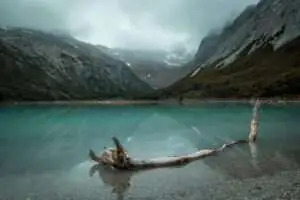
Featured photo by John De Leon on Pexels.
No comments yet.