
Anchorage Farmers Markets 2026 — Best Markets, Local Food & Seasonal Produce
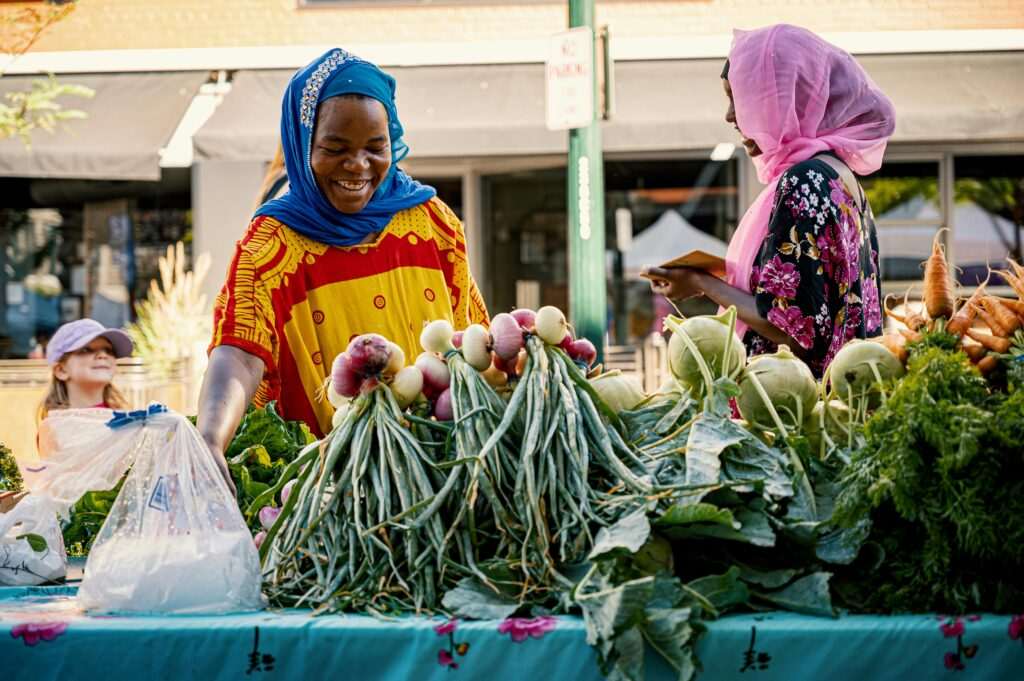
Every summer weekend in Anchorage, the city’s relationship with food and farming becomes visible in a way it isn’t the rest of the year. Farmers markets pull together the producers, fishers, bakers, and makers who exist just below the surface of daily Alaska life — people growing vegetables in hoop houses under the midnight sun, smoking fish caught that week in Cook Inlet, raising bees in the Matanuska Valley, crafting hot sauces from ingredients that barely exist anywhere else. For visitors, these markets offer a closer look at how Anchorage feeds itself than any restaurant can provide.
The Main Markets
Anchorage Saturday Market (Downtown)
The largest and most established farmers market in Anchorage, the Saturday Market runs every Saturday and Sunday from mid-May through mid-September in the parking areas at 3rd Avenue and E Street, adjacent to the Delaney Park Strip. Operating since 1992, it is part farmers market and part arts fair — booths selling fresh produce and smoked salmon share space with local jewelers, quilters, and photographers.
Hours: Saturday 10am–6pm, Sunday 10am–5pm, mid-May through mid-September.
Parking: On-street parking on 3rd Avenue; the nearby 5th Avenue parking garage is a short walk.
What to buy: Wild Alaska smoked salmon, local honey, fresh-baked goods, greenhouse vegetables, handmade jewelry, Alaska Native crafts, and birch syrup. The food stalls offer prepared food — halibut tacos, samosas, and bratwurst are perennial favorites — making it a reasonable lunch stop.
Spenard Farmers Market
Running Tuesday afternoons from 11am to 4pm, the Spenard Farmers Market in the Spenard neighborhood is the more local, less tourist-facing option. The vendor mix leans heavily agricultural — expect serious vegetable growers, mushroom cultivators, and a rotating cast of specialty food producers. This is where Anchorage residents shop, which means shorter lines, more conversation with vendors, and a better sense of what’s actually in season. The curated artisan vendors here include makers selling directly from their studios.
South Anchorage Farmers Market
A neighborhood-focused market running on select Saturdays in south Anchorage. Smaller than the downtown Saturday Market but closer to south Anchorage hotels and the airport area. The vendor selection emphasizes produce and prepared foods over crafts, making it the most purely agricultural of the three main markets. Check local listings for current 2026 dates and locations as the South Market periodically adjusts its schedule.
Palmer Farmers Market (Mat-Su Valley, 45 min north)
Technically outside Anchorage, the Palmer Farmers Market is worth building a day trip around. Running Saturday mornings from June through September in downtown Palmer, it showcases the extraordinary produce of the Matanuska-Susitna Valley — the same region that produces world-record cabbages at the Alaska State Fair in late August. The growing conditions here (up to 20 hours of direct summer sunlight) produce vegetables at sizes not seen elsewhere. Late summer visits may coincide with State Fair preview season, when growers are competing with their largest specimens.
What to Buy at Anchorage Farmers Markets
Local Produce
Alaska’s growing season is compressed but intense. By mid-July, market tables fill with lettuces, kale, spinach, radishes, snap peas, and the first summer squash. By August, tomatoes grown in hoop houses, potatoes, root vegetables, and giant cabbages dominate. The quality of Alaska-grown vegetables — particularly leafy greens — is exceptional due to the long daylight hours concentrating sugars and nutrients.
Wild Alaska Seafood
Some vendors at the Saturday Market and Spenard Market sell vacuum-packed wild Alaska salmon — sockeye, king, and silver — that can be packed in luggage for travel. This is some of the most direct-source seafood available anywhere: fish caught in Cook Inlet or from Bristol Bay, processed and sold by the same family that caught it. Prices are competitive with retail smoked salmon shops and the provenance is clearer.
Honey and Birch Syrup
Alaska honey has a distinctive character from wildflower sources — fireweed honey, the pale gold produced from the fireweed that blankets burned and disturbed land across the state, is particularly prized for its clean floral flavor. Birch syrup appears at markets in small-batch quantities; it is produced only in northern climates and has a richer, more complex flavor than maple syrup. Both make excellent travel gifts.
Baked Goods and Prepared Food
The Saturday Market especially draws serious bakers — sourdoughs, cinnamon rolls, scones, and specialty breads from home bakeries that sell only at market. Prepared food stalls offer everything from pierogi to halibut tacos, representing Anchorage’s diverse population. Arriving hungry and eating through the market is a legitimate strategy.
Alaska Native Crafts
A rotating selection of Alaska Native artisans sell directly at Anchorage markets — beaded jewelry, carved items, and textile work. Buying directly from the artist guarantees authenticity in a way that souvenir shops cannot. The Spenard Farmers Market is one of the best places to find Alaska Native artisans selling directly alongside local produce and baked goods.
Markets and the Broader Local Food Scene
The farmers market culture in Anchorage connects to a broader local growing movement. The South Anchorage Farmers Market runs through summer, drawing the same community of growers, bakers, and craft producers who supply the city’s other neighborhood markets. Visiting both in the same trip gives a fuller picture of how food is grown at this latitude.
Local vendors are woven into the same community — the Anchorage Market & Festival runs Wednesdays and Saturdays in the downtown parking lot and combines produce, crafts, and food vendors in one central location popular with locals and visitors alike.
Practical Tips
- Bring cash: Most vendors accept credit cards, but some small-batch producers prefer cash and may offer a slight discount for it.
- Go early: The best produce and baked goods sell out before noon at both the Saturday Market and Spenard Market. The best prepared food lines are shorter before 11am.
- Bring a bag: Reusable shopping bags are the norm; plastic is not offered by most vendors.
- Packing seafood: Vacuum-packed smoked salmon can travel as checked luggage. TSA allows frozen fish; confirm your airline’s weight limits before buying large quantities.
- Season peak: Mid-July through mid-August is the fullest market season. Early May markets exist but vendor counts are lower and produce is limited to greenhouse items.



No comments yet.