
Portage Valley & Portage Glacier Day Trip 2026: Complete Anchorage Guide
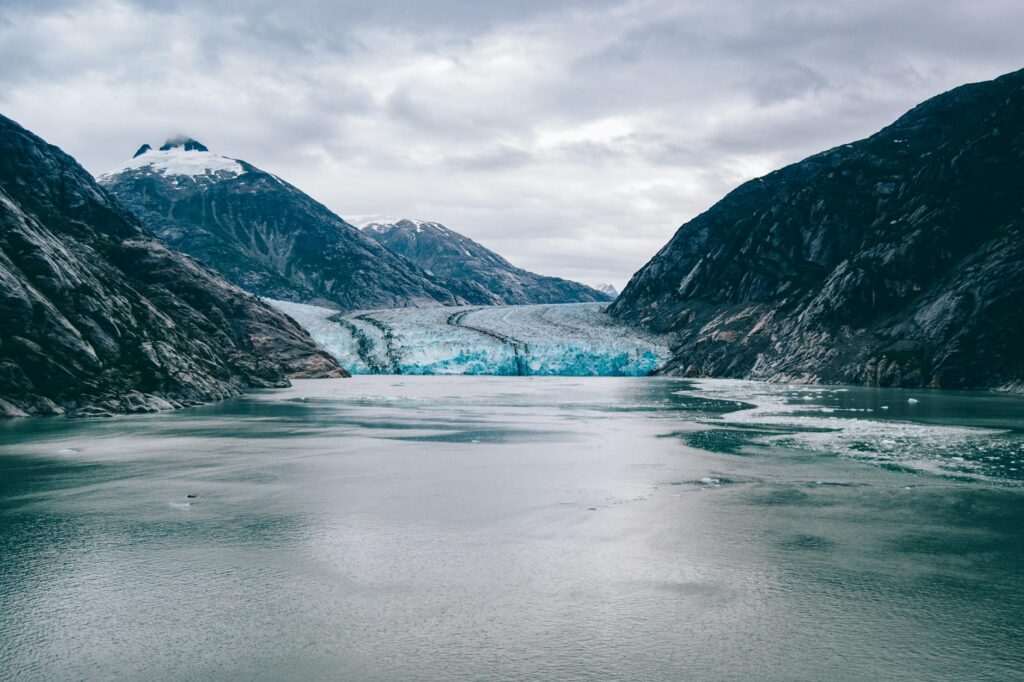
Portage Valley sits just an hour south of Anchorage, yet it feels like a different world. Glacially carved peaks rise on three sides, a milky turquoise lake fills the valley floor, and — if you time it right — a glacier still calves ice into the water you’re standing beside. This is one of the most accessible true wilderness experiences in Southcentral Alaska, and it makes for an outstanding full-day or half-day trip from the city.
The Drive: Seward Highway and Turnagain Arm
The route south from Anchorage follows the Seward Highway along the eastern shore of Turnagain Arm, one of the world’s most dramatic tidal inlets. The drive itself is part of the experience. The arm funnels tides from Cook Inlet into a narrowing channel, creating tidal swings of more than 30 feet — second only to Canada’s Bay of Fundy.
Keep your eyes on the mudflats as you drive. Beluga whales frequently move through Turnagain Arm in summer chasing hooligan and salmon runs. There are several signed pullouts along the highway — the area around Beluga Point (Mile 110) is particularly productive. For organized whale watching along this corridor, Turnagain Arm Beluga Whale Viewing offers guided outings timed to tidal cycles. Dall sheep are also regularly spotted on the cliffs above the road.
Plan roughly 45 to 60 minutes for the drive depending on traffic and how many pullouts you stop at.
Alaska Wildlife Conservation Center
Before you turn off the Seward Highway toward Portage Valley, consider a stop at the Alaska Wildlife Conservation Center (AWCC), located at Mile 79. This 200-acre wildlife park houses bears, moose, musk ox, wood bison, caribou, and wolves — many of them rescues or animals that couldn’t survive in the wild. You drive or walk through the park along a loop road, getting remarkably close to animals that would otherwise take considerable effort to see in the bush.
The AWCC is especially worthwhile in summer when calves and cubs are out. Allow 1.5 to 2 hours for a thorough visit. It’s not free, but it’s one of the most consistently impressive wildlife experiences in the Anchorage area and worth the stop before you continue into the valley.
Byron Glacier Trail
Turn off the Seward Highway at Mile 78.9 and follow Portage Valley Road into the glacially carved corridor. The first major stop — and arguably the most underrated — is the Byron Glacier Trail.
This 1-mile round-trip walk leads through dense stands of cottonwood and across glacial outwash flats to the toe of Byron Glacier. In summer, the glacier calves small ice chunks onto the trail approach, and a lingering snow cave often persists well into July, making it a popular spot for visitors who want to actually step onto or near glacial ice. The trail is easy enough for young children. Total time: 30 to 45 minutes.
Portage Glacier and the Begich-Boggs Visitor Center
Continue three more miles to the end of the valley road, where Portage Lake and the Begich-Boggs Visitor Center sit directly across from the glacier. The visitor center (run by the U.S. Forest Service) has exhibits on glacial geology, local wildlife, and the history of the valley — including the 1964 Good Friday Earthquake that devastated the area.
Portage Glacier itself has retreated significantly since the mid-20th century. The glacier’s face is no longer visible from the visitor center shore; you’ll need to get on the water to see it properly. That’s where the MV Ptarmigan comes in.
The MV Ptarmigan Cruise
The Portage Glacier Cruises (MV Ptarmigan) run multiple times daily in summer. The 90-minute round trip takes you across Portage Lake on a small cruise boat, giving you a close view of the glacier face and the floating icebergs calved from it. A ranger or naturalist narrates the cruise with information on the glacier’s geology and retreat timeline. Book tickets in advance during peak season (late June–August); the boat fills quickly, especially on clear days.
If cruises are sold out or you’d rather not get on the water, the lakeshore walking path around the visitor center still offers views of floating ice chunks and the surrounding peaks — worthwhile even without the cruise.
Whittier Extension (Optional)
Portage Valley Road continues past the glacier turnoff through a 2.5-mile single-lane tunnel to Whittier, the access point for Prince William Sound. The Anton Anderson Memorial Tunnel is one of the longest combined rail/vehicle tunnels in North America; vehicles wait at alternating schedule windows (about 30 minutes per cycle).
If you have an extra 2–3 hours, the extension to Whittier opens up day cruises into Prince William Sound and access to Columbia Glacier. It transforms the Portage day trip into a full 10-to-12 hour day out of Anchorage. For a shorter visit, skip the tunnel and head back toward Anchorage via Girdwood.
Girdwood Stop on the Return
The town of Girdwood, about 40 miles south of Anchorage off the New Seward Highway, is a natural final stop on the return drive. The ski resort village has a handful of good restaurants and the Girdwood Brewing Company — a solid spot to grab a local craft beer and food after a day in the valley. In summer, the Alyeska Resort gondola also runs for sightseeing and hiking access above the treeline.
Practical Info
Distance from Anchorage: ~60 miles to the Begich-Boggs Visitor Center (about 60–75 minutes drive).
Best months: June through August for glacier access and wildlife activity; September for fall color and fewer crowds.
What to bring: Layers (the valley floor stays cool even in summer), rain jacket, snacks and water, binoculars for wildlife along the drive.
MV Ptarmigan bookings: Reserve at least a day in advance; available through the official concessioner or at the visitor center if space remains.
Alaska Railroad option: The Glacier Discovery Train runs between Anchorage and Portage/Spencer Glacier, a car-free alternative for the same corridor.
Portage Valley packs a full Alaska experience into a single day: tidal flats with belugas, big wildlife up close at the AWCC, a short glacier hike at Byron, and a boat ride up to a calving glacier face. Few places in the world offer that combination within an hour of a major city.
Featured photo by Sandra Seitamaa on Pexels.


No comments yet.