
Alaska Wildflowers 2026: Best Viewing Spots Near Anchorage
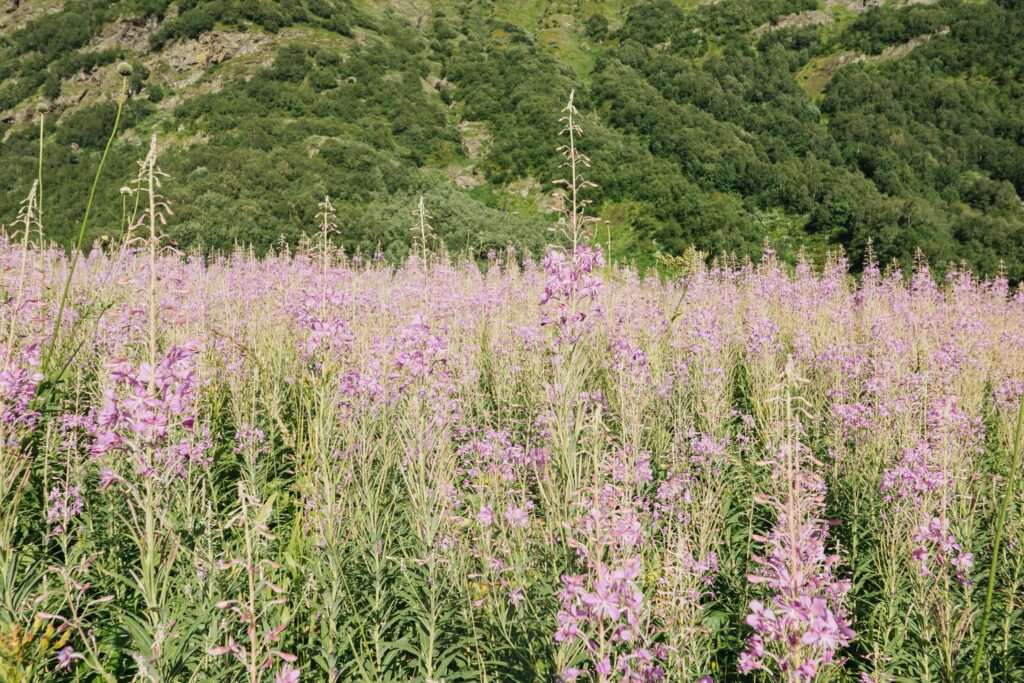
Alaska’s summer is short, intense, and wildly generous with wildflowers. From late May through August, the landscape around Anchorage transforms in waves of color — fireweed lining roadsides in shocking pink, fields of blue-purple lupine at Hatcher Pass, and alpine meadows bright with shooting stars and wild geraniums. For visitors and photographers, the timing is everything, and Southcentral Alaska rewards those who know where and when to look.
The Season: What Blooms When
Late May – June
The season opens at lower elevations. Fireweed — Alaska’s unofficial state flower — begins appearing along roadsides and forest clearings in tall magenta spires. Wild geraniums bloom in open meadows in soft purple. Chocolate lilies (also called mission bells) are a distinctive find — nodding maroon blooms that are unmistakably Alaskan. Shooting stars appear in wet meadows and along streams through late June. These early-season flowers are best at lower elevations along the Seward Highway corridor and in Anchorage’s greenbelt parks.
July (Peak Season)
July is the peak of wildflower season across most of Southcentral Alaska. Lupine dominates — fields of blue-purple blooms appear at roadsides, open hillsides, and most dramatically at Hatcher Pass, where entire alpine bowls fill with color. Cow parsnip (large white umbels, very tall) lines streams and disturbed ground. Wild roses bloom in pink along trail margins. Yarrow — flat-topped white clusters — fills meadows across elevation ranges. This is the single best month for wildflower photography in Alaska.
August
Late summer brings a different kind of beauty. Fireweed transitions from bloom to seed — the plant’s fluffy white seed heads signal that fall is approaching, and Alaskans read this as reliably as a calendar. Late asters and fleabane blooms extend into August. Berry plants — crowberry, lowbush blueberry, cloudberry — ripen and color the tundra red and gold, overlapping with the final wildflowers of the season.
Best Viewing Spots Near Anchorage
Hatcher Pass / Independence Mine
The single best wildflower destination near Anchorage is Hatcher Pass, roughly 90 minutes north of Anchorage. In peak July, the alpine meadows surrounding Independence Mine fill with lupine, fireweed, and wildflower species not easily found at lower elevations. The combination of open terrain, mountain backdrops, and sheer density of blooms makes it one of the most photogenic wildflower locations in Southcentral Alaska. Access the high meadows via the road past the mine or on foot from the Gold Mint Trailhead.
Turnagain Arm / Seward Highway
The Seward Highway south of Anchorage passes through continuous wildflower habitat. Fireweed and lupine grow thick along the highway shoulders from Girdwood to Potter Marsh, with Turnagain Arm and the Chugach Mountains as backdrop. Several pullouts along the highway give access to the roadside displays — particularly photogenic in late July when both species are at peak bloom simultaneously.
Chugach State Park Trails
The Chugach State Park trail system offers wildflower viewing along the trail margins of the Bird to Gird Trail, McHugh Creek, and Flattop Mountain Trail. Alpine slopes open up above treeline by mid-July on most trails, revealing dwarf fireweed, moss campion, and arctic lupine at higher elevations. The Powerline Pass / South Fork Eagle River corridor is particularly rich mid-July through early August.
Tony Knowles Coastal Trail
The Tony Knowles Coastal Trail runs through active greenbelt habitat with good fireweed and wild geranium displays in its forested sections from late June through July. It’s the most accessible wildflower walk from downtown Anchorage, and the combination of blooms against Cook Inlet views is consistently photogenic.
Alaska Botanical Garden
For a more structured wildflower experience, the Alaska Botanical Garden maintains curated plantings of Alaska native species and wildflowers in a 110-acre forested setting in east Anchorage. The native plant garden is at its most vivid in June and July and provides reliable viewing of species you might miss on the trails.
Photography Tips
- Golden hour runs late: In June and July, golden hour in Anchorage falls around 10–11 p.m. The low-angle light transforms wildflower fields with warm color and long shadows. Late evening is often the best time to photograph.
- Overcast = soft light: Cloudy days eliminate harsh shadows on individual blooms and produce truer, more saturated color. Don’t write off overcast days for wildflower photography.
- Wide-angle for fields: Use a wide-angle lens to capture the landscape context — mountains, inlets, and open terrain. For individual blooms, get close with a macro or short telephoto.
- Wind management: Alaska wildflower fields are windy. Shoot in the early morning or late evening when air is calmer, or use a higher shutter speed to freeze movement.
Planning Your Wildflower Visit
- July is the peak. If your schedule allows just one month for wildflowers, July delivers the most widespread and intense blooms across the widest elevation range. Hatcher Pass is particularly worth targeting in early to mid-July when the alpine meadows are at full color.
- Combine with hiking: The best wildflower displays in Southcentral Alaska appear at mid-elevation — 1,000 to 3,000 feet — where open tundra and subalpine meadows provide the right conditions. Most are accessible only on foot; plan for at least a 1–2 mile walk to reach the good terrain.
- Overcast is fine: Rain-soaked flowers photograph with more vivid color and cleaner detail than those in harsh midday sun. Don’t cancel wildflower hikes because of overcast or drizzly conditions — some of the best wildflower photography happens on grey days.
Frequently Asked Questions
When do wildflowers bloom near Anchorage?
The wildflower season near Anchorage runs from late May through August, peaking in July. Early-season flowers appear at lower elevations in late May and June; alpine species at Hatcher Pass and Chugach State Park trails hit their peak in mid-July. Late August brings berry ripening and the final aster blooms of summer before fall color begins.
Where is the best wildflower viewing near Anchorage?
Hatcher Pass, approximately 90 minutes north of Anchorage, delivers the most dramatic wildflower landscape in Southcentral Alaska — lupine fields stretching across alpine bowls against mountain backdrops in peak July. The Seward Highway corridor south of Anchorage and the Chugach State Park trail system are also excellent, more accessible for a half-day outing from the city.

No comments yet.