
Anchorage Summer Solstice 2026: How to Celebrate Alaska’s Longest Day
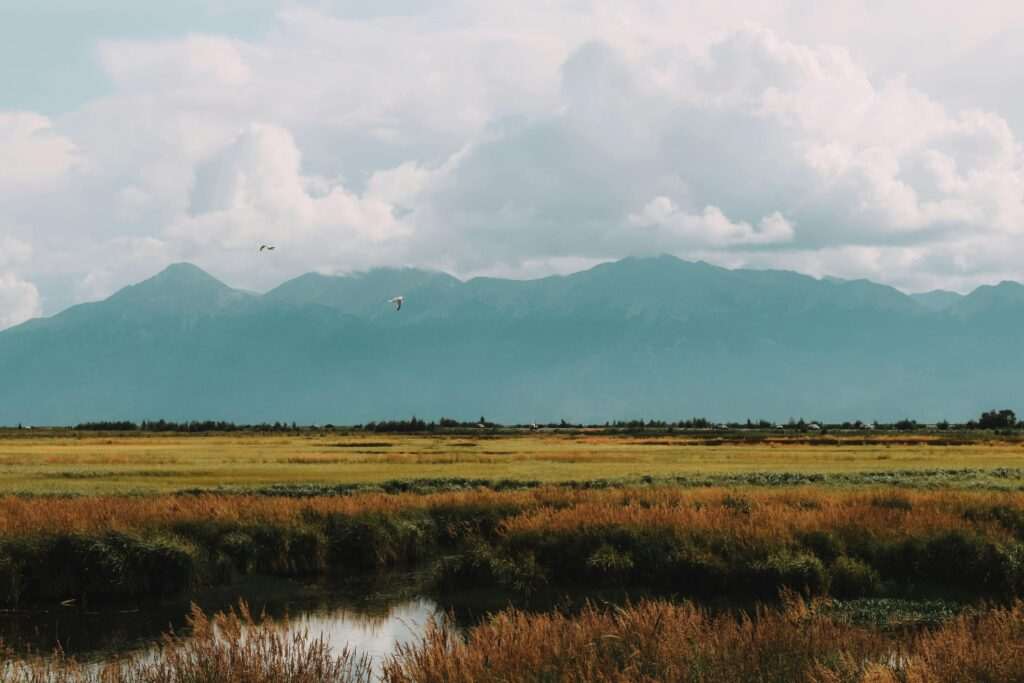
June 20 or 21 in Anchorage is not just a date on the calendar. It is the axis of the Alaskan summer — the day when the sun traces its highest arc across the sky and the city experiences something most of the world never does: a night that never actually arrives. Anchorage doesn’t get true darkness around the summer solstice. Civil twilight persists all night, leaving the sky in a perpetual dusky glow even at 3 AM. The mountains stay visible. Your shadow stays with you. And the whole city, whether it acknowledges it consciously or not, shifts into a different mode of operating. This guide covers how to experience that shift intentionally — what to do, what to eat, what to feel, and how to sleep when the sun refuses to set.
The Phenomenon Explained
Anchorage sits at about 61 degrees north latitude, which places it well above the latitude where midsummer nights produce genuine darkness. Around the summer solstice, Anchorage receives roughly 19.5 hours of direct sunlight, with civil twilight covering the remaining hours. Civil twilight means the sun is less than 6 degrees below the horizon — enough ambient light to read by, walk without a headlamp, and photograph without artificial lighting. The sky at midnight looks like very late evening in the lower 48. It is disorienting in the best possible way.
For visitors from latitudes where darkness arrives reliably around 9 PM, the experience of the solstice in Alaska involves a genuine recalibration of internal time perception. The body’s circadian rhythms rely on light cues; when those cues don’t arrive on schedule, a pleasant confusion sets in. This is not a side effect to be managed — it is a feature of the experience worth leaning into.
Solstice Events in Anchorage
Anchorage marks the solstice with local events that make the most of the extraordinary conditions. The Anchorage Market and Festival, which runs through the summer at the downtown transit center area, often extends hours for solstice weekend, filling the plaza with vendors, live music, and food in daylight that makes outdoor gatherings feel untethered from conventional time. Local bars and restaurants extend patio service and organize themed evenings around the midnight sun, and outdoor concerts and community events cluster around June 20-21 each year.
The best way to find current 2026 solstice programming is to check the Anchorage Daily News events calendar and Visit Anchorage’s event listings starting about two weeks before the solstice — specific events are announced late and shift year to year.
The Fairbanks Midnight Sun Baseball Game
The most iconic single tradition tied to the Alaska solstice is not in Anchorage — it is 360 miles north in Fairbanks. The Alaska Goldpanners’ Midnight Sun Baseball Game has been played without artificial lighting at midnight for over 60 years, starting around 10:30 PM and finishing in full natural light past midnight. The game itself is a legitimate baseball contest, not a novelty exhibition, and Fairbanks’ position at 64 degrees north means the midsummer midnight is bright enough to play without squinting.
For Anchorage-based visitors, the game requires a commitment: the drive to Fairbanks takes about 6 hours on the Parks Highway. Many visitors fly (Alaska Airlines and Ravn Air serve the Fairbanks route, typically under 45 minutes) and make it a one-night trip. The game falls around the solstice date, and tickets are available through the Goldpanners directly. If you’re willing to make the journey, the experience is singular: watching a full baseball game at midnight under a glowing sky, surrounded by Fairbanks locals for whom this event is an annual rite. Nothing about it is metaphorical.
What to Do at 11 PM in Full Daylight
The solstice makes Anchorage’s outdoor options genuinely infinite in the sense that time stops being a constraint. Here’s how to use that gift:
Late-evening hikes: The Williwaw Lakes Trail in Chugach State Park — a 12-mile out-and-back through alpine terrain — becomes a completely different experience when you can start at 8 PM and watch the light change through a long, slow golden hour that never quite turns to dusk. The Flattop Mountain trail, shorter and steeper, is the classic solstice sunset spot: you can watch the sun circle around the northern horizon from the summit without it ever dropping below it. On the solstice, the views at midnight from Flattop are extraordinary — city lights below, mountains in every direction, sky still luminous.
Kayaking on the inlet: Guided kayak tours in Knik Arm and around the tidal flats are available through mid-evening in summer. Paddling a calm stretch of water at 9 or 10 PM with the Chugach Range reflecting in still water is the kind of experience that defies description in terms of scale and quiet. Chugach Adventures runs outdoor experiences that take advantage of the extended Alaska summer daylight, connecting visitors with the terrain at times that would be impossible anywhere else.
Outdoor dining: Anchorage’s restaurant scene has genuine outdoor seating culture in summer precisely because the weather and light cooperate. A late dinner at 8 PM on a patio, with warm-ish air and full sunlight, slides naturally into evening cocktails at 10, which bleeds into a midnight walk along the Tony Knowles Coastal Trail with Cook Inlet glittering on one side.
The Midnight Grill
One of the underrated pleasures of the Alaskan solstice is the midnight barbecue. Grilling at midnight isn’t a novelty choice for Alaskans in June — it happens because the evening is long, dinner gets pushed later and later as the day expands, and suddenly it’s midnight and someone has fired up the grill and no one involved finds this strange. For visitors, it is a small portal into the rhythm of Alaskan summer life. If you have access to any outdoor cooking space — a campsite, a vacation rental with a deck — grilling something at midnight on the solstice is a deeply satisfying exercise in embracing the absurdity of a season without darkness.
Salmon, Wildflowers, and the Peak of Everything
The solstice is not just the longest day — it coincides with the peak of Anchorage’s ecological intensity. The king salmon run on Ship Creek, which flows through downtown Anchorage to Cook Inlet, typically peaks in mid-to-late June, putting the solstice directly inside the city’s best downtown salmon fishing window. Alaska Fishing Adventures and other local outfitters operate guided urban salmon fishing trips during this period — fishing in the heart of a small city, with a backdrop of office buildings and inlet views, while targeting 30-pound king salmon is an only-in-Anchorage experience that aligns perfectly with the solstice date.
Wildflowers hit their peak in late June across the Chugach foothills and Hatcher Pass. The timing means that a hike on or around the solstice produces the fullest possible palette — fireweed in deep magenta, lupine in purple, wild geraniums and forget-me-nots across the alpine meadows. The combination of full bloom and the golden, low-angle solstice light makes late-June hiking aesthetically extraordinary in a way that doesn’t hold through July.
Sleeping During the Solstice
Anchorage hotels anticipate this challenge and most provide blackout curtains; many explicitly advertise them for the summer season. Quality varies — the better-equipped rooms have heavy, well-fitted curtains that actually block the light rather than just filtering it. If the hotel doesn’t have good blackout curtains, a sleep mask is the reliable solution. Earplugs help with the increased evening activity outside.
The more interesting adaptation is schedule flexibility. Visitors who try to force a normal sleep schedule onto the solstice experience often find themselves restless and frustrated, fighting the light. Visitors who let the schedule relax — staying out later, sleeping in later, letting meals drift — often find the solstice week one of the most energizing travel experiences they’ve had. The light becomes a resource rather than a problem.
The Psychological Effect
Visitors frequently report a specific quality of feeling during Alaskan solstice — a heightened alertness, a sense that time is elastic, a reluctance to go inside that overrides normal routines. This is not imaginary. Extended light genuinely suppresses melatonin production and elevates mood in many people, producing something close to a mild natural euphoria. For visitors arriving from cities with compressed summer evenings, the experience is often described as unexpectedly emotional — a feeling of abundance, of being given extra time.
That’s not a bad frame for the whole thing. The summer solstice in Anchorage is, at its core, extra time: an ordinary calendar day stretched past its normal limits, revealing an Alaska that most of the world doesn’t get to see. The midnight grills, the late hikes, the baseball games that start after the bars close in most cities — these aren’t quirks. They’re what happens when a place that earns its darkness in winter gets six weeks of uninterrupted light in return.
Photo: Hannah Villanueva / Pexels

No comments yet.