
Seward Mount Marathon Race 2026: Alaska’s Most Famous July 4th Tradition
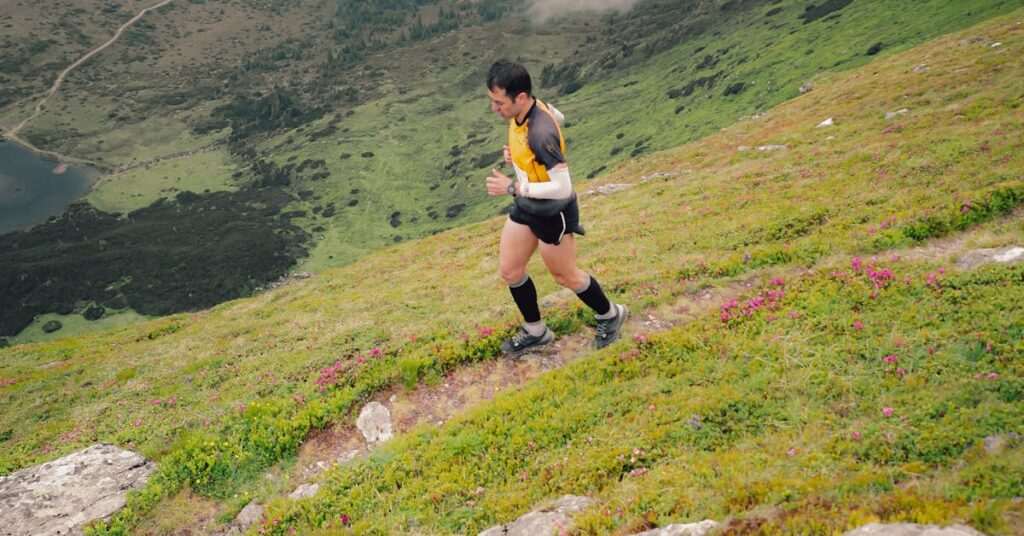
Every July 4th, a few hundred runners leave downtown Seward, run straight up a mountain, and come back down. The mountain is 3,022 feet. The total distance is 3.1 miles roundtrip. The descent involves loose scree at angles that regularly produce falls, torn clothing, and blood. The crowd watching from below loves all of it. The Seward Mount Marathon Race has been running since 1915, making it one of the oldest footraces in the United States, and the combination of the race, the fireworks over Resurrection Bay, the parade, and the July 4th festival atmosphere makes Seward on Independence Day one of the most genuinely Alaskan celebrations in the state. This guide covers how to run it, how to watch it, and how to build a July 4th weekend around it.
Race History
The Mount Marathon Race began with a bet. In 1915, two sourdoughs in Seward argued about whether a man could run from town to the summit of Mount Marathon and back in under an hour. The result of the first attempt was a time of 62 minutes — close enough to settle the argument by continuation rather than conclusion, and the race tradition was born. It has run every July 4th since, with the exception of World War II years. Over a century of continuous history makes it one of the oldest trail races in the United States, and one of the few races that has changed so little in character that its origin story remains legible in the event itself: this is still a town, a mountain, and a bet about what is possible.
The Course
The race starts on Adams Street in downtown Seward and climbs immediately. The first section is pavement and trail up the lower mountain flanks; the course steepens progressively as runners gain elevation, transitioning to dirt trail, then rocky terrain, then the sections that define the race’s reputation.
The upper mountain is loose scree — broken rock on a near-vertical face. Competitive runners use their hands to scramble up the steepest sections, covering ground in the most direct line possible regardless of the technical exposure. The summit at 3,022 feet is the turnaround; the descent is where the race becomes a spectacle. Runners come down the scree field at speeds that look reckless from below — some controlled-falling, some sliding, some running — with the loose rock generating small rockfall around them. Falls are common and largely treated as part of the experience. Finishing the descent bloodied is not unusual among competitive runners, and it is worn with the same satisfaction as a fast time.
Total roundtrip: approximately 3.1 miles. Elevation gain: 3,022 feet. Competitive men finish in 42–55 minutes. Competitive women finish in 50–65 minutes. Recreational runners take 1.5–3 hours. The mountain looks implausible from the start line; that is part of the attraction.
How to Register
The race has two divisions with entirely different registration systems.
Competitive (Open) Division: Limited field size for both men and women. Entry is by lottery. Interested runners submit their name during a registration window that typically opens in January or February; a randomized draw determines who races. The competitive field includes elite trail runners from Alaska and the lower 48 alongside lifelong Seward locals who have run the race for decades. Competition is serious — course records and national trail running profiles are at stake — but the field is community-rooted in a way that big-city road marathons are not.
Recreational Division: Open registration on a first-come-first-served basis. The recreational division is the way in for first-timers, out-of-state visitors, and anyone who wants the experience of running Mount Marathon without competing for the lottery. Registration typically opens in February and fills quickly. Recreational runners start after the competitive field and are not competing for placement in the same bracket.
Junior Divisions: Separate races for runners under 18, organized by age category, run earlier in the day on July 4th. The junior race is a significant Seward community tradition in its own right — local kids who grow up running Mount Marathon develop a relationship with the mountain that shapes their understanding of what the race means.
Check the official race website at mtmarathon.com for 2026 registration dates, lottery entry deadlines, and field sizes. Registration windows for both divisions have been moved up in recent years as the race’s profile has grown; do not assume the schedule from prior years still applies.
How to Spectate
The start and finish line is on Adams Street between 3rd and 4th Avenues in downtown Seward, and the entire lower section of the course is visible from the street. The most dramatic viewing is from the slopes themselves — the lower trail sections are accessible to spectators on foot, and watching the competitive field come through on the descent, at full speed on loose scree with the town visible far below, provides a perspective that the street-level view cannot match. Arrive early if you want a position on the slope; the crowd builds significantly through the morning.
The street-level finish line area has the festival energy — music, vendors, the noise of the crowd as runners appear on the lower slope. Binoculars are useful for tracking runners on the upper mountain. The start at 9 AM is the moment to be positioned; the competitive finish window (roughly 42–55 minutes after the start for the top men, slightly later for women) is when the crowd is loudest.
The July 4th Weekend in Seward
The race is the center of the celebration, but the weekend around it is a full Seward Fourth of July. The parade runs along 4th Avenue in the morning; food vendors, local arts stalls, and beer gardens extend the street fair atmosphere through the afternoon. Fireworks over Resurrection Bay on the evening of the Fourth are among the best in the state — the bay frames the display against the surrounding mountains and the water reflects the light in a way that makes the setting feel theatrical. The celebration draws people from across Southcentral Alaska and fills the town’s accommodation to capacity.
Getting to Seward from Anchorage
Seward is 127 miles south of Anchorage on the Seward Highway — approximately 2.5 hours in normal conditions. The drive south along Turnagain Arm is one of Alaska’s best road trips regardless of destination: the highway hugs the edge of the fjord, with tidal flats, beluga whale sightings in season, and the Chugach Mountains rising directly above the road. Plan for the drive to take longer on July 4th weekend; traffic on the Seward Highway southbound Friday afternoon and northbound Sunday evening is the heaviest of the Alaska summer. Leave Anchorage before midday Friday or early Saturday morning to avoid the worst of it.
The Alaska Railroad’s Coastal Classic train runs between Anchorage and Seward daily from mid-May through mid-September — a 4-hour scenic journey through the Kenai Mountains that eliminates the driving. The train runs a special July 4th schedule; check alaskarailroad.com for 2026 departure times and book well in advance.
Lodging: The Critical Planning Point
Seward on July 4th weekend is the hardest accommodation booking in Southcentral Alaska. The practical window is 6–12 months in advance — July 4th 2026 rooms should ideally be booked in 2025. The Hotel Edgewater and Breeze Inn on the waterfront fill first. The Waterfront Park campground fills on a first-come-first-served basis. Vacation rentals in Seward’s residential neighborhoods are a reasonable alternative; book early. Visitors who cannot secure Seward accommodation sometimes day-trip from Anchorage — feasible but a long day. The better option is to book early and stay.
What Else to Do in Seward July 4th Weekend
July 4th weekend is peak Kenai Fjords season. Full-day boat tours departing from the Small Boat Harbor reach tidewater glaciers and the outer seabird colonies — hundreds of thousands of murres, puffins, and kittiwakes on the outer headlands, with humpback whales and orca reliable through July. Book these tours well in advance for July 4th weekend; they sell out alongside the accommodation. Halibut charters and sea kayak tours from the harbor are equally productive in July, with silver salmon running Resurrection Bay and the halibut grounds offshore consistently producing. The Alaska SeaLife Center is open daily, provides reliable close-up puffin and sea lion viewing regardless of weather, and works as a morning activity before the race starts or an afternoon stop after the finish.
Mount Marathon is not a race that makes sense until you stand at the base and look up. Then it makes complete sense — the kind of sense that only happens in Alaska, where the distance between an idea and an attempt is sometimes just the length of a bet at a bar. Go for the race. Stay for the fireworks. Book the room now.

No comments yet.