
Eklutna Lake & Historical Park 2026: Glaciers, Paddling & Alaska’s Oldest Village
Most visitors to Anchorage have heard of Chugach State Park and Portage Glacier. Far fewer make the 26-mile drive to Eklutna — which means one of the most distinctive and rewarding day trips from the city remains relatively uncrowded. Eklutna has two separate destinations worth your time, within a mile of each other: a historical park centered on Alaska’s oldest continually inhabited Athabascan village, and a glacier-fed lake surrounded by mountains that rivals anything in the state for sheer visual impact.
Here’s how to plan a visit to both.
Getting There
From Anchorage, take the Glenn Highway (AK-1) north toward the Matanuska-Susitna Valley. The Eklutna exit is at mile 26, clearly signed. From the exit, the Historical Park and the Lake Recreation Area are within 1–2 miles. Plan about 35–45 minutes from downtown Anchorage in normal traffic.
Both sites have dedicated parking areas. There is a day-use fee for the lake recreation area (paid at the trailhead kiosk); the Historical Park charges a separate admission for guided tours. Check current fee schedules before your visit — rates have changed in recent years.
Eklutna Historical Park: Spirit Houses and the Russian Orthodox Church
The village of Eklutna is the oldest continually inhabited site in the greater Anchorage area — Dena’ina Athabascan people have lived here for at least 350 years, with archaeological evidence suggesting much longer habitation. Today the site is managed by the Eklutna Village tribal government and is one of the few places in Alaska where you can witness a uniquely syncretic burial tradition that developed nowhere else on earth.
The Spirit Houses Cemetery
The centerpiece of the Historical Park is the cemetery — and it’s unlike anything else you’ll encounter in Alaska or anywhere. After Russian Orthodox missionaries arrived in the region in the 1830s, the Dena’ina people adapted the new religion into their existing spiritual practices rather than replacing one with the other. The result, visible in the cemetery, is a fusion: graves are marked by small decorated wooden “spirit houses” — miniature house-shaped structures placed over burial sites — painted in the clan colors of the deceased. The practice reflects both the Orthodox tradition of honoring the dead and the Athabascan belief that a person’s spirit requires a transitional dwelling. No two spirit houses are exactly alike, and the cemetery as a whole is an extraordinary visual and cultural document.
Walking through the cemetery is a genuinely moving experience. The spirit houses range from simple unpainted structures to elaborately decorated ones covered in bright patterns, small personal objects, and clan symbols. The oldest graves are marked by plain wooden Russian Orthodox crosses; the spirit house tradition developed later as the synthesis of the two cultures deepened.
St. Nicholas Russian Orthodox Church
Adjacent to the cemetery stands the original St. Nicholas Russian Orthodox Church, built around 1830 — making it one of the oldest standing buildings in Alaska. The church is small, made of hand-hewn logs, and sits in striking contrast to the surrounding boreal forest. A second, newer Orthodox church stands nearby; both are still used by the community for services.
The original log church is not always open to enter, but the exterior is accessible and the building itself is worth spending time with — the craftsmanship and the scale (it’s quite small, seating perhaps two dozen people at most) tell a particular story about the early contact period in Alaska.
Guided Tours
The Historical Park offers guided tours that provide essential context for what you’re seeing. A knowledgeable guide from the Eklutna Village community can explain the meaning of clan colors, the significance of specific grave markings, the history of the Dena’ina relationship with Russian missionaries, and the ongoing cultural traditions of the community. Tours run seasonally — typically May through September — and are well worth the modest cost. Visiting without a guide is possible, but you’ll miss most of the meaning.
Tours run approximately 30–45 minutes. Check the Eklutna Historical Park website or call ahead for current tour times, as they vary by season and staffing.
Eklutna Lake Recreation Area: Turquoise Water and Mountain Trails
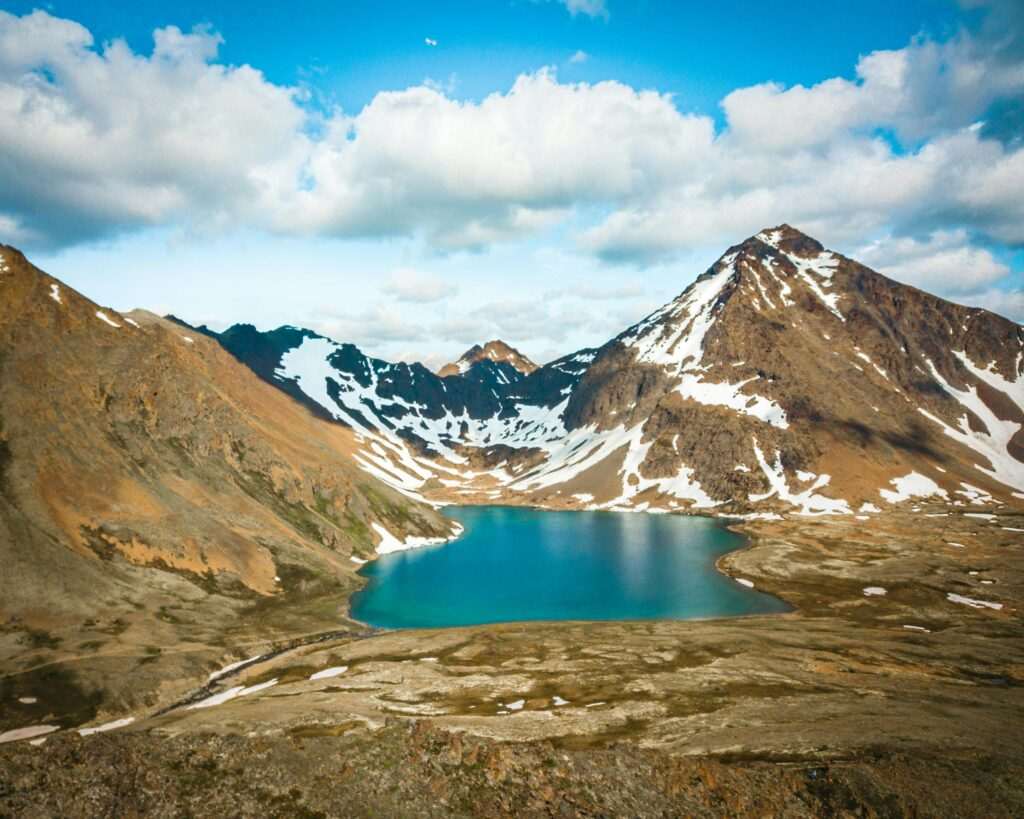
A mile or two from the Historical Park, Eklutna Lake is one of the most visually spectacular spots within easy reach of Anchorage. The lake is glacially fed, which gives it the characteristic milky turquoise color that comes from fine rock particles — glacial flour — suspended in the water. The color is most vivid in late summer when glacial melt is at its peak; in early spring the lake can appear greener, and in winter it freezes over entirely.
The lake sits at the base of a valley flanked by steep mountains, with Eklutna Glacier visible at the far end. The entire setting is dramatic in a way that photographs don’t fully capture — the combination of scale, color, and mountain backdrop is genuinely striking.
The Eklutna Lakeside Trail
The primary route into the recreation area is the Eklutna Lakeside Trail, a 13-mile trail (one way) that follows the shoreline from the trailhead parking area to the head of the valley near Eklutna Glacier. The trail is wide, relatively flat, and well-maintained — it’s popular with both hikers and cyclists, and the lake rental shop at the trailhead has bikes available for the purpose.
You don’t need to go the full 13 miles to have a rewarding visit. Even the first 2–3 miles offer excellent lake and mountain views, and the trail is accessible to walkers of most fitness levels. For a more committed day hike, the Serenity Falls Hut sits about 12 miles in — a public use cabin operated by the state that can be reserved for overnight stays. The hike to the hut and back is a serious full-day commitment of roughly 24 miles round trip; most visitors either turn back well before the hut or spend a night.
Twin Peaks Trail: For those seeking more elevation and views, a side trail branches off the main lakeside route toward the Twin Peaks, a more strenuous route with significant vertical gain and panoramic views over the entire valley. This route is best suited to experienced hikers in good weather.
Kayaking and Paddling the Lake
Eklutna Lake is one of the best flatwater paddling destinations in the Anchorage area. The lake is calm enough for novice paddlers in good conditions and large enough that experienced paddlers can cover significant distance. Kayak and paddleboard rentals are available at the trailhead from a seasonal concessionaire — single and tandem kayaks, plus paddleboards. No personal watercraft (motorized boats) are allowed on the lake, which keeps it peaceful.
Paddling the lake at dawn or dusk, when the water is calm and the light hits the mountains, is one of the finest outdoor experiences in the region. If you have a morning to spare, it’s worth setting an early alarm.
For guided paddling experiences beyond the lake, Prince William Sound Kayak Center and Anchorage Kayak Adventures offer guided tours of more technical coastal and fjord paddling in the broader southcentral region.
Camping
The Eklutna Lake Campground sits at the trailhead and offers basic tent and RV camping with fire rings and pit toilets. Sites are reservable through the state parks system. The campground is a practical base for multi-day exploration of the trail and lake, and it’s significantly less crowded than campgrounds closer to the city. The Chugach State Park Campgrounds system includes Eklutna among its sites — check availability well ahead for summer weekends.
Combining Both Sites in One Day
A full day at Eklutna works naturally as a two-part visit. Start at the Historical Park with a morning guided tour (typically running 10am–noon depending on schedule), spend an hour or two walking the cemetery and church grounds, then drive the short distance to the lake for an afternoon of hiking, paddling, or both. The two sites are tonally very different — one is quiet, reflective, and culturally dense; the other is wide-open and physically immersive — and the combination makes for a genuinely complete day.
Time budget:
- Historical Park guided tour: 1–1.5 hours
- Cemetery and church grounds: 30–60 minutes additional
- Drive to lake: 10 minutes
- Lakeside Trail (3–5 miles out-and-back): 2–3 hours
- Kayak rental and paddling: 2 hours
A 7am departure from Anchorage gets you to the Historical Park for an early tour and leaves a full afternoon at the lake. If you’re staying overnight at the campground, the pressure is off — you can explore the lake over two days and see it in different light conditions.
What to Know Before You Go
- Historical Park hours: Seasonal (May–September); guided tours typically run multiple times daily. Confirm current schedule before your visit.
- Lake Recreation Area: Open year-round, though the access road may be gated in winter. Day-use fee required in summer.
- Kayak and bike rentals: Available at the lake trailhead from a seasonal concessionaire, typically operating Memorial Day through Labor Day. Arrive early on summer weekends — inventory is limited.
- Bear awareness: Black and brown bears are present in the Eklutna valley. Carry bear spray and make noise on trails, particularly around blind corners on the lakeside trail.
- Weather: The valley can generate its own weather — afternoon winds pick up on the lake, and afternoon thunderstorms are possible in summer. Morning paddling is generally calmer and safer.
- Photography: Please respect the cemetery at the Historical Park — it’s an active burial ground for a living community. Ask your guide or check signage about photography restrictions before shooting.
Eklutna rewards visitors who make the small effort to get there. Both sites — the spirit houses and the glacier lake — offer experiences that have no equivalent elsewhere in the region, and the combination in a single day is hard to beat as an introduction to what makes southcentral Alaska genuinely distinctive.


No comments yet.