
Birdwatching in Anchorage 2026: Best Spots, Species & Seasonal Guide
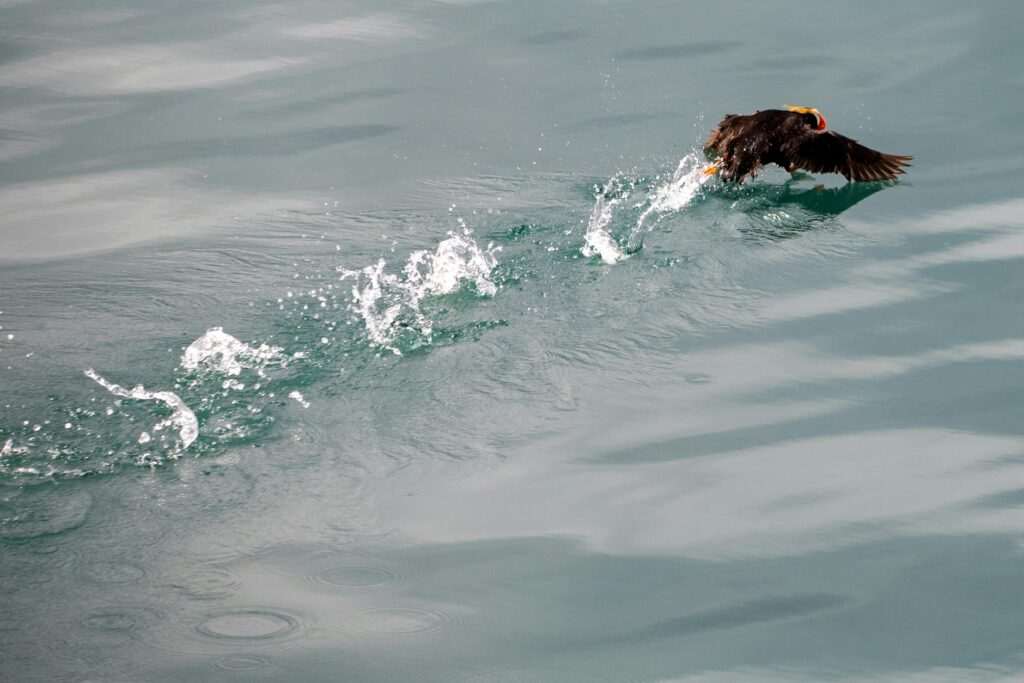
Anchorage sits at the convergence of several major migratory flyways, backed by the Chugach Mountains and fronting the Cook Inlet tidal flats — one of the largest shorebird staging areas in the Western Hemisphere. The city punches well above its weight as a birding destination. Within 30 minutes of downtown you can reach wetlands, tidal flats, coastal spruce forest, and subalpine terrain, each supporting a completely different bird community. Serious birders from across North America make dedicated trips here. If you’re visiting for other reasons, birding Anchorage is something worth building into your itinerary even if you’ve never used binoculars before.
Potter Marsh: Alaska’s Premier Urban Birding Site
The Potter Marsh Bird Sanctuary at the south edge of Anchorage is the city’s flagship birding location, and one of the top urban birding sites in the country. The marsh sits within the Anchorage Coastal Wildlife Refuge and is accessible via a 1,500-foot boardwalk that puts you directly over the wetland.
Spring migration peaks in May and early June, when the marsh fills with arriving Arctic terns, red-necked grebes, trumpeter swans, and dozens of duck species working their way north. The boardwalk offers eye-level access to birds at close range — grebes in breeding plumage, swans with cygnets, and yellowlegs probing the shallows. In summer, the marsh supports active nesting by several species. Fall brings a second wave of southbound shorebirds and waterfowl. Winter at Potter Marsh is quieter but not empty — the open water sections often hold mallards and other cold-tolerant waterfowl year-round.
The parking lot is accessible from the Seward Highway at milepost 117. Go early in the morning for the best light and fewest crowds.
Westchester Lagoon
Westchester Lagoon is a coastal impoundment just west of downtown, connected to Cook Inlet by a tidal channel. It’s one of Anchorage’s most accessible birding spots — within walking distance of several downtown hotels — and consistently productive year-round. Trumpeter and tundra swans use the lagoon as a staging area during spring and fall migration; in winter, the partially open water attracts diving ducks, buffleheads, and the occasional unusual stray that draws birders from across the region. Bald eagles are essentially permanent fixtures, perched in the cottonwoods at the lagoon’s edges. The surrounding trail offers good views at multiple points around the perimeter. Photography at Westchester Lagoon is exceptional in winter, when low-angle light and snow-covered surroundings produce striking conditions.
Tony Knowles Coastal Trail
The Tony Knowles Coastal Trail runs 11 miles along the Cook Inlet shoreline from downtown to Kincaid Park, passing through a variety of coastal habitats. For birders, the section between Westchester Lagoon and Earthquake Park is particularly productive — the trail borders tidal mudflats that attract shorebirds at low tide, and the spruce patches and berry thickets along the trail hold passerines during migration. Bohemian waxwings mass in these thickets in fall, sometimes in flocks of hundreds. In summer, the trail is excellent for raptors: merlins and sharp-shinned hawks use the coastal corridor as a hunting ground, and Northern harriers work the adjacent marsh areas.
Earthquake Park
The Earthquake Park Trail occupies land dramatically reshaped by the 1964 Good Friday Earthquake — the second-largest earthquake ever recorded — and the irregular terrain and standing water that resulted from ground subsidence have created prime bird habitat. The park sits at the north end of the coastal trail and is one of the better spots in the city for shorebirds during migration. Least and semipalmated sandpipers, dowitchers, and both yellowlegs species move through in numbers during the southbound migration window (late July through September). The park also offers reliable views of the Inlet, where loons and scoters are present in season.
Anchorage Coastal Wildlife Refuge
The Anchorage Coastal Wildlife Refuge encompasses approximately 10,000 acres of tidal flats, coastal marshes, and upland habitat stretching along the western edge of the city from Potter Marsh north to the Elmendorf Air Force Base shoreline. Potter Marsh is the most accessible section, but the broader refuge — accessible at various points along the Seward and Glenn Highways — hosts shorebird concentrations in migration that can number in the tens of thousands. The mudflats are particularly important during the southbound shorebird passage (July–September), when dunlin, western sandpipers, and dowitchers stage in enormous numbers before continuing south.
Birds by Season
Spring (April–June)
May is the peak month. Waterfowl and shorebirds arrive in waves throughout the month; raptors — including rough-legged hawks moving north — appear in late April and early May. By late May, swallows, warblers, and sparrows have arrived and are actively singing. The soundscape at Potter Marsh in late May is genuinely extraordinary. Common loons establish territories on nearby lakes and their calls carry across the marsh at dawn.
Summer (June–August)
Breeding birds are the focus: arctic terns nesting at Potter Marsh and Westchester Lagoon (give nesting terns space — they will dive-bomb intruders), yellow warblers in the willow thickets, and American dippers along fast-moving creeks. By late July, the first southbound shorebirds begin appearing — the end of July marks the beginning of fall migration at these latitudes.
Fall (August–October)
The southbound shorebird migration peaks in August. Unusual species mixed into the large flocks — buff-breasted sandpipers, Baird’s sandpipers, and occasional Pacific vagrant species — make fall the most exciting season for listing. Waterfowl numbers build through September and October, and Westchester Lagoon can hold large mixed flocks during weather-related pushes.
Winter (November–March)
Anchorage winters have a distinct and underrated bird community. Common and hoary redpolls arrive in irruption years, sometimes in flocks of hundreds. Pine and evening grosbeaks work through birch and alder forests. Boreal chickadees and gray jays are year-round residents of the spruce forests. Snowy owls occasionally appear during irruption years, hunting the coastal areas around the Lagoon and the Refuge. Bald eagles are present throughout winter.
Gear Tips
- Binoculars: 8×42 is the standard choice for the habitats here — good magnification with enough brightness for the frequent overcast conditions. 10x is better for distant shorebirds on the flats.
- Rain gear: Anchorage birding involves wet conditions much of the year. A waterproof jacket and waterproof footwear make the difference between a comfortable morning and a miserable one.
- Layers: Temperature swings are common even within a single outing. The coast is often windy and cooler than the city center.
- Field guide: The Sibley Guide to Birds of Western North America covers the relevant species. A supplementary Alaska-specific guide is useful for species identification subtleties.
Apps and Resources
- eBird (Cornell Lab): The essential tool for birders. Search recent sightings near Anchorage to see what’s being reported, find hotspot maps for each location, and log your own lists. Potter Marsh and Westchester Lagoon both have extensive historical data.
- Merlin Bird ID (Cornell Lab): The free identification app that identifies birds by photo or by sound. The Sound ID function is particularly useful at locations like Potter Marsh where birds are often heard before they’re seen.
- Anchorage Audubon Society: The Anchorage Audubon Society runs regular guided bird walks throughout the year, including specific migration walks at Potter Marsh in May. These are free, open to beginners, and led by experienced local birders who know the locations and the species intimately. Check their schedule before you arrive.
Featured photo by Beth Fitzpatrick on Pexels.

No comments yet.