
Ice Climbing Near Anchorage 2026: Frozen Waterfalls, Glaciers & Guided Trips
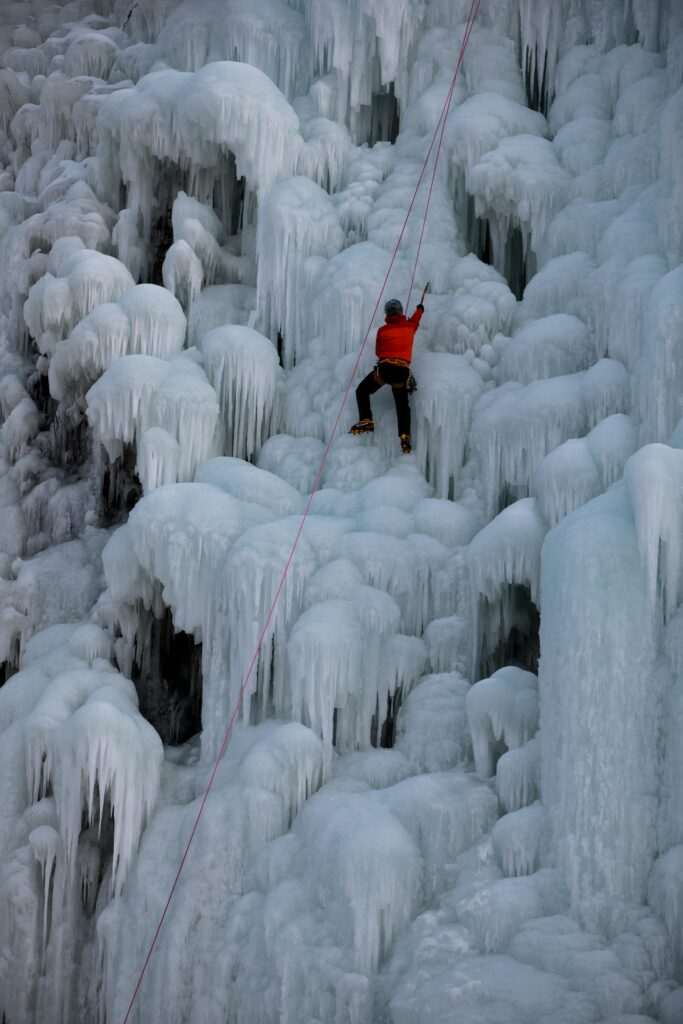
Ice climbing is one of those activities that looks extreme from the outside and feels completely achievable once you’re standing on a frozen waterfall with crampons on your feet and ice axes in your hands. The Anchorage area has access to some of the best ice climbing in North America, and the range of guided introductory options makes it accessible to visitors with no prior experience.
Here’s where to go, what to expect, and how to do it safely.
Matanuska Glacier: The Most Accessible Option
The Matanuska Glacier is the easiest major ice climbing access from Anchorage — about 2.5 hours northeast on the Glenn Highway. In winter, the glacier offers vertical ice walls, seracs, and frozen features that make excellent teaching terrain. MICA Guides is the primary guide service operating year-round on the Matanuska and offers ice climbing introductions specifically designed for beginners with no prior experience.
A typical introductory ice climbing day at Matanuska includes: arriving at the glacier, a safety briefing and gear fitting (crampons, harness, helmet, ice axes — all rental gear is provided), basic technique instruction on flat ice, and then top-roped ice climbing on vertical ice features. You’ll fall in love with the crampons long before you get to the vertical stuff — walking on glacial ice in steel spikes feels like having superpowers.
The season for optimal ice climbing conditions at Matanuska runs December through March. The ice solidifies and reaches maximum thickness in mid-winter; early and late season conditions can be variable.
Keystone Canyon: Alaska’s Ice Climbing Mecca
Keystone Canyon, about 5 hours east of Anchorage near Valdez, is the destination ice climbing area in Southcentral Alaska. The canyon walls freeze into Bridal Veil Falls (300 feet) and Horsetail Falls, along with dozens of smaller ice routes of varying difficulty. In peak winter conditions, Keystone Canyon attracts climbers from around the world and is one of the premier ice climbing venues in North America.
Valdez itself is worth the trip: a small port city deep in Prince William Sound with dramatic mountain and fjord scenery, good food, and a strong outdoor recreation culture. If you’re extending a trip to include Keystone Canyon, plan for at least two days — the drive plus the climbing works better as an overnight.
Several Valdez-based guide services and some Anchorage operators offer guided climbing at Keystone Canyon for intermediate to advanced climbers. The routes there are significantly more demanding than Matanuska introductory terrain; this is not a beginner destination without a highly qualified guide.
Chugach Foothills: Shorter Options Near Anchorage
Several seasonal ice climbing areas form in the Chugach Mountains east of Anchorage, accessible on day trips without the longer drives to Matanuska or Valdez. These form in cold snaps and vary significantly by year depending on temperatures. Locally based climbing guides know where the ice is forming and can arrange day trips to whatever is in condition. Contact Anchorage-area climbing guides in December to ask about what’s currently forming near the city.
Guided Experiences vs. Independent Climbing
For beginners, guided trips are the only appropriate path. Ice climbing involves technical rope systems, crampons and ice axe technique, and fall factors that require proper instruction before you start climbing vertical ice. Attempting it without instruction or with inexperienced guidance carries genuine risk of injury.
Introductory guided days are accessible to beginners in reasonable physical fitness. You don’t need to be an athlete — but upper body and grip strength make the experience easier, and a reasonable level of general fitness means you’ll enjoy the climbing rather than struggle through it.
Intermediate climbers with prior ice or rock climbing experience and belay skills can approach Keystone Canyon and some Chugach routes more independently, but local beta on ice conditions and route quality is valuable enough that local guide services or climbing clubs are worth contacting even if you don’t need a guide to belay you.
Required Gear
For guided introductory trips, all technical gear is typically provided or rented:
- Crampons: 12-point crampons designed for ice climbing (different from hiking crampons)
- Ice axes: Specialized technical ice tools for vertical climbing
- Helmet: Mandatory
- Harness and rope system: Provided by guide
You bring: warm base layers, insulating mid-layers, a waterproof outer layer (you will get wet against the ice), warm gloves (two pairs — one for climbing, one backup), and insulated boots with a stiff sole compatible with crampons. Your guide will advise on specific footwear requirements when you book.
Physical Fitness and What to Expect
A first ice climbing day is physically demanding in unexpected ways. The constant engagement of your core and arms to maintain position on the ice, the mental focus required for the technique, and the cold environment (you stop generating as much heat when you’re stationary belaying as when you’re climbing) add up. Most beginners are genuinely tired by the end of a 4–6 hour climbing day.
What you’ll find: ice climbing is significantly more intuitive than it looks from the ground. Once your feet are on the ice and you’ve made your first few solid crampon placements, the balance and the technique start to click. The combination of physical engagement, technical problem-solving, and vertical exposure creates an experience that’s difficult to describe to someone who hasn’t done it.
Booking Guide Services
Book guided ice climbing trips in advance, especially for peak winter dates (January and February). MICA Guides at the Matanuska is the most established operator for Anchorage-area climbers. For Valdez/Keystone Canyon trips, contact Valdez-based climbing guide services directly — the local operators know the specific ice conditions and route quality in ways that out-of-town guides don’t.
Ice conditions vary significantly by year depending on temperatures and snowfall. The most reliable communication about what’s in condition is direct contact with local guides in the weeks before your planned trip.
Alaska’s winter ice is extraordinary terrain. The combination of accessibility from Anchorage, world-class routes at Keystone Canyon, and quality introductory glacier terrain at Matanuska makes the Southcentral Alaska ice climbing scene one of the best in North America for climbers at every level.


No comments yet.