
Whale Watching from Anchorage 2026: Tours, Best Times & What to Expect
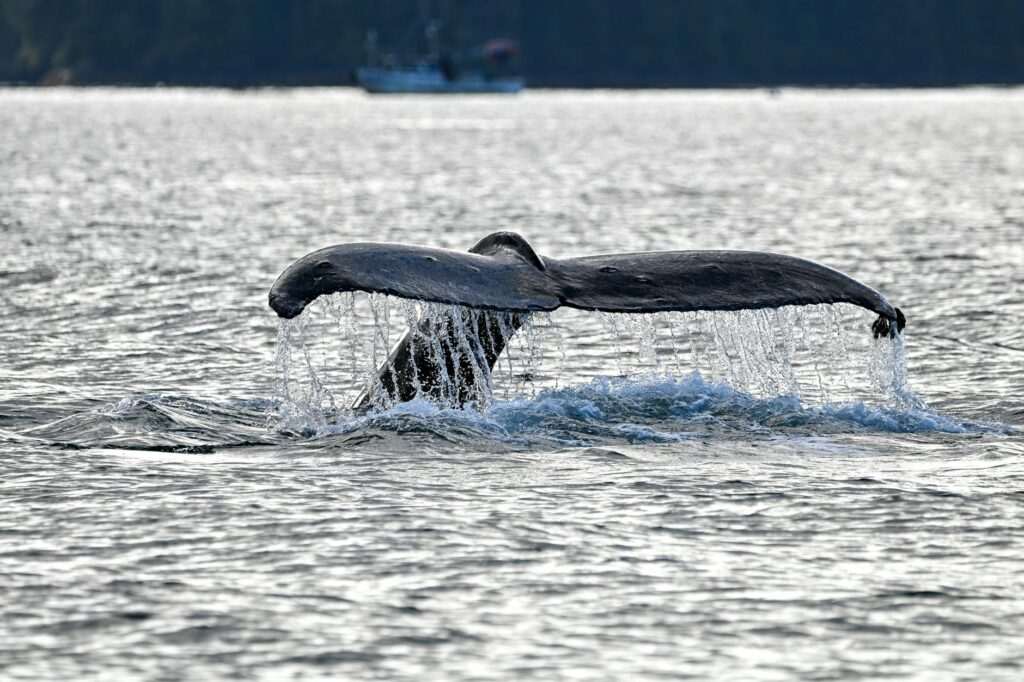
Anchorage doesn’t have its own whale watching harbor, but it’s the best base in Alaska for reaching the places that do. Within two to three hours by road or an hour by air, you can be on a boat in Resurrection Bay or Kachemak Bay watching humpbacks surface, orcas work the kelp lines, and Dall’s porpoise bow-ride alongside the hull. The whale watching accessible from Anchorage is some of the best on the Pacific coast — here’s how to get to it.
What you’ll see: species around Southcentral Alaska
Humpback whales are the most commonly encountered large whale on Kenai Fjords tours out of Seward. Summer and fall bring feeding humpbacks into the nutrient-rich waters of Resurrection Bay and the outer fjords, where they lunge-feed on herring and sand lance near the surface. Tail flukes, fin slaps, and occasional full breaches are regular occurrences on active days. Humpbacks are the species most reliable for dramatic behavior — they’re large, social, and frequently visible from the boat deck.
Orcas (killer whales) appear on Kenai Fjords tours throughout summer, though sightings are less predictable than humpbacks. The waters around the Chiswell Islands and the outer coast are particularly productive for orca pods. Transient orcas hunting marine mammals tend to move quickly and quietly; resident fish-eating orcas are more vocal and stay in areas with salmon. Both types move through Southcentral Alaska waters in summer.
Beluga whales are a different experience entirely — and the one species you can watch for free from shore. Cook Inlet’s resident beluga population concentrates in Turnagain Arm during summer salmon runs, where they’re visible from pullouts along the Seward Highway between Anchorage and Portage. Unlike humpbacks and orcas, belugas are white, relatively small, and seen in pods of 5–30 animals rolling through the tidal currents just offshore. No boat required.
Seward: the main departure point for whale watching tours
Seward, about 127 miles south of Anchorage on the Seward Highway, is the primary hub for whale watching boat tours accessible from Anchorage. The town sits at the head of Resurrection Bay, and the narrows open quickly into the outer Kenai Fjords coastline — productive humpback and orca territory that tour boats reach within 30–60 minutes of departure.
Major Marine Tours is one of Seward’s longest-established operators, running naturalist-guided tours on vessels large enough to be stable in the swells off the outer coast. Their full-day Kenai Fjords National Park tours (8–9 hours) are the version worth booking if you have the time — the longer route reaches the Chiswell Islands seabird rookeries alongside the whale habitat and includes a hot meal onboard. Half-day tours (4–5 hours) stay in Resurrection Bay and give you reliable wildlife with a shorter commitment.
Seward Ocean Excursions operates smaller vessels for guests who prefer a more flexible, less structured experience. Smaller boats can alter routes quickly based on wildlife sightings and get closer to coastline than the larger tour vessels. For guests focused on whale watching rather than a full parks tour, smaller-boat operators often deliver a more responsive experience.
Pricing for Seward whale watching tours typically runs:
- Half-day (4–5 hours): $100–$140 per adult
- Full-day Kenai Fjords tour (8–9 hours): $180–$240 per adult
- Children’s rates are usually 50–60% of adult pricing; infants sometimes free
Book at least 2–3 weeks ahead for summer departures, and 4–6 weeks ahead for July, which is peak season.
Homer: orca habitat and Kachemak Bay
Homer is 218 miles from Anchorage via the Sterling Highway — a beautiful 4-hour drive down the Kenai Peninsula, but a significant commitment for a day trip. The payoff is Kachemak Bay, one of Alaska’s most biologically productive marine environments and reliable territory for orca pods in summer. Homer’s charter fleet is smaller than Seward’s and tends toward half-day fishing and wildlife combinations rather than large-vessel tour formats. If you’re spending multiple days in Southcentral Alaska, Homer as an overnight with a whale watching charter on the water makes good use of the drive.
What a typical Kenai Fjords tour looks like
Most Seward whale watching tours follow a similar structure. You board at the small boat harbor in the morning (typically 8–9 a.m. departure), cruise out through Resurrection Bay with a naturalist narrating the coastline and wildlife. Seabirds appear quickly — puffins, murres, and kittiwakes are dense in the outer waters. Wildlife sightings are logged by the naturalist and shared over the PA system as the captain adjusts course toward active areas.
On a productive day, you might spend 20–30 minutes with a group of humpbacks before the boat moves on to sea otter rafts or a sea lion haul-out. Orca sightings trigger longer stops, with the boat holding position while the pod moves through. The Alaska SeaLife Center in downtown Seward is worth adding to the itinerary after your tour — the marine exhibits give excellent context for what you saw on the water, and the harbor seal and Steller sea lion tanks let you observe species up close that are often distant on the boat.
The free alternative: Turnagain Arm beluga watching
If a full tour isn’t in the budget or the schedule, Turnagain Arm’s roadside beluga whale viewing is one of the most genuinely distinctive wildlife experiences in Alaska — and it costs nothing but drive time and tide awareness. The best viewing spots are Beluga Point (Mile 110, Seward Highway) and the pullouts between Indian and Bird Creek. Belugas follow the incoming tide up the arm chasing salmon, so the 2–3 hour window around a rising tide is consistently the most productive time to look. Check tide tables before you go.
Best months for whale watching near Anchorage
May through September covers the core season, with June, July, and August delivering the most reliable activity:
- May–June: Humpbacks arrive and begin feeding in earnest. Orca activity increases. Tours run at full capacity from Memorial Day onward.
- July: Peak season. All species are active, salmon runs are in full swing (which drives feeding behavior), and daylight stretches past 11 p.m. The busiest and most expensive time to book.
- August: Humpback feeding activity is at its highest as fish concentrate before the fall. Excellent month for dramatic surface behavior. Crowds begin to thin toward month’s end.
- September: Quieter, cooler, and still productive. Shoulder season pricing, smaller crowds, and the possibility of early fall light on the mountains above the fjords.
Where do you go whale watching from Anchorage?
The primary departure point is Seward, about 127 miles south of Anchorage on the Seward Highway (2.5 hours). Major Marine Tours and Seward Ocean Excursions both run daily whale watching and Kenai Fjords National Park tours throughout summer. Homer (218 miles, 4 hours) offers a second option with productive Kachemak Bay orca habitat.
What whales can you see near Anchorage?
Humpback whales are the most reliably spotted species on Kenai Fjords tours out of Seward. Orcas (killer whales) appear regularly in summer, particularly in the outer fjords and near the Chiswell Islands. Beluga whales are a separate species — visible for free from shore along Turnagain Arm’s Seward Highway pullouts during summer salmon runs.
How much does whale watching near Anchorage cost?
Half-day tours from Seward typically run $100–$140 per adult. Full-day Kenai Fjords National Park tours run $180–$240 per adult and include a hot meal. Beluga whale viewing from Turnagain Arm is free — just check tide tables so you’re there on an incoming tide.
When is the best time for whale watching near Anchorage?
June through August is peak season, with July offering the highest activity as salmon runs concentrate feeding behavior. May and September are excellent shoulder-season options with lower prices and smaller crowds. All species are present from late May through early September.
The whale watching accessible from Anchorage doesn’t require a specialized expedition or a week on a ship. A morning departure from Seward, a full-day tour on the outer coast, and a drive back along Turnagain Arm in the evening light — that’s the whole trip, start to finish, and it covers three species of whale in one day without leaving Southcentral Alaska.
Featured photo by Beth Fitzpatrick on Pexels.


No comments yet.