
Trans-Alaska Pipeline 2026: Visiting the Engineering Marvel That Changed Alaska
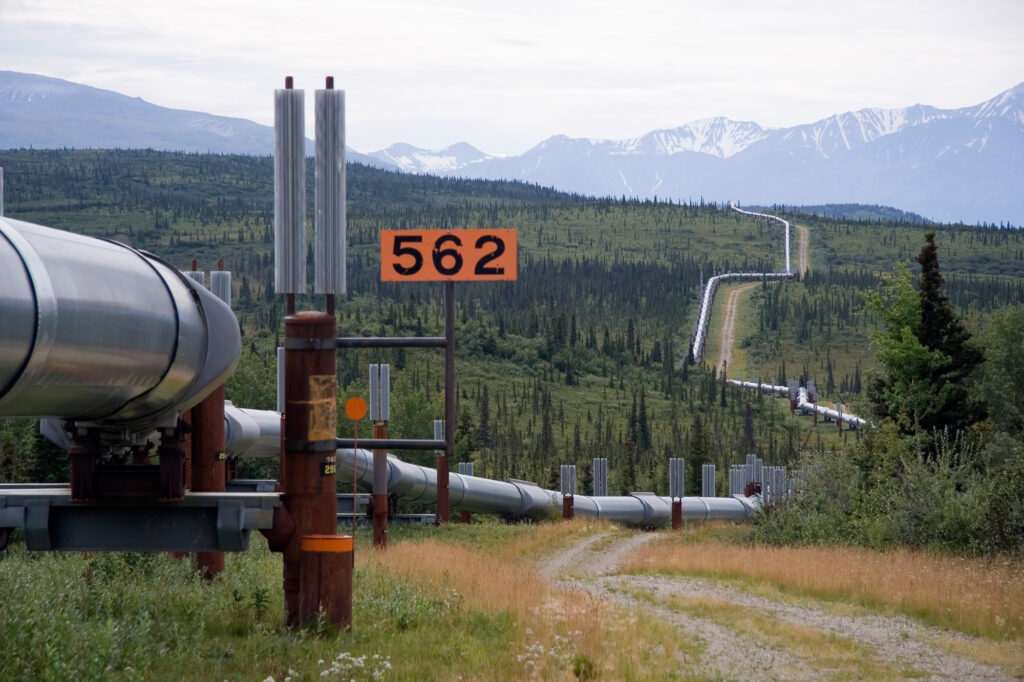
The Trans-Alaska Pipeline is 800 miles long, crosses three mountain ranges, spans more than 800 rivers and streams, and has moved over 18 billion barrels of oil since it opened in 1977. It was built in three years by 70,000 workers, at a cost of over $8 billion (roughly $40 billion in today’s dollars), in conditions ranging from -60°F winters to permafrost that made conventional buried pipeline impossible. It is, by any measure, one of the great engineering achievements of the 20th century — and it’s remarkably accessible to visitors who want to understand it up close.
The Pipeline in Brief: What It Does and Why It Looks Like That
The pipeline runs from Prudhoe Bay on the Arctic Ocean’s Beaufort Sea coast to the marine terminal at Valdez on Prince William Sound — 800 miles connecting Alaska’s two coasts through mountains, tundra, boreal forest, and permafrost. Oil pumped from wells on the North Slope travels south at about 5 mph, taking roughly 5 days to make the full journey at peak flow.
The most visually distinctive feature of the pipeline is that roughly half of it runs above ground on vertical support members — the characteristic zigzag pattern of supports visible from every road crossing. This design solves two problems: first, hot oil (the crude arrives at 145°F from the wellhead) would melt permafrost if buried, causing the ground to sink; second, the zigzag allows the pipe to flex and absorb seismic movement without rupturing. Alaska sits on one of the world’s most active earthquake zones, and the pipeline’s design survived a magnitude 7.9 earthquake in 2002 with minimal damage. The engineering is elegant in a purely industrial way, and once you understand why it looks the way it does, it becomes genuinely interesting rather than just large.
The Fairbanks Pipeline Visitor Center
The Alyeska Pipeline Service Company Visitor Center in Fairbanks is the best place in Alaska to engage with the pipeline’s history, engineering, and environmental context. It’s a must-stop on any Fairbanks visit: free admission, hands-on exhibits, a section of actual above-ground pipeline that visitors can touch, and explanations of every significant engineering decision from the thermal heat pipe design to the earthquake flex joints.
The center covers not just the engineering but the political and environmental battle over whether to build the pipeline at all — a fight that lasted years in Congress and courts before the 1973 Arab oil embargo broke the deadlock. It also covers the Valdez oil spill of 1989, the most significant environmental event in the pipeline’s history, and the changes in operations that followed. The Alaska Railroad connects Anchorage to Fairbanks and makes the trip accessible without renting a car — worth considering if a dedicated Fairbanks day is on your itinerary.
Seeing the Pipeline from the Road
The pipeline crosses or parallels several major Alaska highways, and pullouts and viewpoints allow close-up looks without needing to access restricted property. Key road crossings:
- The Parks Highway (Anchorage–Fairbanks): Multiple crossings visible from the road in the area south of Fairbanks. The pipeline runs roughly parallel to the highway through this stretch.
- The Richardson Highway (Fairbanks–Valdez): This road follows the pipeline for much of its length through the Alaska Range and Chugach Mountains to Valdez — one of the most dramatic drives in Alaska regardless of the pipeline’s presence. The Chugach National Forest Scenic Drives guide covers the Richardson Highway corridor’s scenic highlights.
- The Dalton Highway (Fairbanks–Prudhoe Bay): This 414-mile road to the Arctic Ocean runs alongside the pipeline for most of its length, offering the most sustained access to the above-ground sections. The Dalton is rough, remote, and extraordinary — a two- or three-day drive into terrain that most Alaska visitors never see. GoNorth Alaska offers RV rentals specifically suited for Dalton Highway travel, including vehicle preparations for the rougher northern sections.
Valdez: The Pipeline’s Southern Terminus
At its southern end, the pipeline terminates at the Valdez Marine Terminal — the largest oil terminal in North America — where tankers load crude oil for transport to refineries on the West Coast and beyond. The terminal itself isn’t open to the public, but the loading area is visible from shore in Valdez, and the sight of a 900-foot supertanker being loaded in the shadow of glacier-draped mountains is one of Alaska’s more surreal industrial spectacles.
Valdez is also where the Exxon Valdez spilled 11 million gallons of crude oil in 1989 — one of the most consequential environmental disasters in American history. The Valdez Museum covers the spill in detail, including the massive cleanup effort and the lasting ecological effects on Prince William Sound. Coming to Valdez and not engaging with this history would be a significant omission; it’s central to understanding what the pipeline represents in Alaska’s relationship with the environment it depends on.
Prudhoe Bay: The Pipeline’s Origin
For those who want to see the pipeline at its source, fly-in tours to Prudhoe Bay on the North Slope offer access to the oil fields where the crude originates. Multiple operators fly from Fairbanks to Prudhoe Bay for day tours — these tours include visits to drilling infrastructure, the pipeline pump station, and genuine Arctic Ocean access (you can touch the Beaufort Sea) in a highly industrial, otherworldly landscape. Tours are typically run by companies with North Slope access permits; book far in advance as space is limited.
The experience is not for everyone — Prudhoe Bay is functional industrial infrastructure, not aesthetic wilderness — but for anyone interested in how Alaska’s economy actually works, or in extreme environments, or in the practical logistics of extracting oil from the Arctic, it’s a genuinely fascinating day.
What the Pipeline Means to Alaska
It’s impossible to understand modern Alaska without understanding the pipeline. Alaska has no state income tax. No state sales tax. Every permanent Alaska resident receives an annual cash dividend — the Permanent Fund Dividend — paid from a constitutionally protected investment fund that accumulates a portion of oil royalties. In 2023, the PFD was over $1,300 per person; every man, woman, and child in Alaska gets a check. This is what oil wealth looks like in a state that decided to share it.
At peak production in the late 1980s, the pipeline carried 2 million barrels per day. Today production has declined significantly — current throughput is roughly a quarter of peak — and Alaska is actively navigating the question of what comes after oil. The pipeline will likely carry crude for decades yet, but the Permanent Fund’s investment portfolio is increasingly understood as the post-petroleum transition mechanism the state has been building since 1976. The pipeline is an engineering achievement, a political compromise, an environmental incident, and a fiscal foundation all at once. Seeing it — really looking at it, reading its history, understanding its engineering — is one of the more illuminating things a visitor can do in Alaska.
For guided pipeline-region and wilderness tours from Anchorage, Adventures by True North offers Alaska multi-day and day tour options.

No comments yet.