
Sand Art in Anchorage: Bottle Layering, Mandalas, and Sand Sculpting Workshops (2026)
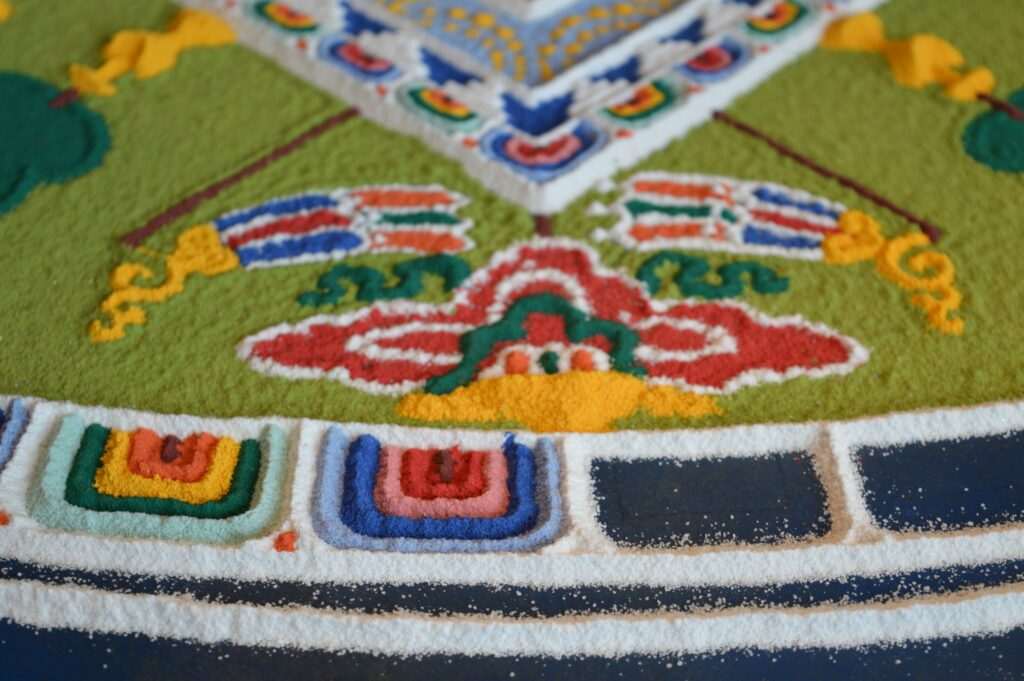
Sand art encompasses a wide range of creative practices that use sand — colored, natural, or kinetic — as the primary artistic medium, from the layered colored sand bottles that appear in craft market stalls to the extraordinarily complex Tibetan Buddhist sand mandalas that take teams of monks weeks to complete before being ritually swept away. Sand’s unique properties as an art material — its granular texture, its capacity for precise color mixing and layering, its response to gravity and motion — make it distinctive among visual art media. The impermanence of many sand art forms is itself part of their meaning: sand paintings created for specific ceremonies or occasions derive their significance partly from the fact that they’ll be destroyed. Contemporary sand art spans these extremes — the commercial craft of layered decorative bottles, the contemplative practice of Tibetan mandala making, the collaborative entertainment of competitive sand sculpting, and the therapeutic use of sand in psychological settings. In Anchorage, sand art workshops have found an audience particularly for mandala-inspired patterned work and layered bottle art, where the precision of colored sand application produces meditative, beautiful results that connect to both folk craft and fine art traditions. This guide covers colored sand layering, Tibetan sand mandala tradition, wet sand sculpting, kinetic sand, sand painting on glass, and therapeutic applications in 2026.
Colored Sand Layering in Bottles
Layered sand art — creating designs by pouring colored sand in sequence into glass bottles or vases — is the most accessible and widely practiced sand art form. The technique creates cross-sectional images visible through the glass: mountains, sunsets, geometric abstractions, and landscape patterns built from distinct colored layers.
Materials: Fine-grained, consistently colored craft sand (available in craft stores and online in dozens of colors) is the standard material. Natural beach or riverbed sand varies in grain size and color in ways that work against consistent layering. A glass bottle or vase with a wide enough opening to accept a funnel or small pouring implement, and a thin stick or skewer for creating valley patterns in the sand, complete the basic toolkit.
Technique: Pour each color layer carefully to the desired depth, leveling the surface before adding the next color. Straight horizontal layers create a simple stacked-band design; using a thin skewer or wire tool pushed down through the completed layers and dragged in patterns creates mountain ridges, wave shapes, and other designs by pulling the colors into each other at the layer boundaries. The pattern only appears at the glass wall — the interior of the bottle doesn’t need to be as precise. Building layers slowly and leveling between pours produces cleaner, more defined color boundaries than rushing.
Once the bottle is full, the contents are sealed — a cork or cap pressed firmly into place, often with a small amount of glue to prevent the seal from loosening. The finished piece is permanent as long as the bottle remains upright and sealed; turning a layered sand bottle upside down collapses the design.
Alaska landscape palettes — glacier blues and whites layered into mountain horizon compositions, aurora colors (teal, purple, magenta) in gradient layers, tundra autumn golds and ambers — produce layered sand bottle art with strong regional character.
Tibetan Buddhist Sand Mandalas
The Tibetan Buddhist sand mandala is one of the world’s most complex and philosophically rich art forms. Monks trained in the tradition spend years learning to construct mandalas — intricate geometric compositions representing specific Buddhist deities and cosmological structures — using metal funnels (chak-pur) to pour colored sand grain by grain in patterns of extraordinary precision. A complete mandala may contain millions of individual sand grains placed over days to weeks of collaborative work by a team of four or more monks.
The sand used in traditional Tibetan mandalas is powdered stone (dyed crushed stone, or in older traditions, semi-precious stone powders including lapis lazuli, coral, and turquoise). The colors follow traditional iconographic specifications — each deity, direction, and symbolic element has prescribed colors derived from centuries of artistic tradition. The mandala pattern itself follows a complex geometric design that encodes theological meaning in every element.
The practice’s most profound aspect is its conclusion: after completion, the mandala is ritually swept away, the colored sands mixed together, and poured into flowing water. The destruction of the completed work embodies the Buddhist teaching of impermanence — the beauty and effort of creation, offered and released. When Tibetan monks present public mandala constructions (which occur periodically in American cities including Anchorage through visiting cultural programs), the construction process is as much the art as the completed mandala.
Contemporary non-Buddhist sand mandala practice adapts the meditative, precision-patterned approach using colored craft sand and funnel tools, producing mandala-inspired pieces for contemplative practice and decorative art without the specific religious ritual context.
Wet Sand Sculpting
Sand sculpting — building three-dimensional sculptural forms from wet sand compacted into shapes — is the most publicly visible sand art form, appearing in competitive sand sculpture festivals, beach art installations, and recreational beach and riverside activity. The physics of wet sand are specific: the surface tension of water between sand grains creates a temporary cohesion that allows architectural building and carving while the sand remains wet, then collapses back to loose sand as it dries (or when the tide comes in).
Competitive sand sculpting operates at extraordinary scale and complexity — professional sand sculptors produce life-size figures, architectural structures, and elaborate narrative scenes from basic tools (shovels, water buckets, and small carving instruments). The ephemeral nature of the work — built to be photographed and then returned to the beach — gives sand sculpture a different relationship to permanence than most visual art.
Alaska’s beaches (Turnagain Arm, Knik Arm, coastal parks accessible from Anchorage) provide accessible sand sculpting environments during summer months, and the dramatic tidal environments of Southcentral Alaska add their own temporal dimension to sand-built forms.
Kinetic Sand
Kinetic sand is a commercial product — fine sand coated with a polymer that gives it unusual tactile properties: it flows like a liquid when poured or compressed but holds its shape when formed, doesn’t stick to dry surfaces, and produces a satisfying sensory experience of movement-and-form that standard dry or wet sand can’t replicate. Originally developed for occupational therapy and sensory integration contexts, kinetic sand became a mainstream craft and play material and now appears in adult mindfulness and craft contexts.
Kinetic sand’s therapeutic properties — the tactile engagement, the resistance to permanent mess, the meditative quality of manipulating a material that responds visibly to pressure and releases cleanly — make it particularly valuable in workshop settings focused on mindfulness and sensory experience rather than permanent artifact production.
Sand Painting on Glass Panels
Sand painting on glass — applying colored sand to glass panels with adhesive, creating permanent, framed pieces — produces finished artwork with a dimensional, textured surface quality distinct from both painting and layered sand work. The technique is related to the traditional Native American and Australian Aboriginal sand painting traditions that create pictorial images from colored mineral pigments pressed into adhesive surfaces.
Contemporary glass panel sand painting applies colored craft sand to an adhesive-coated glass or acrylic panel in sections, building up the design color-by-color. The adhesive (white glue diluted slightly, or purpose-made sand painting medium) is applied to one section at a time, the appropriate sand color poured over and pressed in, then the excess tipped off before moving to the next section. The result, when framed, produces a piece with textural and color depth that looks quite different from flat painting while sharing the same pictorial approach.
Alaska landscape imagery — mountain silhouettes, glacier compositions, wildflower fields — translates particularly well to sand painting on glass, where the granular texture of the sand complements the geological and organic subjects.
Therapeutic Uses of Sand Art
Sand has been used therapeutically for over a century: Jungian analytical psychologist Dora Kalff developed sandplay therapy in the 1950s, building on earlier work by Margaret Lowenfeld, as a projective technique where clients create scenes in a sand tray using miniature figures and objects. The sand tray becomes an externalized inner landscape where symbolic arrangements reveal psychological content that verbal expression may not access as directly.
Beyond clinical sandplay, the tactile and sensory engagement of sand art in general has documented therapeutic value — the meditative concentration of mandala work, the sensory satisfaction of kinetic sand, and the slow layering of colored sand bottles all produce states of focused attention that practitioners consistently report as calming and restorative. Sand art workshops in therapeutic and wellness contexts use these properties deliberately, framing the craft as contemplative practice as much as artistic production.
Sand Art Workshops in Anchorage
Anchorage sand art workshops primarily focus on layered bottle art (producing a finished sealed bottle in 90 minutes to 2 hours) and mandala-inspired sand pattern work on flat panels. Summer workshops at coastal and riverside locations — including beach access points along the Tony Knowles Coastal Trail — sometimes incorporate wet sand sculpting as a combined outdoor-craft experience. Workshop prices run $25–$55, with materials provided.
Our free things to do in Anchorage guide covers the cultural events and community spaces — including the Anchorage Market & Festival, where community craft programming and live art demonstrations appear — where Anchorage sand art workshops and mindfulness craft programming appear. Our Anchorage hiking guide covers the coastal and riverside environments — Turnagain Arm beaches, Knik River banks, and the Cook Inlet-facing beaches of Kincaid Park — where sand sculpting and plein-air sand art are most naturally practiced.
Photo by Quynh Tran on Pexels.
No comments yet.