
Parasailing Near Anchorage 2026: Alaska Aerial Views & Summer Thrills
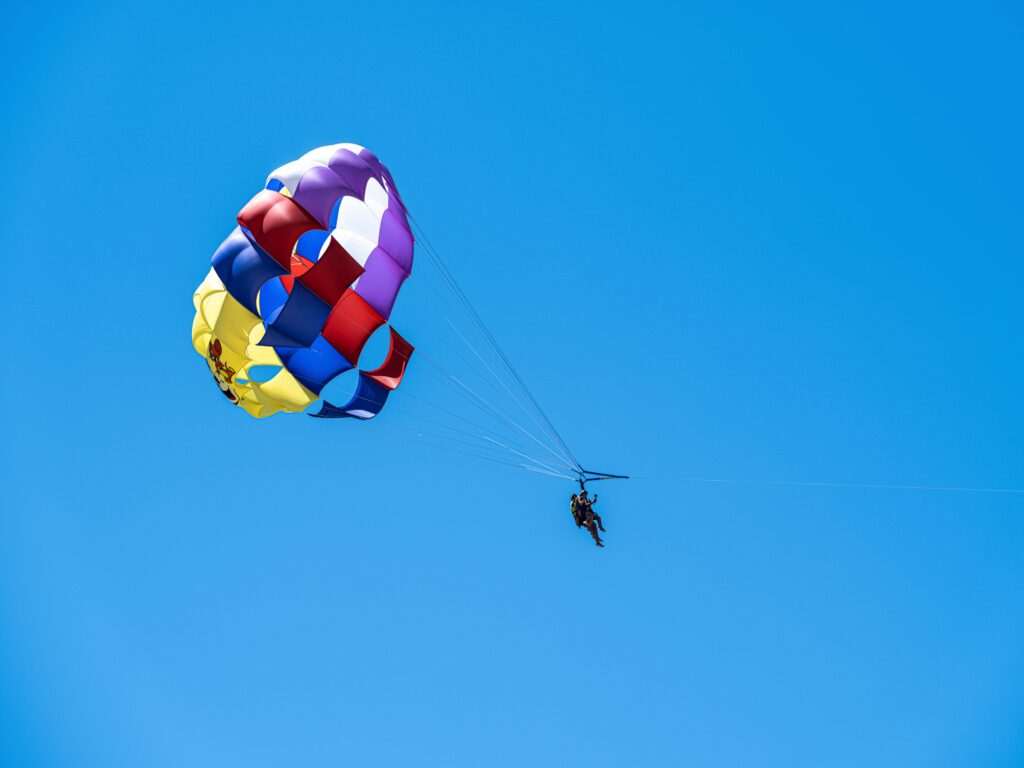
Parasailing delivers one of the best aerial perspectives you can get without climbing into a plane — dangling above the water, watching mountains and coastline spread out below you, with nothing between you and the view. Near Anchorage, the combination of dramatic coastal scenery and limited crowds means a parasailing session becomes something genuinely spectacular. Here’s where to find it, what it’s like, and what you should know before you go in 2026.
Parasailing Near Anchorage: Setting Expectations
Anchorage itself sits on the edge of Cook Inlet and Knik Arm — two of the most extreme tidal zones in North America, with tidal swings up to 38 feet and dangerous glacial silt mudflats. These conditions make parasailing impractical directly off the Anchorage waterfront. The action happens farther down the Kenai Peninsula, where Kachemak Bay near Homer and the protected coves around Seward offer calmer waters and boat-based parasailing operations.
Homer is the main hub. It’s a 5-hour drive from Anchorage down the Kenai Peninsula — a stunning road trip in itself, especially if you time it for mid-June when wildflowers are out and the mountains still have snow. Seward (2.5 hours from Anchorage via the Seward Highway, one of the most scenic drives in the world) is a closer option, with marine tour operators who occasionally offer parasailing among their water activities. Both destinations reward a day trip or overnight stay beyond just the parasailing.
What the Experience Is Like
If you’ve never parasailed, the mechanics are simple: you’re harnessed into a parachute-style canopy, attached to a towline connected to a powerboat. As the boat accelerates, you lift off the boat platform — or launch directly from the beach in some setups — and rise to altitude. Ascents reach 400–800 feet above the water depending on the operator and conditions. At the top, you float in silence while the boat continues pulling your line.
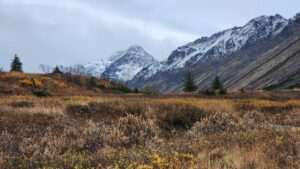
The view from altitude near Homer might include Kachemak Bay’s calm turquoise water, the snow-covered Kenai Mountains across the bay, and Grewingk Glacier visible in the distance. Near Seward, you’d be looking at Resurrection Bay, sea otters and seals in the water below, and the Chugach peaks rising dramatically from the coastline. On very clear days, Denali can be seen from altitude throughout much of the Kenai Peninsula.
The ride itself is smoother than most people expect — there’s no sensation of falling, just a steady, quiet float with wind in your ears. Most sessions last 8–12 minutes of airtime per person. Tandem and triple rides (two or three people in harness at once) are standard. You come back down by the boat operator reeling in the line.
Tandem vs. Solo Parasailing
Most operators near Anchorage offer tandem as the default — two people sharing one canopy. It’s the better option for first-timers because you have company and it tends to be calmer when you’re not managing the experience alone. Solo parasailing gives you more freedom of movement and a slightly longer airtime, but isn’t always available from every operator. If solo is important to you, confirm availability when you book.
Triple parasailing (three people in harness) is offered by some Homer and Seward operators and is popular with families. Weight limits typically allow up to 400–450 lbs for triple rides.
Aerial Views: What You’ll See
The aerial perspective from parasailing altitude is one of the few ways to see the full scale of Alaska’s coastal topography at once. Key landmarks visible from altitude in the Homer area:
- Kachemak Bay State Park: The undeveloped south shore of Kachemak Bay, with glacier-cut valleys and dense spruce forest visible from above
- Grewingk Glacier: One of the most accessible tidewater glaciers in Alaska, visible across the bay as a blue-white river of ice spilling toward sea level
- Homer Spit: The unusual 4.5-mile sand bar that juts into Kachemak Bay, with the fishing harbor, boat launch, and shops visible in miniature below
- Chugach and Kenai Mountains: The ring of jagged peaks surrounding the bay, snow-covered well into July
From Seward, altitude reveals Resurrection Bay’s fjord geography — steep walls dropping straight to water, glaciers feeding streams visible from above, and the open Gulf of Alaska at the bay’s mouth.
Alternatives: Flightseeing and Helicopter Tours
If parasailing timing doesn’t line up with your Anchorage visit, the city has outstanding aerial alternatives. Rust’s Flying Service runs fixed-wing flightseeing tours directly from Lake Hood — the world’s busiest seaplane base — with views of Denali, the Chugach Range, and Knik Glacier on a typical route. Alaska Helicopter Tours offers helicopter-based aerial experiences with landing options on glaciers, which delivers a perspective no parasail can match in terms of sheer drama.
For boat-based adventures around Anchorage that don’t require the Homer or Seward drive, Cook Inlet Charters and Seward Ocean Excursions run marine wildlife and sightseeing tours that put you on the water with mountain backdrops — a different kind of thrill, but worth the day if aerial views are the goal.
Age, Weight, and Health Requirements
Typical parasailing requirements in Alaska:
- Minimum age: Usually 6–8 years old for tandem rides with a parent; some operators require 18+ for solo rides
- Weight limits: Solo riders usually 80–250 lbs; tandem 80–450 lbs combined; confirm with your specific operator
- Health: Not recommended for pregnant individuals or those with heart conditions, back problems, or recent surgeries — the harness puts pressure on your hips and legs during ascent and descent
- Non-swimmers OK: You’ll have a life jacket, and skilled operators rarely dip riders in the water (though “splashing” is optional at many operators if you ask for it)
What to Wear and Bring
- Layers: Even in July, Alaska coastal air at altitude is cool. Bring a windbreaker or light fleece — you’ll be surprised how much colder it gets even 400 feet up
- Sunglasses with a strap: Wind at altitude will pull standard glasses off your face
- Secure footwear: Closed-toe shoes or sport sandals with heel straps; flip-flops will come off on ascent
- Leave the phone pocketed: Many operators prohibit loose items and handheld phones aloft. GoPros mounted to helmets are usually fine if the operator provides mounts
- Sunscreen: UV reflection off the water is intense, and you’re getting it from below as well as above
Best Season and Pricing
Parasailing near Anchorage runs June through August, peaking in July when weather windows are longest and most reliable. Operators in Homer and Seward typically don’t open until late May and close by mid-September. June offers some of the best conditions — long days (near-constant daylight in the Homer area in mid-June), low wind mornings, and water clarity is often best before late-season boat traffic churns things up.
Pricing typically runs $80–$120 per person for a tandem session; solo and triple rates vary. Book at least a few days in advance for July — summer weekends fill quickly and weather cancellations can knock out a day’s entire queue.
Frequently Asked Questions
Is there parasailing in Anchorage itself?
Not on the Anchorage waterfront — Cook Inlet’s extreme tidal swings (up to 38 feet), glacial silt, and dangerous currents make boat-based parasailing impractical close to the city. The nearest reliable parasailing is in Homer (5 hours south) and Seward (2.5 hours south), both of which have calmer protected waters suitable for parasailing operations.
Do I need experience to parasail?
No prior experience is needed. The boat operator handles all the technical aspects — you just get harnessed in, follow their instructions for launch and landing, and enjoy the ride. Most first-timers find it far less intimidating than they expected once they’re in the air.
What’s the best time of day to go parasailing?
Morning sessions (before 11am) tend to have calmer wind conditions in both Homer and Seward. Alaska coastal afternoons can build wind quickly, which doesn’t necessarily cancel a session but can make the ride more turbulent. If smooth, quiet airtime is your goal, book the earliest available slot.
Can I parasail if I’m afraid of heights?
Many people who are afraid of heights find parasailing more manageable than they expect — the slow, controlled ascent and steady floating feel quite different from the immediate exposure of a cliff edge or tall building. That said, you’re genuinely at altitude, and there’s no way to get down quickly if you panic. If heights are a significant concern, a trial flightseeing tour in a small plane first can be a gentler way to test your comfort before committing to parasailing.
No comments yet.