
Northern Lights Tours & Aurora Viewing Near Anchorage 2026
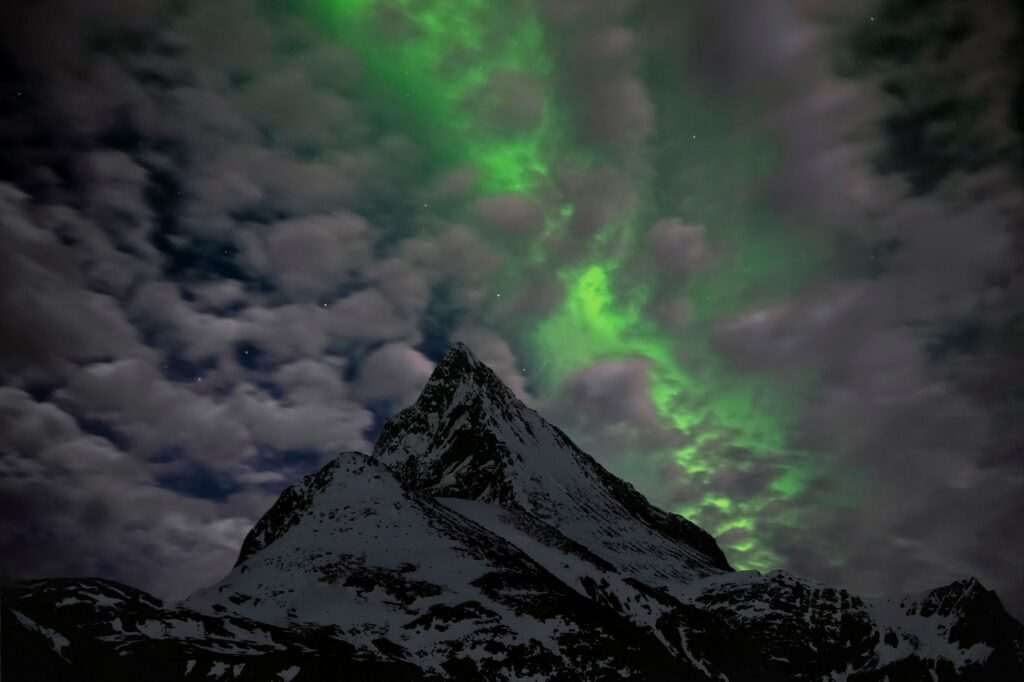
Anchorage sits directly under the auroral oval — the ring-shaped zone around Earth’s magnetic pole where the northern lights appear most frequently and most intensely. On clear nights with sufficient geomagnetic activity, the aurora is visible from the Anchorage area roughly 200 nights per year, though the combination of cloudless skies and city light pollution means that productive aurora nights require either patience or movement toward darker ground. The season runs from late August through mid-April, when darkness lasts long enough to provide a viewing window; the peak months are September through March, with February and March typically producing the highest frequency of strong displays. This guide covers the best viewing spots within reach of Anchorage, guided tour options, and the practical knowledge needed to chase the aurora independently in 2026.
Why Anchorage is an Aurora Base Camp
Most major aurora destinations in Alaska require significant travel — Fairbanks, the traditional aurora capital, is 350 miles north and considerably darker. Anchorage trades some of Fairbanks’ darkness for the convenience of a full-service city with international flights, diverse accommodations, and well-developed infrastructure. The trade-off is real: Anchorage’s lights wash out fainter aurora activity, and nights that produce faint Kp-2 or Kp-3 displays visible in Fairbanks may be invisible from the city center. However, the dark-sky locations accessible within 30 to 90 minutes of Anchorage — particularly north into the Matanuska-Susitna Valley and south along the Kenai Peninsula — push aurora viewing quality close to Fairbanks-level conditions while retaining the logistical advantages of an urban base.
Best Viewing Spots Near Anchorage
Hatcher Pass is the single most recommended dark-sky aurora destination within reach of Anchorage — approximately 70 miles north on the Parks Highway to Wasilla, then the Hatcher Pass Road into the Talkeetna Mountains. At elevations above 2,000 feet with minimal surrounding light pollution, Hatcher Pass delivers the clearest dark skies accessible by road from Anchorage. The open alpine terrain provides 270-degree horizon views, and the combination of snow-covered mountain scenery and aurora overhead produces some of the most photogenic conditions in Southcentral Alaska. Drive time from downtown Anchorage is approximately 90 minutes; allow extra time in winter for road conditions. The pass road may close above the lower parking areas after significant snowfall — check road conditions with the Alaska Department of Transportation before departing.
The Hillside and Chugach State Park Trailheads offer the quickest escape from Anchorage city glow without leaving the metropolitan area. The Glen Alps Trailhead at 2,100 feet elevation on the Chugach front, accessible from the east Anchorage hillside neighborhoods, places you above the city’s light dome on the western horizon while preserving full sky coverage to the north and east. On strong aurora nights (Kp 4 and above), the Hillside areas produce genuine aurora viewing within 20 minutes of downtown. The trailhead parking area is accessible in winter with a passenger vehicle on dry roads; check conditions before attempting in icy weather.
Eklutna Lake, 26 miles northeast of Anchorage on the Glenn Highway, provides another dark-sky option with the bonus of mountain reflections on calm nights. The lake’s eastern orientation opens the sky toward the most active aurora belt; the surrounding peaks frame the display without blocking it. The drive takes approximately 40 minutes from downtown.
The Palmer and Wasilla area in the Matanuska-Susitna Valley offers broader flat terrain with less surrounding topography — useful when the aurora is active to the south and southwest, where mountains can block Chugach front viewpoints. Several local farms and open fields in the valley provide genuine dark-sky viewing conditions accessible within 45–60 minutes of Anchorage.
Turnagain Arm pullouts along the Seward Highway south of Anchorage provide additional viewing options with Cook Inlet in the foreground — particularly productive when the aurora extends low toward the southern horizon. The stretch between Potter and Portage is accessible by car and offers numerous shoulder pullouts with minimal ambient light.
Guided Aurora Tours from Anchorage
Guided aurora tours from Anchorage typically operate on a reactive model: tour operators monitor geomagnetic forecasts and notify participants when conditions look favorable, then transport small groups to pre-selected dark-sky locations where the combination of site knowledge, weather awareness, and transportation removes the decision-making burden from visitors. A good guide knows which direction the aurora tends to display from each site, which locations stay accessible after snowfall, and how to read the real-time forecast data that separates productive nights from futile ones.
Standard group aurora tours from Anchorage run $80–$150 per person for a 3–5 hour evening experience, typically including vehicle transport, a thermos of hot drinks, and basic photography guidance. Most operators run groups of 8–12 people; smaller private tours cost $200–$400 per person depending on group size and destination. Tour operators based in the Mat-Su Valley sometimes offer better pricing because they are already closer to the prime dark-sky zones and spend less of the evening driving.
For visitors who want a multi-night aurora experience with the highest probability of a sighting, remote aurora lodges outside Anchorage — some accessible via the Alaska Railroad into the Interior — offer accommodation in yurts, cabins, or glass-roofed rooms designed specifically for aurora viewing. These packages typically run $300–$600 per night including lodging, meals, and guiding, and represent the highest-probability aurora experience available to visitors who can commit two or more consecutive nights to the pursuit. The extended dwell time dramatically improves odds: a single cloudy night at a lodge still leaves the next night available, whereas a day-visitor who gets clouded out simply misses the display.
The Anchorage Museum occasionally hosts aurora-themed programming and lectures during the winter season — a useful complement to an aurora tour for visitors who want scientific context alongside the visual experience. Check the museum’s events calendar during your visit window.
Self-Guided Aurora Chasing
The tools for independent aurora forecasting have improved dramatically in recent years. The essential apps and resources for self-guided viewing near Anchorage:
SpaceWeatherLive (free app and website) provides real-time Kp index data and short-term aurora activity forecasts. The Kp index runs from 0 to 9; for Anchorage-area viewing from a dark-sky location like Hatcher Pass, Kp 3–4 is typically sufficient for a visible display. Kp 5 and above produces strong displays visible even from moderately light-polluted suburban locations. Kp 6+ delivers dramatic curtain and corona displays that fill social media feeds after major geomagnetic storms.
The NOAA Space Weather Prediction Center (swpc.noaa.gov) publishes 3-day geomagnetic forecasts that allow advance planning around particularly promising nights. The 27-day forecast tool tracks the solar rotation cycle and helps identify when active sunspot regions will again face Earth.
Clear sky conditions matter more than Kp index for Anchorage-area viewing. Alaska’s coastal climate produces frequent cloud cover; checking cloud forecast apps for both city forecasts and mountain forecasts is essential before driving 90 minutes to Hatcher Pass. Cloud cover over the Chugach can differ dramatically from cloud cover in the valley — occasionally the pass is clear when Anchorage is socked in, and vice versa. Windy.com’s cloud layer visualization is particularly useful for identifying clear-sky corridors.
The optimal viewing window on any given night is typically 10 p.m. to 2 a.m., with midnight often producing the peak. Set a Kp alert on SpaceWeatherLive so your phone wakes you if activity surges after you’ve gone to sleep — some of the strongest displays happen between 1 and 3 a.m. when most visitors have already returned to their hotels.
What to Wear for Aurora Viewing
Aurora viewing in Alaska is fundamentally a standing-around-in-the-cold activity. Unlike hiking, where exertion keeps you warm, aurora photography and observation requires extended static exposure to overnight temperatures that frequently drop below 0°F in the Mat-Su Valley in winter. The clothing requirement is significantly warmer than what feels adequate for an active outdoor excursion at similar temperatures.
Base layer: merino wool or heavyweight synthetic. Mid layer: down or synthetic insulation jacket. Outer layer: wind-blocking shell. Legs: insulated pants or bibs rated for extended cold exposure. Feet: boots rated to at least -20°F (-29°C), with wool socks and boot liners. Hands: mittens over liner gloves — not gloves alone. Head: balaclava or fleece hat covering ears, plus a windproof hood. Hand warmers (chemical or battery-powered) are valuable for both personal comfort and for keeping camera batteries functional — cold temperatures drain lithium batteries rapidly. Bring a wide-mouthed thermos with hot drinks.
Realistic Expectations
The northern lights are a natural phenomenon and cannot be guaranteed on any specific night. The combination of geomagnetic activity, clear skies, and sufficient darkness creates a three-variable equation where any single factor failing produces a non-event. Visitors who plan their entire Alaska trip around a single aurora-viewing night frequently go home disappointed; visitors who allow three or more nights in the region, with the flexibility to drive toward clear skies, improve their probability substantially.
The aurora also looks different in person than in photographs. Long-exposure photography reveals colors and structure invisible to the naked eye; a display that appears as a subtle pale-green shimmer to unaided vision may produce dramatic photographs with appropriate camera settings. Strong displays at Kp 5 and above, however, produce unmistakable naked-eye color and movement: curtains of green and occasional red or purple visible without any optical aid. These nights, which occur several times per season in most years, justify every cold hour of waiting.
Plan your aurora evenings as late-night excursions from Anchorage rather than as primary activities. Keep dinner plans, a warm hotel, and early-morning flexibility as your framework, and treat the aurora as a bonus layer over an already full Alaska itinerary. The best aurora nights often arrive without much warning — flexibility to drop everything and drive north on a clear-forecast night is the most reliable aurora strategy available.
Featured photo by Noel BAUZA on Pexels.
No comments yet.