
Mat-Su Valley Day Trip 2026 — Palmer, Wasilla & Giant Vegetables from Anchorage
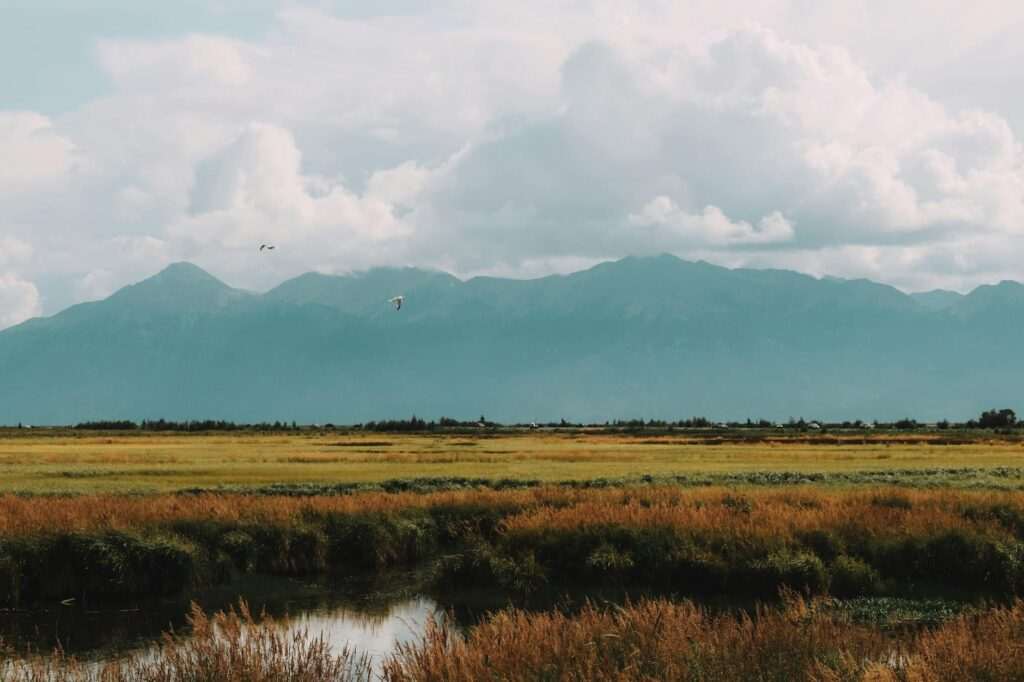
An hour north of Anchorage, the Glenn Highway drops into the Matanuska-Susitna Valley and everything changes. The mountains pull back, the sky opens up, and fields stretch between peaks in a landscape that looks nothing like the rest of Southcentral Alaska. The Mat-Su Valley is Alaska’s agricultural heartland — fertile glacial soil, summer days that run 20 hours, and a culture shaped equally by farming, sled dogs, and small-town Alaska character. For Anchorage visitors,it’s one of the most overlooked and rewarding day trips on the road system.
Getting There: The Drive
Palmer is 42 miles north of Anchorage via the Glenn Highway (Highway 1) — about 45 minutes without stops. Wasilla is a few miles further west on the Parks Highway (Highway 3). The most scenic approach follows the Glenn Highway through the Matanuska River corridor with views of the Chugach Mountains to the south and Talkeetna Mountains ahead. There are no toll roads and the drive is straightforward.
A popular loop route: take the Glenn Highway north to Palmer, continue west on the Palmer-Wasilla Highway to Wasilla, and return south on the Parks Highway (Highway 3) to Anchorage. The full loop is about 130 miles and works well as a half-day or full-day trip.
Palmer: Colony Town and Farmers Market
Palmer was built in 1935 as part of Franklin Roosevelt’s New Deal, when the federal government relocated 203 Midwestern farming families to the Mat-Su Valley to establish Alaska’s agricultural base. The colony era is the defining chapter of Palmer’s history and the town has preserved it well.
Colony House Museum
A restored 1935 colony home, furnished as it was when the original farming families arrived. The exhibits explain the audacious New Deal experiment — transporting Midwesterners to Alaska by ship — and what daily life looked like in the early years. Admission is $5 for adults. The museum is open Tuesday through Saturday in summer.
Palmer Farmers Market
Saturday mornings from June through September, downtown Palmer hosts one of Alaska’s best farmers markets. The produce is extraordinary: the Mat-Su Valley’s 20-hour summer days push vegetables to sizes found nowhere else.You’ll see cabbages the size of ottomans, zucchinis as long as baseball bats, and sunflowers taller than the vendors. This is a genuine agricultural market, not a craft fair — the people selling produce grew it. Come early for the best selection.
Hatcher Pass
A scenic mountain road starting just north of Palmer leads into the Talkeetna Mountains to Independence Mine State Historical Park, a preserved gold rush-era hard-rock mine perched in an alpine bowl at 3,800 feet. The buildings are original, the views are expansive, and the wildflower displays in July are exceptional. Parking costs $5. The road to the mine is paved to mile 17, then gravel — high-clearance vehicles are recommended beyond the mine.
Wasilla: Iditarod Country
Wasilla is where the Iditarod Trail Sled Dog Race has its heart. While the ceremonial start is in Anchorage each March, the official restart — when the dogs actually begin racing to Nome — happens in Wasilla. The town embraces its sled dog identity year-round.
Iditarod Trail Sled Dog Race Headquarters
Open year-round, the Iditarod headquarters museum covers the race’s history from its 1973 founding to current champion mushers. Exhibits include sleds, gear, photographs, and video from past races. In summer, kennels are open for visits — you can meet champion sled dogs and, if you time it right, see husky puppies. Admission is $10 for adults. This is genuinely interesting even for people who have never followed the race.
Dorothy G. Page Museum
Wasilla’s local history museum covers the town’s founding in the homestead era, the gold rush years, and the area’s Indigenous heritage. Small but well-curated; admission is $3 for adults.
Giant Vegetables and the Alaska State Fair
The Mat-Su Valley’s 20 hours of daily summer sun in June and July creates growing conditions that don’t exist anywhere else in North America. Plants that mature over months in the lower 48 grow to record proportions here. The current world record for heaviest cabbage — 138.25 pounds — was set at the Alaska State Fair in Palmer.
The fair runs August 21 through September 1, 2026 and draws over 400,000 visitors across its 12 days. The giant vegetable competition is the centerpiece: cabbages, pumpkins, squash, and carrots compete by weight, with the largest specimens lifted by forklift. Beyond the vegetables, the fair has a full midway, live music on multiple stages, 4-H animal exhibits, local food vendors, and the kind of late-summer Alaska energy that is hard to find elsewhere. This is one of the best possible ways to spend a day in the Mat-Su Valley.
For a taste of local Mat-Su brewing culture, the Matanuska Brewing Company in Palmer is worth a stop — their taproom features beers named after valley landmarks and is a popular post-fair gathering spot.
Day Trip Extension: Matanuska Glacier
If you have extra time, continue east on the Glenn Highway from Palmer another 60 miles to reach the Matanuska Glacier — the largest glacier accessible by car in the United States. The glacier’s face is visible from the highway; guided walks on the ice are available through operators at the site. Adding this to a Palmer day trip makes for a long but extraordinarily varied day: farms, history, and an ice field all within one drive.
Where to Eat
- Turkey Red: Palmer’s best restaurant. Farm-to-table menu, locally sourced ingredients, excellent lunch plates. Get there by noon on weekends or expect a wait. Closed Mondays.
- Vagabond Blues: Palmer coffee shop and bakery on South Valley Way. Locally roasted coffee, pastries, live music some evenings. A genuine community gathering spot.
- Valley Hotel Restaurant: Breakfast in the historic 1948 hotel dining room. Classic diner menu, reasonable prices, the oldest continuously operating hotel in the Mat-Su Valley.
When to Go and What to Combine
Best months: June through early September. June and July for wildflowers and Hatcher Pass. Late August for the State Fair and giant vegetable peak. September for the sandhill crane migration at Palmer Hay Flats — thousands of cranes stage here before flying south, visible from the highway.
Half-day from Anchorage: Palmer Farmers Market (Saturday morning) + Colony House Museum + lunch at Turkey Red. Back in Anchorage by 3pm.
Full-day loop: Glenn Highway to Palmer → Hatcher Pass → Wasilla Iditarod HQ → loop back on Parks Highway. Add the State Fair if visiting late August.
With kids: The Iditarod HQ kennel visit and giant vegetable competition are both excellent with children. Hatcher Pass alpine meadows are accessible on short hikes from the parking area.
Featured photo by Josh Meeder on Pexels.


No comments yet.