
Lake Hood Seaplane Base Anchorage 2026 — World’s Busiest Floatplane Base
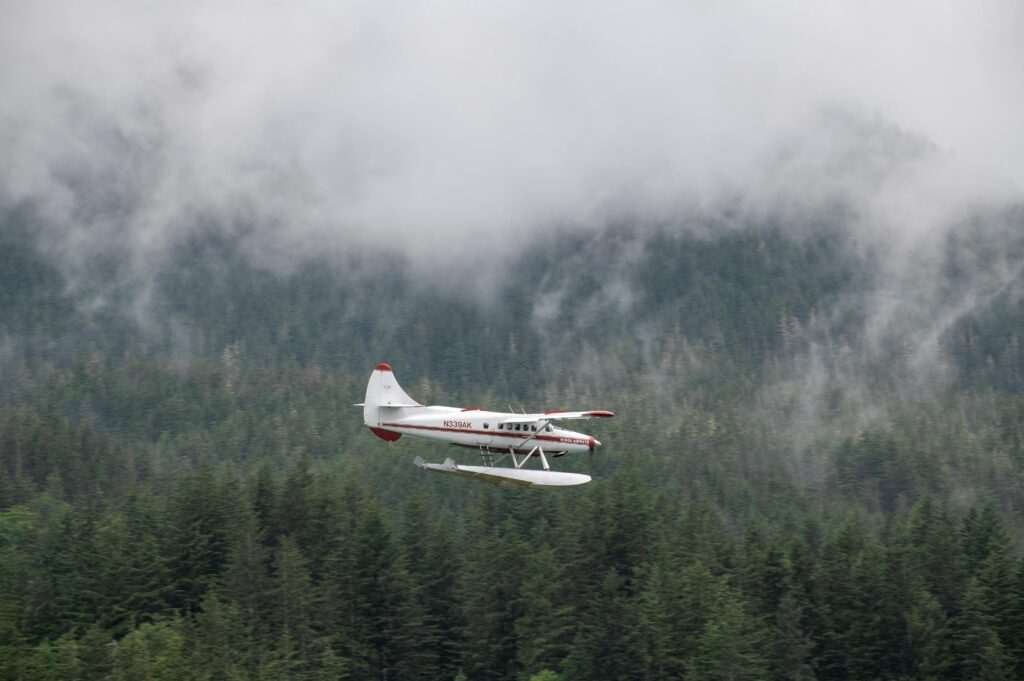
On a busy summer morning at Lake Hood, the air traffic doesn’t stop. A float-equipped Cessna lifts off the lake surface heading northwest toward Denali. Another circles for landing on the adjacent Lake Spenard, touching down with a spray of white water and taxiing to one of the hundreds of private dock spaces that line the shore. A de Havilland Beaver, the workhorse of Alaska bush aviation, idles at the fuel dock. Lake Hood and Lake Spenard together form the largest and busiest floatplane base in the world — up to 800 aircraft operations per day during peak summer — and the whole spectacle unfolds along public viewing areas accessible to anyone who drives over from downtown Anchorage, five minutes away. This guide covers where to watch, what you’ll see, how to access the adjacent Alaska Aviation Museum, and how to book a floatplane charter if watching from shore isn’t enough.
What Makes Lake Hood Unique
Lake Hood is not primarily a tourist attraction, which is part of what makes it worth visiting. It is a working airport — FAA designated as Anchorage Lake Hood Seaplane Base — where Anchorage residents tie their personal floatplanes to private docks and commute to remote properties, fish camps, and cabins that are inaccessible by road. Alaska has more private pilots per capita than any other state, and a disproportionate number of them fly floatplanes. Lake Hood is where that aviation culture is most visibly concentrated.
The base occupies two connected lakes: the original Lake Hood and the larger Lake Spenard, which were connected by a channel dug in the 1930s to create a longer takeoff and landing corridor. The combined water runway is approximately 4,000 feet long in winter when the lakes freeze and aircraft switch to wheel-ski operations. In summer, floatplanes use the open water. The surrounding shoreline is developed with private hangars, dock spaces, and the residential properties of aircraft owners who have homes adjacent to their aircraft — a uniquely Alaskan arrangement where pulling out of the driveway and pulling out of the dock are equivalent actions.
Watching the Operations: Where to Stand
Lake Hood Drive, which runs along the lake’s eastern and northern shores, provides the primary public viewing access. Pull-offs and informal viewing areas along the road offer clear sight lines across the water to the takeoff and landing corridor, with the Chugach Mountains as a backdrop on clear days. No fee, no reservation, no guided tour required — you walk to the water’s edge and watch the traffic.
Morning is the peak activity window. Alaska floatplane pilots tend to depart early for fishing trips, hunting camp supply runs, and wilderness lodge shuttles that require arriving at remote destinations before the day’s activities begin. Between 7am and 10am on a weekday morning in July, the traffic on Lake Hood is sustained enough that there’s rarely more than a minute or two between operations. Aircraft types visible on any given morning span a century of aviation: vintage 1940s and 1950s Piper Cubs and Aeroncas alongside modern Cessna 206s, de Havilland Beavers and Otters, and the occasional Twin Otter operated by commercial charter companies.
The residential dock areas on the western and northern shores, accessible by foot along the waterfront path, offer a different perspective — less traffic watching and more close-range observation of aircraft tied to private docks, being rigged for trips, or having maintenance performed. This is where Alaska aviation culture is most visible at a human scale.
Alaska Aviation Museum
The Alaska Aviation Museum on the eastern shore of Lake Hood is one of the most undervisited attractions in Anchorage — a serious aviation history institution housed in a waterfront facility with direct views of active floatplane traffic from its observation deck. The collection centers on historic Alaska bush planes: the de Havilland Beaver and Otter, the Cessna series that opened remote Alaska to regular transport, the Stinson Reliant, and early Norseman aircraft that were instrumental in building the infrastructure of the Alaska interior before roads existed.
The museum’s exhibits trace the full arc of Alaska aviation from the first flights in the territory through the barnstorming era, the military buildup of World War II, the postwar bush pilot golden age, and the development of Alaska’s commercial aviation network. The context matters for visitors who want to understand what they’re watching on the lake outside — many of the aircraft still operating out of Lake Hood today are contemporaries or descendants of the museum’s collection, flown for the same purposes they were designed for eighty years ago.
Admission is approximately $15 per adult (verify current rates before visiting). The observation deck provides an elevated view over the lake that is particularly valuable for photography — looking west over the water during afternoon light with the Alaska Range visible beyond on clear days. The museum is open year-round, though the floatplane traffic outside peaks between May and September and drops significantly once the lake freezes in October.
Charter Floatplane Tours from Lake Hood
Several charter operators based at Lake Hood offer scenic floatplane tours, glacier landings, fishing drop-off services, and remote cabin charters departing directly from the seaplane base. Booking a floatplane tour from Lake Hood is qualitatively different from booking one from an airport terminal — you board from a dock, taxi across the same water you just watched other aircraft use, and depart with the full sensation of floatplane flight that begins with a water takeoff.
Tour options range from 30-minute scenic circuits over Anchorage and the Chugach Range to full-day glacier landing excursions to Denali or the Alaska Range. Prices vary significantly by duration and destination; expect to pay $200–500 per person for scenic tours and considerably more for remote destination charters. Operators at Lake Hood include companies that also serve as air taxis to remote lodges and wilderness camps throughout Southcentral Alaska, so the aircraft you board for a scenic circuit is typically the same one that ferries supplies and guests to destinations unreachable by road.
The Surrounding Area
Lake Hood sits in west Anchorage between the airport and the coastal bluff, adjacent to two other accessible destinations worth combining with a lake visit. Kincaid Park, Anchorage’s largest park, begins about a mile southwest of Lake Hood and covers more than 1,400 acres of coastal bluff forest with an extensive trail network accessible year-round. A morning at Lake Hood watching floatplane traffic followed by a trail walk at Kincaid makes for a complete west Anchorage half-day.
The Tony Knowles Coastal Trail runs between downtown Anchorage and Kincaid Park, passing through terrain adjacent to Lake Hood’s western perimeter. The trail section nearest the lake provides views across the water from the coastal bluff and, on clear days, across Cook Inlet to the volcanic peaks of the Alaska Range. The 11-mile trail can be accessed at multiple points and cycled or walked in either direction; the Lake Hood section is particularly scenic in early morning when the floatplane traffic is active and fog burns off the inlet.
Practical Information
Lake Hood is free to visit and accessible by car or bicycle year-round. Parking is available along Lake Hood Drive and at the Alaska Aviation Museum lot. The lake is approximately five minutes by car from downtown Anchorage — from the intersection of International Airport Road and Minnesota Drive, follow the signs toward the floatplane base. GPS navigation to “Lake Hood Seaplane Base” is reliable.
Aircraft movement on the lake is continuous but not constant — there are slow periods, particularly in the afternoon on overcast days when charter traffic is lighter. Weekday mornings in June and July produce the highest sustained activity. Summer weekends bring more recreational flight activity. If watching specific aircraft types or waiting for a particular lighting condition for photography, a morning visit of two to three hours captures the peak period without requiring full-day commitment.
No formal guide or tour is required to access the public viewing areas. The Alaska Aviation Museum provides the structured interpretive experience if you want context; the lakeside viewing areas provide the raw spectacle regardless.
Is Lake Hood Seaplane Base free to visit?
Yes — the public viewing areas along Lake Hood Drive are free and accessible by car or on foot at any time. No reservation or admission fee is required to watch floatplane operations from the shoreline. The Alaska Aviation Museum on the lake’s east shore charges separate admission (approximately $15 per adult) and is open year-round.
When is the best time to watch floatplanes at Lake Hood?
Weekday mornings between 7am and 10am from June through August produce the highest volume of floatplane traffic, with charter operations departing for fishing camps, wilderness lodges, and remote destinations throughout Alaska. Summer overall (May–September) is the peak floatplane season; winter operations continue with wheel-ski aircraft on the frozen lake surface.
Can you take a floatplane tour from Lake Hood?
Yes — multiple charter operators based at Lake Hood offer scenic floatplane tours, glacier landing excursions, and remote destination charters departing directly from the seaplane base. Tours range from 30-minute aerial circuits over Anchorage to full-day Alaska Range expeditions. Booking in advance is advisable for July and August when demand is highest.
How far is Lake Hood from downtown Anchorage?
Lake Hood Seaplane Base is approximately 3 miles from downtown Anchorage — about five minutes by car. The Tony Knowles Coastal Trail connects downtown to the Lake Hood area by bicycle or on foot, with the trail passing through terrain adjacent to the lake’s western perimeter.
Lake Hood is the kind of place where Alaska’s personality is most plainly visible: practical, self-reliant, and organized around access to terrain that most of the world only sees in photographs. The floatplanes coming and going aren’t performing for visitors — they’re working. A bush pilot loading gear for a week in the Brooks Range, another ferrying a fishing party to a remote river, a third heading back to the city after dropping supplies at a dry cabin. Watch for an hour on a July morning and you understand something about how Alaska actually operates that no museum exhibit quite conveys.


No comments yet.