
Kenai River Pink Salmon Run 2026 — Fishing the August Humpy Bonanza
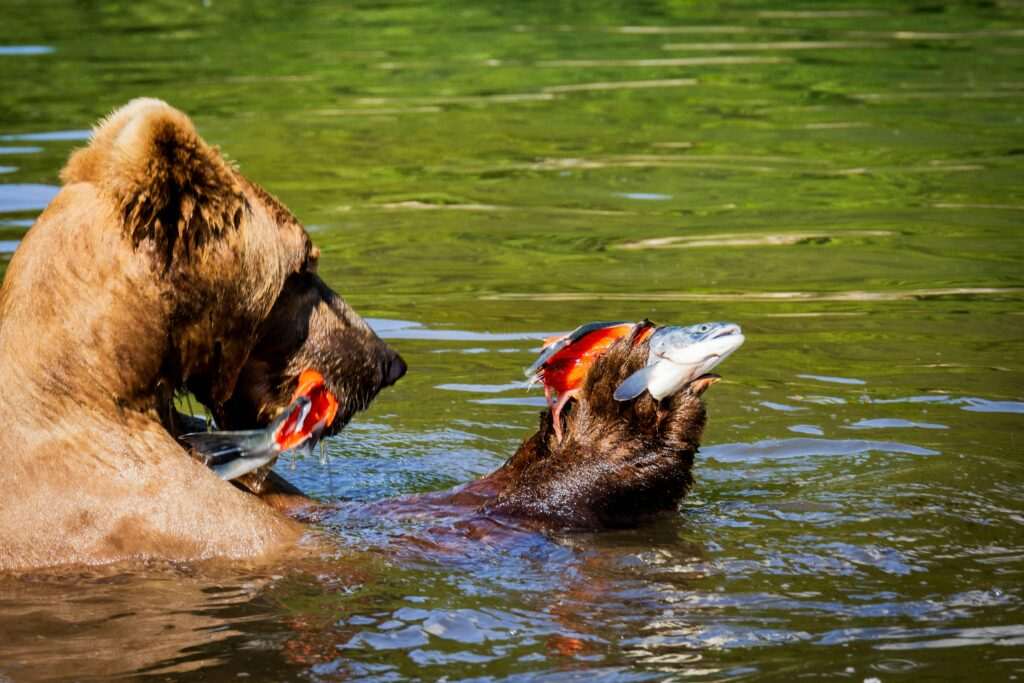
August on the Kenai River has a particular quality that regular visitors recognize immediately: the banks are crowded, the fish are everywhere, and the bears know it. Pink salmon — called humpies for the pronounced dorsal hump males develop as they approach spawning — return to the Kenai system in numbers that can exceed a million fish in a good run year. When they arrive in force, every gravel bar becomes a fishing spot and every shallow riffle holds moving fish visible from shore.
For visitors to Anchorage, the Kenai pink salmon run is one of the easiest Alaska fishing experiences to access. The fish are abundant, the tackle is simple, the drive is about two hours, and the success rate for anglers who pick the right week is genuinely exceptional.
What Pink Salmon Are (and Why Anglers Call Them Humpies)
Pink salmon (Oncorhynchus gorbuscha) are the smallest and most numerous of the five Pacific salmon species. An average humpy weighs three to five pounds — light compared to a Kenai king salmon pushing 60 pounds — but what they lack in size they compensate for with sheer numbers and aggressive behavior in the river. Pinks will strike spinners, spoons, flies, and pink plastic beads without much persuasion, making them the most forgiving salmon species for anglers learning the ropes.
The hump that gives them their nickname develops in males during the freshwater spawning migration. A male pink salmon approaching spawning condition is visibly changed from its ocean form: the jaw hoooks, the back humps dramatically, and the coloration shifts from silver to brownish-olive with dark patches. Freshly arrived fish — silver, firm, still ocean-bright — are the best eating and the most active fighters. Fish that have been in the river more than a week begin to deteriorate rapidly; catch them early in the run for the best experience.
Timing the 2026 Kenai Pink Salmon Run
Pink salmon return on a strict two-year cycle, with different stream systems showing different dominant-year strengths. On the Kenai River and its tributaries, pink salmon enter the system from late July onward, with the peak of the run typically occurring between the last week of July and the third week of August. The very first week of August is historically productive — fish are entering in large numbers and are still ocean-fresh.
Run timing can shift by a week or two depending on ocean conditions, water temperature, and weather. Alaska Department of Fish & Game monitors the Kenai run in real time and publishes sonar counts on their website throughout the season. Check the ADF&G count data before booking flights — a run that arrives late is still worth fishing; you simply plan for the actual peak rather than a calendar estimate.
Best Kenai River Access Points for Pinks
The lower Kenai River, from Kenai to the outlet at Cook Inlet, sees the first arriving fish. The upper river, from Soldotna upstream toward the Russian River confluence, fills with fish as the run progresses. For day visitors from Anchorage, the Soldotna area offers the most developed infrastructure: bank access at Centennial Park (in-town, free, family-friendly), the mouth of Soldotna Creek, and numerous pullouts along the Kenai Spur Highway.
The Russian River confluence, about 80 miles south of Anchorage on the Sterling Highway, is a legendary pink salmon location that also draws significant brown bear activity during the run. The confluence area is managed by the U.S. Forest Service and requires a small recreation fee. Space is limited on the bank — arrive early on weekend mornings if you want a spot in the most productive zones.
Ninilchik and Deep Creek on the lower Kenai Peninsula offer additional pink salmon access and somewhat less crowding than Soldotna during peak weeks. Both have beach-launching ramps for anglers fishing by boat from the salt.
Gear for Pink Salmon on the Kenai
Pink salmon are caught on light to medium-light gear — a 7- to 9-foot spinning rod rated for 6–12 pound line handles the fish comfortably and is the most versatile setup for the Kenai. Baitcasting and fly fishing gear both work equally well.
Effective lures include:
- Pink spinners and spoons — Pink-colored hardware is the traditional choice and remains the most consistent producer. Mepps, Blue Fox, and Pixee spoons in pink/silver are the standards.
- Pink beads — Pegged foam or hard plastic beads (8–12mm, pink or salmon-egg orange) drifted naturally through holding water are highly effective and increasingly popular.
- Pink flies — For fly anglers, pink woolly buggers, pink Clousers, and egg patterns all draw strikes. A 6- or 7-weight rod with a floating or intermediate line works well in the slower pools.
No bait is needed. Pinks are aggressive enough on their spawning migration that lure presentation and positioning matter far more than bait selection.
Alaska Fishing License Requirements
All anglers 18 and older need an Alaska sport fishing license. Non-residents purchase an annual license or a shorter-term license (1-day, 3-day, 7-day, or 14-day options available). Pink salmon require a King Salmon Stamp only when targeting king salmon — pinks do not require any stamp beyond the base license.
Licenses are purchased online at the ADF&G website, at sporting goods stores throughout the Kenai Peninsula, or at the Fred Meyer and REI in Anchorage. Buy before you go; the river banks are not the place to discover you need to get licensed first.
Guided vs. Independent Fishing
The Kenai is one of the most approachable rivers for independent anglers in Alaska. The pink salmon run requires no specialized knowledge of seasonal holes or underwater structure — the fish are everywhere when the run is on, and basic lure presentation from public bank access produces results for most first-time anglers within a few hours.
Guided trips add value if you want to fish by drift boat (covering more river and accessing spots unreachable from the bank), if you want coaching on presentation technique, or if you’re combining the trip with a king salmon or sockeye portion that requires more specialized knowledge. Guide operations such as Alaska Good Time Charters and Cook Inlet Charters offer half-day and full-day pink salmon trips in August at rates starting around $150–$200 per person.
Bears on the River
Brown bears are active on the Kenai River during the pink salmon run — the same fish draw both species. Encounters are routine at the Russian River confluence and other bank-access points. Standard bear awareness applies: make noise on the trail, don’t leave fish on the bank, clean your catch away from the water if possible, and never approach a bear regardless of its apparent indifference to your presence. Anchorage sporting goods stores sell bear spray; carry it on the Kenai during August.
Getting to the Kenai River from Anchorage
Soldotna is approximately two hours south of Anchorage via the Seward Highway and Sterling Highway. The drive is one of the most scenic in Southcentral Alaska — the highway parallels Turnagain Arm before climbing through mountain passes to the Kenai Peninsula lowlands. Leave Anchorage by 6:00 a.m. on weekend mornings to reach the best bank access spots before peak crowds arrive.
Car rental is required — there is no bus service to the Kenai from Anchorage. A standard sedan handles all Kenai Peninsula highway driving; a higher-clearance vehicle is only needed for gravel road access to certain off-highway spots.





No comments yet.