
Glacier Helicopter Tours from Anchorage 2026: Land on Ice Above the Clouds
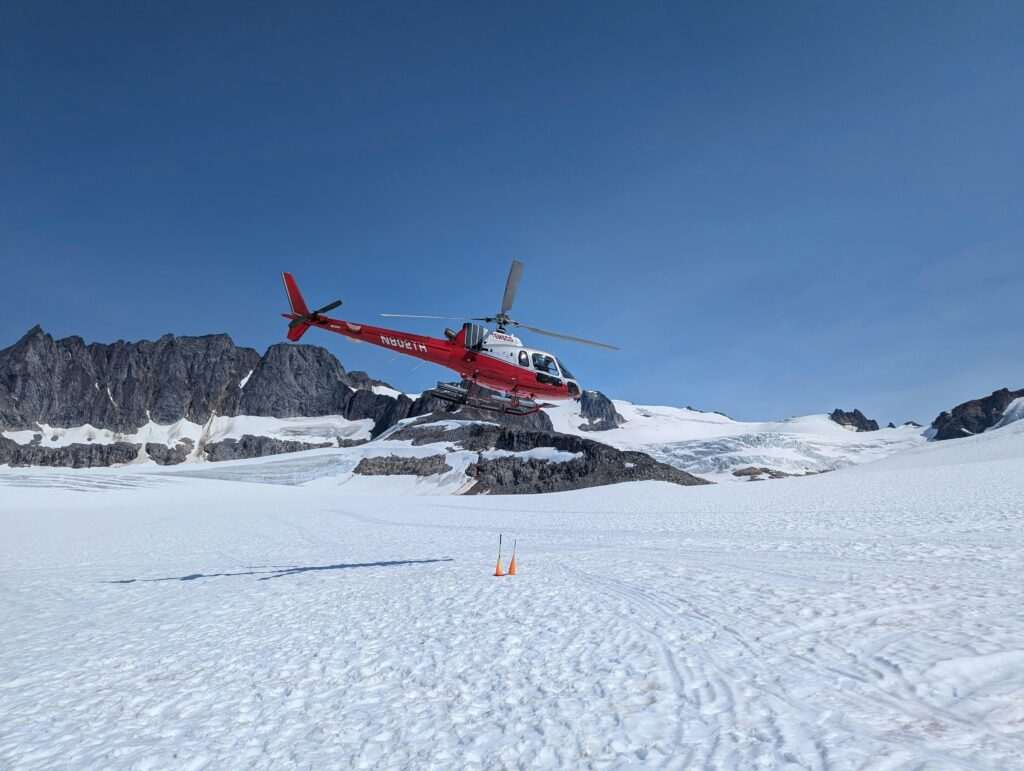
There’s a moment on a glacier helicopter tour that no photograph fully prepares you for. The aircraft descends through thin air above an ice field, the rotor noise drops, the skids touch down, and suddenly you’re standing on something ancient — ice that has been moving, grinding, and reshaping the land beneath it for thousands of years. The silence is immediate. The scale is disorienting. The blue is a shade of blue you’ve never seen before.
Helicopter glacier tours are among the most dramatic experiences you can book from Anchorage. They’re expensive, weather-dependent, and over in an hour. Most people who take one say it was worth every dollar.
What Makes Helicopter Glacier Landings Different
Float plane tours and boat-based glacier viewing — both common from Southcentral Alaska — offer impressive perspectives on glaciers, but they keep you at a remove. You see the terminus, the calving face, the outwash plain. With a helicopter tour, you land on the glacier itself. You walk on the ice. You hear it creak. If you’re on a hike-included tour, you rope up with crampons and explore crevasse fields with a guide.
The approach is its own reward. Helicopters can fly routes and reach altitudes that fixed-wing planes avoid, threading through valleys and rising above ice falls. You get perspectives that feel impossible — staring straight down into seracs, hovering beside nunataks, banking over blue meltwater ponds on the glacier’s surface.
Glacier landings also give you something that viewing from a distance doesn’t: a sense of the glacier as a living system. You can touch the ice. You’ll see meltwater channels, debris lines, and the distinct banding of annual snow layers compressed over decades. Guides explain what you’re looking at. It changes how you understand every glacier view you’ll see for the rest of your Alaska trip.
Operators and Departure Points Near Anchorage
No helicopter glacier tour departs from central Anchorage — helicopter pads and the glaciers themselves are outside the city. The two most common departure areas are the Palmer / Knik Glacier corridor (about 45–60 minutes northeast of Anchorage) and Girdwood (40 minutes south on the Seward Highway). For Denali-area glacier landings — the most dramatic option — Talkeetna is the staging point, about 2.5 hours north of Anchorage.
Knik Glacier is the most accessible glacier for Anchorage visitors. At roughly 25 miles long, it’s one of the largest glaciers in Southcentral Alaska, fed by the Chugach Mountains above the Matanuska-Susitna Valley. Several operators stage tours from Palmer and offer packages ranging from 30-minute aerial flightseeing to 90-minute landings with a guided ice walk. This is the go-to option for a day trip from Anchorage.
Girdwood-area operators access several glaciers in the Chugach Range, including the Punch Bowl and nearby ice fields. These tours pair well with a day at Alyeska Resort or an afternoon drive along Turnagain Arm. For visitors already heading to Seward or Homer, stopping in Girdwood for a glacier flight adds minimal driving time.
Denali glacier landings are a different category entirely. Tour operators based in Talkeetna offer flightseeing routes over Denali National Park — including the Ruth Glacier and the Great Gorge — with optional glacier landings on the Southeast Fork of the Kahiltna Glacier, the same staging area used by Denali mountaineering expeditions. Landing at high elevation on a glacier surrounded by the Alaska Range is, by most accounts, the top-tier version of this experience. It requires building a Talkeetna leg into your itinerary, but for many visitors it’s the most memorable thing they do in Alaska.
For visitors exploring the greater Chugach region, Chugach State Park offers accessible mountain and glacier terrain by trail — a good complement to or alternative for days when helicopter tours are grounded by weather.
Types of Experiences
Aerial flightseeing only (no landing): The shortest and least expensive option. The helicopter circles and hovers near the glacier, giving you views from above. Duration typically 20–45 minutes. Best for visitors who are short on time or budget, or who want to see multiple glaciers from the air in one flight.
Glacier touchdown: The helicopter lands on the glacier for 20–30 minutes of walk-around time. No crampons, no ropes — just boots on ice. You explore the immediate area around the landing zone, take photos, and listen to the guide. This is the most common format and what most first-timers book.
Guided glacier hike: After landing, a certified guide leads a 1–2 hour hike across the glacier surface with crampons, helmets, and sometimes ropes. You’ll approach crevasse edges safely, see blue ice up close, and learn about glacier dynamics from someone who works on ice regularly. This format typically costs significantly more and requires a reasonable fitness level and proper footwear.
Heli-skiing and snowboarding (winter/spring only): Operators in the Chugach and Talkeetna ranges offer helicopter access to untracked backcountry powder from December through April. This is a separate sport requiring advanced skiing or snowboarding ability and a dedicated booking — but worth knowing about for winter visitors.
Adventure tour companies like Adventures by True North and Get Up and Go Tours can help visitors coordinate multi-activity itineraries that incorporate glacier tours alongside sea kayaking, wildlife viewing, and other Southcentral Alaska experiences.
What to Expect When You Book
Cost: Helicopter glacier tours are premium experiences. Expect to pay $400–$550 per person for a basic glacier touchdown tour departing from Palmer or Girdwood, $600–$850 for a guided hike tour, and $700–$1,000+ for Denali-area landings with flightseeing. Groups of four or more sometimes qualify for small discounts. Prices vary by operator and season; book directly through operator websites for current rates.
Weight limits: All helicopter tours have combined passenger weight limits — typically 750–900 lbs total for a 4–6 passenger aircraft. Operators will ask for your weight during booking. This is routine, non-judgmental, and required for safe flight calculations. Be honest — accurate weight data matters for safety.
Weather and cancellations: Glacier tours are weather-dependent and can be cancelled with little notice. Cloud ceilings, wind, and visibility in mountain passes are the main factors. Reputable operators will offer a full refund or reschedule option for weather cancellations. Build flexibility into your itinerary — try not to book a glacier tour on your last day in Alaska.
Booking lead time: In peak summer season (mid-June through mid-August), the best departure times fill two to four weeks ahead. Book early. Many operators open the following season’s calendar in late winter.
What to wear: Even in July, glacier temperatures are cold — 20–35°F on the ice surface is common. Dress in layers. Bring gloves and a wind layer regardless of how warm it is in Anchorage. Operators typically provide or loan crampons and helmets for guided hike tours.
Photography on the Ice
The light on a glacier at mid-latitude can be intense and highly reflective. A polarizing filter reduces glare from ice surfaces and deepens the blue of crevasses and meltwater pools. If you shoot on a phone, turn off auto-HDR — it tends to flatten the tonal contrast that makes glacier ice visually striking.
The 30-minute window at a glacier touchdown goes fast. Prioritize getting your bearings and taking in the scene before worrying about photos. The images you’ll want most — crampons on blue ice, the helicopter parked against a white expanse, a crevasse edge — require getting physically close to the interesting features rather than standing at the landing zone and zooming in.
For Denali glacier landings, shoot early in the morning if you can arrange it. The low-angle light on the Alaska Range at 9 or 10 a.m. is extraordinary.
Safety Briefings
Every reputable glacier helicopter operator conducts a pre-flight safety briefing covering: how to approach and exit the aircraft safely (always away from the tail rotor), what to do if the helicopter has to leave without you (rare, but weather can change), glacier travel basics, and crevasse awareness if you’re on a guided hike. Listen carefully. The guides know the terrain and the risks. Follow their instructions.
Helicopter glacier tours are statistically safe when run by licensed, experienced operators. Verify that your operator holds the appropriate FAA certification and that guides hold guiding certifications for glacier travel if you’re booking a hike-included tour.
Is It Worth It?
Glacier helicopter tours are expensive. They’re also a once-in-a-trip experience for most visitors — something that can’t be replicated by any ground-based activity in Alaska. If your budget allows one premium activity in Anchorage, this is a strong candidate. The combination of aerial flight, glacier landing, and guided ice access is unique to a handful of places on Earth, and Alaska is one of the best.
Book early, dress warm, and leave a flexible day in your itinerary in case weather pushes the tour. The ice will be waiting.
No comments yet.