
Glacier Bay National Park 2026: Tidewater Glaciers & the World’s Greatest Ice Show
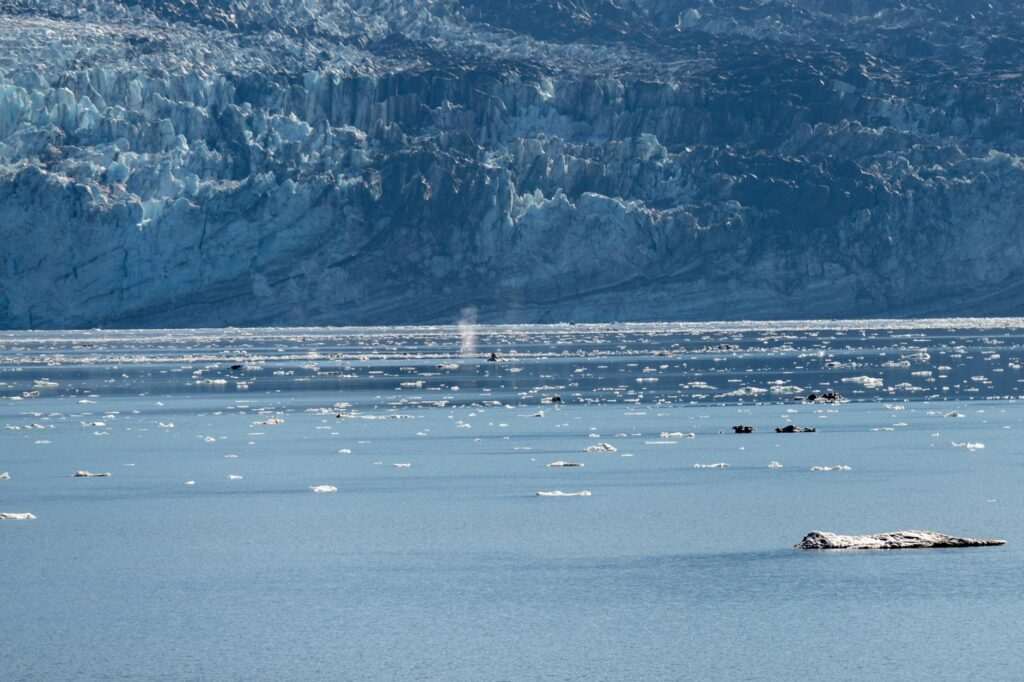
In 1750, the bay that now bears the name Glacier Bay did not exist. The entire 65-mile inlet was filled with a single glacier advancing from the mountains — a wall of ice so massive that when Captain George Vancouver sailed past the entrance in 1794, he saw only a small indentation in the coastline. Within a century, the ice had retreated dramatically; within two, it had pulled back nearly the full length of the bay, exposing one of the most biologically productive marine environments in Alaska. Glacier Bay National Park and Preserve, a UNESCO World Heritage Site covering 3.3 million acres at the northern end of Southeast Alaska’s Inside Passage, is where that retreat is still in progress — and where 16 tidewater glaciers continue to calve ice directly into salt water while humpback whales feed in the newly uncovered fjords below.
Getting There from Anchorage
Glacier Bay has no road access. The gateway is Gustavus, a small community on the flats south of the park entrance, reached by small aircraft from Juneau — a 1.5-hour Alaska Airlines flight from Anchorage followed by a 20-to-30-minute prop flight or a fast ferry from Juneau to Gustavus. Alaska Airlines flies Juneau-Gustavus seasonally; Air Excursions and other small carriers operate year-round. The alternative approach is a passenger ferry from Juneau to Gustavus operated by the park concession in summer.
Many Alaska cruises include a Glacier Bay passage — the park permits a limited number of cruise ships per day, and the bay’s scenic route brings vessels close to the active glacier faces before returning to open water. For independent travelers, the park’s visitor infrastructure is concentrated at Bartlett Cove, a 10-minute drive from the Gustavus airstrip, where the Glacier Bay Lodge provides the park’s only lodging and the day cruise departs each morning.
The Day Cruise: The Core Experience
The Glacier Bay Lodge day cruise is the primary way most visitors experience the park — an 8-hour round-trip journey from Bartlett Cove to the glacier faces at the head of the bay aboard a comfortable vessel with a Park Service ranger narrating throughout. The cruise covers approximately 130 miles of water, moving from the forested lower bay through the progressively more barren upper bay — where the land is still too recently deglaciated to support much vegetation — to the Grand Pacific and Margerie glaciers at the bay’s northwestern terminus.
Margerie Glacier is the most active calving glacier accessible from the cruise route: a 21-mile-long river of ice whose face rises 250 feet above the waterline. The captain positions the vessel near the face for an extended viewing period. Calving — when chunks of ice break from the face and fall into the water — is audible before it is visible, a rifle crack followed by a roar and a wave. The scale becomes real only when you watch a piece of ice the size of a building drop and generate a wave that rocks the ship.
The cruise departs Bartlett Cove daily in summer; book at glacierbaytours.com well in advance for July and August sailings. Cost is approximately $220–$240 for adults.
Wildlife
Glacier Bay’s position at the convergence of the open Pacific, the Inside Passage, and the glacially churned nutrients of the bay itself produces wildlife concentrations that are exceptional even by Alaska standards.
Humpback whales are the park’s signature species — they returned to the bay after the glaciers retreated and now feed throughout the summer season, and the day cruise routinely passes within viewing distance of surfacing animals. Orcas move through the bay in pods tracking seal and sea lion populations. Harbor seals haul out on icebergs calved from Margerie and other glaciers, using the ice as protection from orcas — the seal population in the upper bay is one of the most reliably visible in Alaska, floating calmly on blue ice within yards of the cruise vessel. Brown bears are present throughout the park and visible from the water on the lower bay shores. Mountain goats occupy the steep terrain above the glacier faces, visible with binoculars from the cruise. Bald eagles are constant in the lower bay forests.
Kayaking the Upper Bay
Multi-day wilderness kayaking in Glacier Bay is one of the most remarkable experiences available in any national park in the country. The park permits paddlers to camp on designated beaches throughout the bay, and the upper bay — near the Muir Inlet and Johns Hopkins Glacier arms — places kayakers among floating ice, calving faces, and wildlife in conditions of genuine remoteness. The cruise ship can drop kayakers at a designated camp in the upper bay and pick them up days later; this is the standard format for kayak camping in the park.
Kayak rentals and guided trips are available through Glacier Bay Sea Kayaks at Bartlett Cove. Self-guided paddlers must attend a required orientation at the visitor center before launching. Conditions in the bay vary significantly by location and weather; the lower bay near Bartlett Cove is calm and appropriate for beginners, while the upper bay requires paddling experience and respect for calving hazard zones. The park issues campsite reservations and bear canister requirements apply throughout.
Bartlett Cove and the Lodge
Bartlett Cove is the park’s only developed area: the Glacier Bay Lodge, a visitor center, a ranger station, and a small dock from which the day cruise departs. The lodge has 56 rooms and fills quickly in summer — book months in advance. A restaurant on site serves dinner and breakfast; the menu draws on Southeast Alaska seafood and is better than the remote location might suggest. The Forest Loop Trail at Bartlett Cove is a 1.5-mile walk through old-growth Sitka spruce and hemlock that contrasts dramatically with the barren upper bay, illustrating the pace of forest succession following glacial retreat — the trees here are among the oldest in the recently deglaciated landscape.
When to Visit and How to Plan
The park is open year-round but the cruise and most visitor services operate from late May through mid-September. June offers the clearest weather windows; July and August are the warmest months but also the busiest, with the highest demand for lodge rooms and cruise berths. Dress for cold and wet regardless of month — the bay’s maritime microclimate means rain gear and insulating layers are essential even on clear days. A fleece or down mid-layer, waterproof outer shell, and waterproof boots cover most conditions.
A practical Glacier Bay itinerary from Anchorage runs 3 to 4 days minimum: fly to Juneau, overnight there, fly to Gustavus the following morning, take the day cruise, spend a second night at the lodge, then return to Juneau for the flight south. Adding a Juneau day — Mendenhall Glacier, whale watching in Stephens Passage — makes the Southeast Alaska segment of an Alaska trip feel complete.
Glacier Bay is the national park that most directly shows what a glacier actually does to a landscape — not as a static exhibit but as an ongoing process. The ice is still moving. The bay it left behind is still filling with life. Standing at the rail while Margerie calves into the water below, you understand something about scale and time that no photograph captures adequately. Go see it while the glaciers are still there.
Featured photo by Beth Fitzpatrick on Pexels.


No comments yet.