
Fly Fishing Near Anchorage 2026: Eagle River, Russian River & Best Alaska Fly Spots
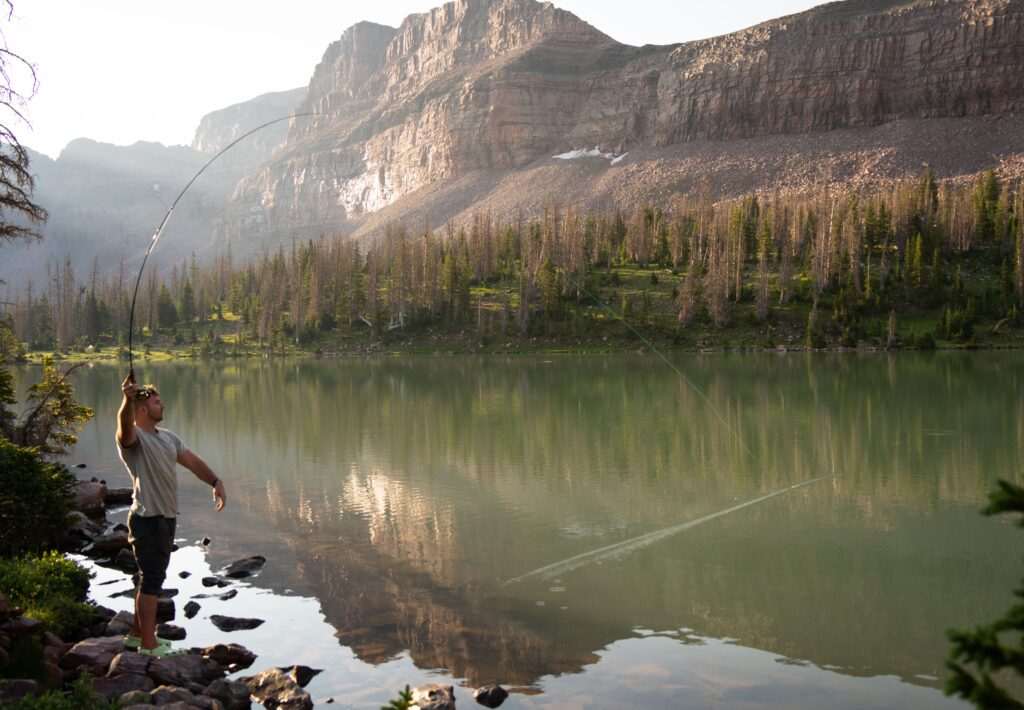
Alaska is one of the world’s great fly fishing destinations — but you don’t have to charter a bush plane to get to it. Some of the best fly fishing in Southcentral Alaska is within an hour or two of Anchorage, on rivers where rainbows stack up in the riffles and sockeye push upstream in dense, visible schools. Here’s where to cast and what to know for 2026.
What Makes Alaska Fly Fishing Different
Fly fishing in Alaska isn’t the same as a quiet afternoon on a trout stream in the Lower 48. The fish are bigger, the runs are denser, and the rivers move fast and cold. You’ll share the water with bears during salmon season — and that’s not a metaphor, it’s something to plan for. But the trade-off is access to fisheries that most of the world can only dream about: wild salmon pushing past your boots, 20-inch rainbows rising in clear tailouts, and scenery that puts any postcard to shame.
Top Fly Fishing Spots Near Anchorage
Eagle River
Eagle River, flowing through the Chugach Mountains northeast of Anchorage, is one of the closest quality fly fishing destinations to the city. The river holds rainbow trout and Dolly Varden year-round, with sockeye salmon entering in summer. The forested canyon sections offer classic pool-and-riffle structure ideal for swinging streamers or presenting dry flies. Access is straightforward — the Eagle River Nature Center sits near productive stretches and provides trailhead parking.
Russian River (Kenai Peninsula)
About 2.5 hours south of Anchorage, the Russian River is arguably the most famous fly-fishing-only sockeye stream in Alaska. The confluence with the Kenai River at Russian River Campground draws thousands of anglers during the June–July first run and August–September second run. The upper Russian is fly-fishing-only, catch-and-release for rainbow trout, with sockeye allowed by hook-and-hand method only. If you visit in July, expect shoulder-to-shoulder combat fishing at the confluence — but the fish density is extraordinary.
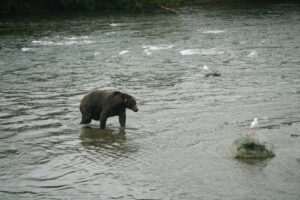
The area also offers a striking bonus: Russian River Falls upstream, where brown bears congregate to catch sockeye leaping the falls. It’s one of the most accessible bear viewing experiences in Alaska and pairs perfectly with a fly fishing day on the river below.
Ship Creek — Urban Fly Fishing
Ship Creek runs through downtown Anchorage and delivers one of North America’s most unusual fishing experiences: king and sockeye salmon within sight of office towers. Ship Creek opens for king salmon in mid-May and sockeye in July, and it draws serious fly anglers who arrive before dawn to stake out runs. The fishing is technical — urban pressure means fish are line-shy — but landing a 30-pound king on a fly rod in the middle of a city is an experience worth having.
Knik River
The Knik River near Palmer offers Dolly Varden and pink salmon fishing in a dramatic glacial setting. The braided channel structure means good wading access across gravel bars, and the glacier views in the background make it a memorable spot even when the fish aren’t cooperating. Pink salmon (humpies) arrive in even-numbered years in huge numbers — 2026 is an even year, making the Knik a top pick for pink salmon fly fishing this season.
Guided Fly Fishing vs. Self-Guided
For visitors new to Alaska fly fishing, a guided trip pays dividends. Alaska’s rivers can be deceptively powerful, wading in glacial current with chest waders is a real cold-water risk, and fishing regulations vary significantly by river, species, and section. A licensed guide removes the guesswork and puts you on fish faster. Alaska Fishing Adventures and similar Southcentral guide services run float-and-fly trips that cover multiple stretches in a single day, often with a drift boat or raft for access.
Self-guided fly fishing is entirely viable for experienced anglers familiar with reading Alaska water. Pick up a copy of the ADF&G (Alaska Department of Fish and Game) regulations booklet — available free online — and confirm the rules for your specific target river and species before you go.
Licenses and Regulations
All anglers 16 and older need an Alaska fishing license. Nonresidents can purchase 1-day, 3-day, or annual licenses online through the ADF&G website or at sporting goods stores in Anchorage. King salmon fishing requires a separate king salmon stamp in addition to the base license.
Key regulatory notes:
- The Russian River upper section is fly fishing only with specific gear restrictions — check the current Kenai Peninsula regulations carefully
- Many streams near Anchorage have catch-and-release only sections for rainbow trout and Dolly Varden
- Daily and possession limits vary significantly by species and river — don’t assume a rule you know from one river applies to another
Gear for Alaska Fly Fishing
Alaska fishing requires a few adaptations from standard Lower-48 setups:
- Rod: 9-foot, 7–8 weight is versatile for salmon; a 5–6 weight works well for Dolly Varden and rainbow trout
- Waders: Neoprene or breathable with built-in gravel guards — Alaska rivers chew through gear quickly
- Wading staff: Essential for glacial rivers with strong current and loose gravel substrate
- Flies: Flesh flies, egg patterns, and large articulated streamers for salmon; dry flies and beads for rainbows; egg-sucking leeches are Alaska standards for nearly everything
- Bear spray: Non-negotiable for any Alaska river during salmon season
Best Season by Species
- King salmon: May–June on Ship Creek and Kenai systems
- Sockeye salmon: June–July first run, August–September second run (Russian River, Bird Creek)
- Pink salmon: July–August, even-numbered years only — 2026 is an excellent pink year
- Rainbow trout: May–October, best in May–June and September when salmon aren’t crowding the water
- Dolly Varden: June–September, peak activity following salmon runs into rivers
2026 Trip Planning Tips
- Book guided trips early — July and August slots with quality guides fill by April
- Check ADF&G’s weekly run updates as your trip approaches — timing a sockeye run correctly makes all the difference
- 2026 is an even year: pink salmon runs in even-numbered years are significantly larger, making the Knik River and other pink fisheries especially productive this season
- Anchorage sporting goods stores (Sportsman’s Warehouse, REI, local fly shops) carry local fly patterns and can advise on current conditions
Frequently Asked Questions
Do I need a fishing guide for fly fishing near Anchorage?
Not necessarily — experienced fly anglers can self-guide successfully with proper research. But for first-time Alaska visitors, a licensed guide is worth it for river safety, local knowledge on current run timing, and navigating Alaska’s complex fishing regulations. It also removes the logistics of shuttles, wading access, and gear transport.
What’s the difference between fly fishing and gear fishing for salmon?
Gear fishing typically uses spinning or baitcasting tackle with hardware (spinners, spoons, bait) that casts a long distance and covers water quickly. Fly fishing presents flies — tied imitations of baitfish, eggs, or insects — on a weighted fly line, using specialized casting technique. Some Alaska rivers are fly-fishing-only by regulation; others allow both. Fly fishing for salmon is generally more technical but deeply rewarding when conditions are right.
Is fly fishing at Ship Creek worth it?
Yes — for the experience, absolutely. Urban salmon fly fishing on a glacial stream running through downtown Anchorage is genuinely unique. The fishing can be technical and the banks get crowded during peak runs, but landing a king salmon within walking distance of your hotel is a story you’ll tell for a long time.
Are bears a concern while fly fishing Alaska rivers?
Yes, and they should be taken seriously. Brown and black bears congregate at salmon streams during the runs. Carry bear spray (know how to use it), make noise as you move through brush to the water, and never leave fish carcasses near your fishing spot. Most encounters are uneventful if you behave predictably and give bears space — Alaska fish-and-game officials recommend maintaining a 50-yard buffer when possible.

No comments yet.