
Flightseeing Tours from Anchorage Alaska 2026 — Glacier Overflights, Denali Views & Lake Hood
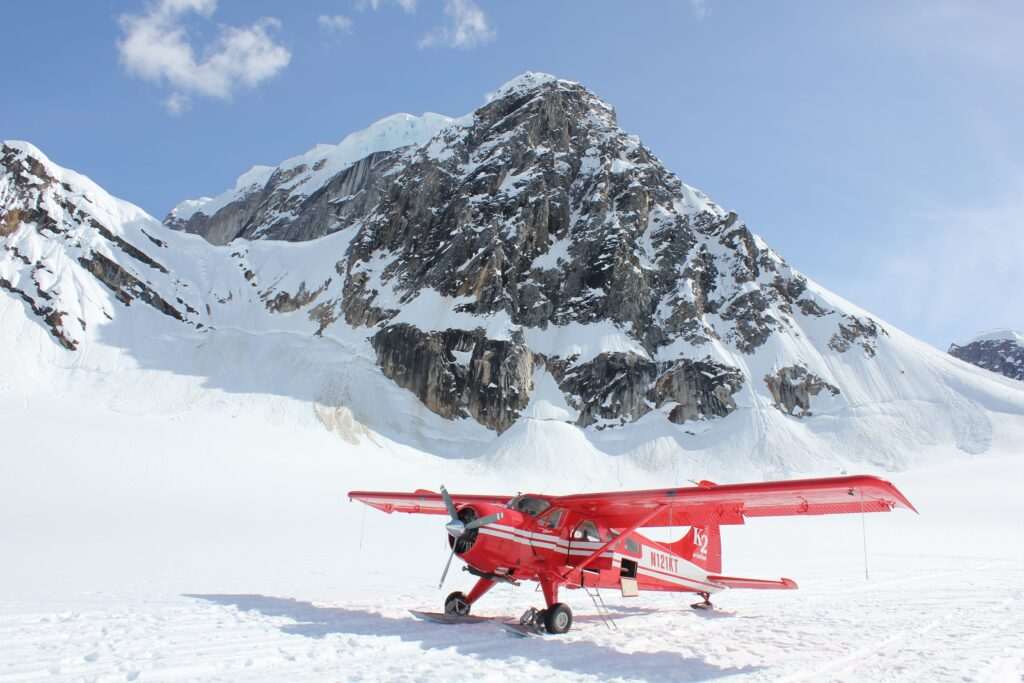
Every road in Alaska eventually runs out. The state’s most dramatic terrain — the icefields, the high Chugach, the crevassed faces of the great glaciers — sits beyond where pavement ends and well above where trails go. Flightseeing is not a tourism luxury in Alaska; it is a functional way of seeing the landscape that the ground simply cannot provide. From Anchorage, the departure point is Lake Hood Seaplane Base, the largest floatplane base in the world, located minutes from downtown hotels. On clear summer days, the line of floatplanes taxiing across the water is its own spectacle. What they reach in the air is something else entirely.
Lake Hood Seaplane Base
The Lake Hood Seaplane Base occupies two connected lakes adjacent to Ted Stevens Anchorage International Airport. It handles roughly 190 aircraft operations per day during summer — more floatplane traffic than anywhere else on earth. For visitors, the base is easy to access from the city: a short drive from downtown puts you at the water’s edge to watch departures and arrivals before or after a tour. Several of Anchorage’s major flightseeing operators stage directly from Lake Hood or the nearby strips within the airport complex.
Fixed-Wing Floatplane Tours
Rust’s Flying Service is the longest-established floatplane operator in Anchorage and one of the best-known names in Alaska aviation. Operating from Lake Hood, Rust’s offers glacier sightseeing flights, Denali overflight packages, and combination tours linking glacier viewing with remote lake landings. Fixed-wing floatplanes cover more distance in a given flight time than helicopters, and larger viewing windows on modern tour aircraft give multiple passengers decent sight lines simultaneously. A one-hour tour can reach the Knik Glacier drainage and return while covering the upper Chugach front — terrain that would take two days to reach on foot.
Most fixed-wing departures from Anchorage focus on one of several routes: Knik Glacier overflights (the most accessible glacier from the city, visible as a massive braided ice system northeast of town), Chugach Mountain ridge routes above the Matanuska Valley, or longer Denali-area flights reaching the Alaska Range on the clearest days. Route availability depends on weather — operators are experienced at reading conditions and will reschedule rather than send passengers out in cloud cover that blocks the views.
Helicopter Tours and Glacier Landings
Helicopter tours offer capabilities that fixed-wing aircraft cannot: the ability to hover, to land on terrain no wheeled or floated plane can reach, and to descend directly onto a glacier. Helicopter flightseeing from the Anchorage area typically targets the Knik Glacier or the Colony Glacier — both within 45 minutes of the city — with operators offering tours that include time on the glacier surface. A glacier landing tour runs 60 to 90 minutes and includes 20 to 30 minutes walking on the ice, with a guide explaining the crevasse systems, moraine features, and active ice movement visible underfoot.
Helicopter tours cost more than fixed-wing equivalents — plan for $400 to $700 or more per person for glacier landing packages. The glacier-on-foot experience is the draw: touching 10,000-year-old ice while looking down the length of a moving glacier is something no road or trail can provide.
What You Will See
The aerial perspective changes the scale of what visitors understand about Southcentral Alaska. From the ground, the Knik Glacier is a distant white wall. From a floatplane at 3,000 feet, the full system becomes legible: the accumulation zone high in the mountains, the flow lines where ice streams from multiple tributaries merge, the terminal face where the glacier meets the lake, and the meltwater rivers spreading across the outwash plain below. On clear days — which occur reliably in June and early July before afternoon cloud build-up — the Alaska Range is visible from Anchorage-area flight corridors, with Denali rising above the surrounding summits 200 miles to the north.
Tour Lengths and Costs
Tours range from 30-minute scenic introductions ($150–$200 per person, covering the Chugach foothills) to multi-hour packages that include remote area landings and glacier access ($500–$900 per person or more). The 60-minute floatplane route to Knik Glacier and back is the middle ground — long enough to reach significant terrain and spend time over the ice, typically $250–$400 depending on operator. Group pricing and charter options reduce the per-person cost for parties of four or more.
Tips for the Flight
Dress in layers regardless of summer forecast — aircraft cabins vary in temperature and altitude changes can drop conditions 10 to 15 degrees below sea-level readings. Motion sickness affects some passengers on floatplanes more than on commercial aircraft; window seats with a fixed external horizon help. Request a window seat explicitly when booking. Bring a camera with a wrist strap. Book at least several days in advance for summer departures, and a week or more ahead for helicopter glacier landing tours.
Best Season
June through August is the primary flightseeing season from Anchorage. June and early July typically offer the best visibility and the most snow still present on high peaks and glaciers — which dramatically improves the visual contrast of ice against rock from the air. Most operators run a weather-hold policy: if conditions are poor at departure time, they will reschedule rather than fly in visibility that limits the experience.
Where do flightseeing tours depart from in Anchorage?
Most operators depart from Lake Hood Seaplane Base, the world’s largest floatplane base, adjacent to Ted Stevens Anchorage International Airport — about 10 minutes from downtown. Some helicopter operators depart from nearby pads within the airport complex. Confirm the specific staging area when booking.
How much do flightseeing tours cost from Anchorage?
Fixed-wing tours range from roughly $150–$200 for a 30-minute scenic flight to $400+ for extended glacier overflight routes. Helicopter glacier landing tours typically run $400–$700 per person. Multi-hour remote packages can exceed $900 per person. Group charters reduce per-seat cost significantly for parties of four or more.
Can you land on a glacier on a flightseeing tour from Anchorage?
Yes — helicopter operators offer glacier landing packages targeting the Knik Glacier and Colony Glacier, both within 45 minutes of Anchorage. Tours typically run 60 to 90 minutes and include time on the ice surface with a guide. Book well in advance; summer slots fill quickly.
What is the best time of day for flightseeing?
Morning departures before 11am consistently produce the best conditions. Afternoon cloud build-up over the Chugach and Alaska Range is a predictable summer pattern that can limit views by early afternoon. Most operators offer early morning departures specifically for this reason, and morning light is better for photography.
Alaska’s defining terrain is accessible from the ground only partially and at considerable effort. From a floatplane at 3,000 feet over the Knik Glacier, the full picture becomes clear in an hour. Lake Hood on a summer morning — engines running, floats cutting across the water — is its own argument for going.
Featured photo by Jonathan Moore on Pexels.


No comments yet.