
Alaska Caribou Viewing 2026: Chasing the Great Migrations
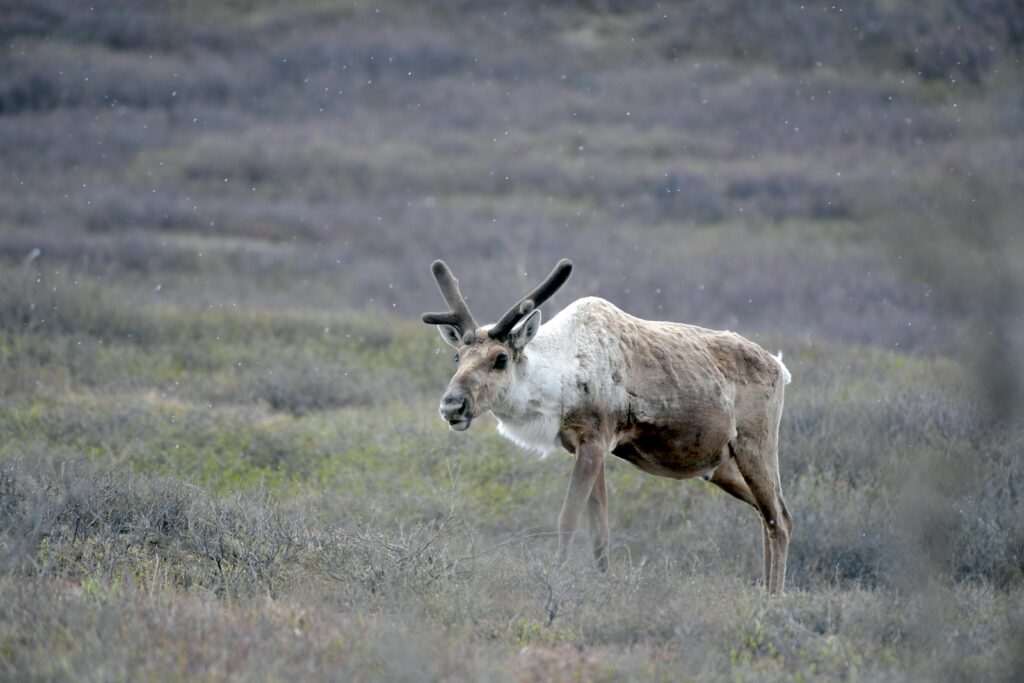
On the open tundra of Alaska’s Brooks Range foothills, in August and September, the Western Arctic caribou herd moves. Nearly 190,000 animals — calves, cows, bulls with antlers the size of rocking chairs — traveling along routes their ancestors have used for thousands of years, following invisible trails across the landscape toward their winter range. The sound reaches you before the animals do: a low, rhythmic clicking from the tendons in their feet, thousands of hooves on tundra, a river of life flowing across the land.
Alaska’s caribou migrations are one of the greatest wildlife spectacles remaining on earth. They’re also substantially less visited than the state’s bear viewing or whale watching, which means the experience of encountering a migrating herd on the Dalton Highway or the open tundra of Denali is genuinely wild — no crowd, no platform, no queue. Here’s how to see them in 2026.
Alaska’s Caribou Herds: The Scale of It
Alaska is home to approximately 32 distinct caribou herds totaling nearly 750,000 animals — the largest caribou population in North America. Three herds are particularly significant for wildlife viewers:
Western Arctic Herd
The largest herd in Alaska and one of the largest in the world, the Western Arctic herd has historically numbered between 300,000 and 500,000 animals, though populations fluctuate significantly across decades. Current estimates place the herd near 190,000, following a population decline that management agencies are actively monitoring. Even at reduced numbers, the Western Arctic herd’s migrations through the Brooks Range foothills and across the Dalton Highway corridor are among the most dramatic wildlife events accessible from a road in North America.
Porcupine Herd
Roughly 218,000 animals that range across northeastern Alaska and Canada’s Yukon, crossing the Arctic National Wildlife Refuge’s coastal plain each summer to calve. The Porcupine herd’s calving grounds in the Arctic Refuge have been at the center of Alaska’s most persistent conservation debates for decades. The herd is named for the Porcupine River, which it crosses during migration. Viewing the Porcupine herd requires charter flights into remote arctic Alaska — it is not roadside accessible — but guided wilderness expeditions from Fairbanks reach their range.
Denali Herd
Approximately 2,000 animals that range within and around Denali National Park. Small by Alaska standards, the Denali herd is the most accessible for most visitors: caribou are reliably sighted from the park road bus system throughout the summer, particularly on the open tundra between Sable Pass and Polychrome Pass. Unlike viewing the massive western herds, Denali caribou sightings are typically of smaller groups — dozens rather than thousands — but the quality of observation is excellent, often at close range from a stopped bus.
Viewing Caribou at Denali National Park
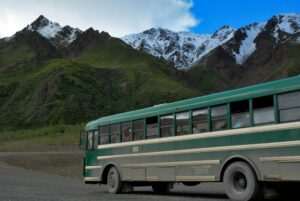
The Denali Park Road bus system provides the most reliable caribou viewing accessible from Anchorage. Caribou are present in the park’s interior throughout summer, with sighting frequency and group sizes increasing in late summer and fall as bulls enter rut and herds consolidate before winter.
The most productive sections of the road for caribou tend to be in the open tundra areas between Miles 38–62 — particularly the Sable Pass closure area (closed to off-road foot travel to protect wildlife) and the Toklat River flats. Caribou crossing the road is common; bus drivers stop and allow extended viewing when this occurs.
Late August through September is the optimal window for Denali caribou viewing. Bulls are in full velvet or early hard antler by late August, making them visually dramatic. October brings the rut, when bull behavior becomes more active and interesting, though park bus service is reduced by late September.
The Dalton Highway: Western Arctic Herd Territory
The Dalton Highway — Alaska Route 11 — runs 414 miles from the Elliott Highway north of Fairbanks to Deadhorse on the Arctic Ocean. It was built to support the Trans-Alaska Pipeline and is the only road reaching Arctic Alaska. In August, September, and October, portions of the Western Arctic herd’s migration cross or parallel the highway corridor, and encounters with caribou on or near the road can be extraordinary: herds numbering in the hundreds or thousands crossing the gravel road, flowing around vehicles, moving with purposeful momentum toward their winter range.
Key viewing areas along the Dalton:
- Atigun Pass area (Mile 243–248): The highway crosses the Brooks Range at Atigun Pass (4,739 ft), the highest point on any Alaska public highway. Caribou cross the pass during fall migration and are frequently seen in the immediate vicinity.
- Galbraith Lake area (Mile 275): Open tundra flats with long sightlines. One of the better areas for scanning with binoculars during peak migration.
- Chandalar Shelf and Dietrich River valley: Broad valleys on the south slope of the Brooks Range that funnel migrating animals through predictable corridors.
The Dalton Highway is a serious road — mostly gravel, truck traffic throughout, limited services (fuel available at Yukon River Camp, Coldfoot, and Deadhorse only), and distances between points that require planning. Rental cars are generally prohibited on the Dalton under most rental agreements; check your contract explicitly. Many visitors opt for guided tours from Fairbanks that handle logistics.
What Migration Looks Like in Person
No photograph or documentary fully prepares you for a caribou migration. The scale is different from anything most people have seen in a wildlife context. When a herd moves, the landscape changes: what was empty tundra becomes a surface in motion, thousands of animals flowing over ridgelines and through river valleys with a collective momentum that feels tidal.
The sound is distinctive. The clicking of caribou tendons — a noise produced by tendons slipping over foot bones as animals walk — carries across the tundra before you can see the herd clearly. It’s a low, rhythmic sound unlike anything else in the natural world, and once you’ve heard it, you’ll recognize it immediately. Following the herd are predators: wolves loping on the flanks, grizzly bears working the edges, ravens overhead. The migration is an ecosystem event, not just a caribou event.
Individual encounters — a bull standing on a ridgeline above the road, velvet antlers catching the low September light — are common along the Dalton even when large herds aren’t present. Caribou are curious and relatively tolerant of stationary observers at respectful distances.
Guided Caribou Viewing from Fairbanks and Anchorage
Several Fairbanks-based tour operators offer Dalton Highway and Arctic caribou viewing expeditions, ranging from day trips to multi-day fly-in wilderness programs. A Dalton Highway day trip from Fairbanks (approximately 500-mile round trip) typically costs $200–$400 per person and covers the southern Brooks Range corridor where fall caribou concentrations are highest.
For the Porcupine herd or remote western Arctic viewing, fly-in expeditions from Fairbanks reach areas accessible no other way. These are expedition-level travel — costs range from $1,500–$4,000+ per person for multi-day programs — but they provide access to caribou viewing that few people in the world ever experience.
From Anchorage, the most practical guided option is a Denali National Park bus tour (see above), which guarantees caribou sightings at a level that Dalton Highway visits cannot — Denali’s herd is small but reliably present.
Bulls and Cows: What to Look For by Season
Both male (bull) and female (cow) caribou grow antlers — the only deer species in which females are antlered. Understanding what you’re looking at improves the viewing experience:
- June – July: Bulls carry impressive velvet antlers — large, soft, blood-vessel-rich antlers in active growth. Cows nurse calves born in late May; calves are small and spotted.
- August – September: Bulls shed velvet, revealing polished, hard antlers in full summer configuration. This is the peak visual drama period for bulls. Herds begin consolidating for fall migration.
- October: The rut. Bulls are aggressive, vocal, and highly active — challenging rivals, herding cows, sparring with antlers. The rut behavior is dramatic and photographically spectacular, though bull condition declines rapidly as they expend energy on breeding.
Photography Considerations
For herd photography — the wide shot showing dozens or hundreds of animals moving across landscape — use a wide-angle or moderate telephoto (70–200mm) to capture both the animals and the context of the terrain. The landscape scale is essential to conveying the migration’s magnitude.
For individual portraits — a bull in velvet, a cow with a calf — a longer telephoto (300–500mm) provides the subject separation you need without requiring unsafe proximity to the animals. Caribou are legally protected in national parks; harassment or pursuit for photographs is prohibited and ethically indefensible regardless of location.
Subsistence Culture: A Respectful Background
Caribou are not only a wildlife spectacle in Alaska. For Alaska Native communities across the Arctic and subarctic, caribou have been the primary subsistence food source for thousands of years — a relationship that continues today. Subsistence hunters in communities like Kotzebue, Anaktuvuk Pass, and Arctic Village depend on the Western Arctic and Porcupine herds for a significant portion of their annual food supply.
Viewing caribou migrations takes place in the same landscape where this subsistence relationship continues. Approaching this with awareness — not disrupting herds near subsistence hunting areas, understanding that wildlife management in Alaska balances subsistence, conservation, and recreational interests — adds a dimension to the experience that most wildlife tourism elsewhere in the world doesn’t offer.
The herds are moving. They always have been. What you’re watching in 2026 is the same thing Alaska Native people have watched, and depended on, for ten thousand years. The tundra puts that in perspective in a way that’s hard to replicate anywhere else.
No comments yet.