Hiking Flattop Mountain in Anchorage 2026: Alaska’s Most-Climbed Peak Guide
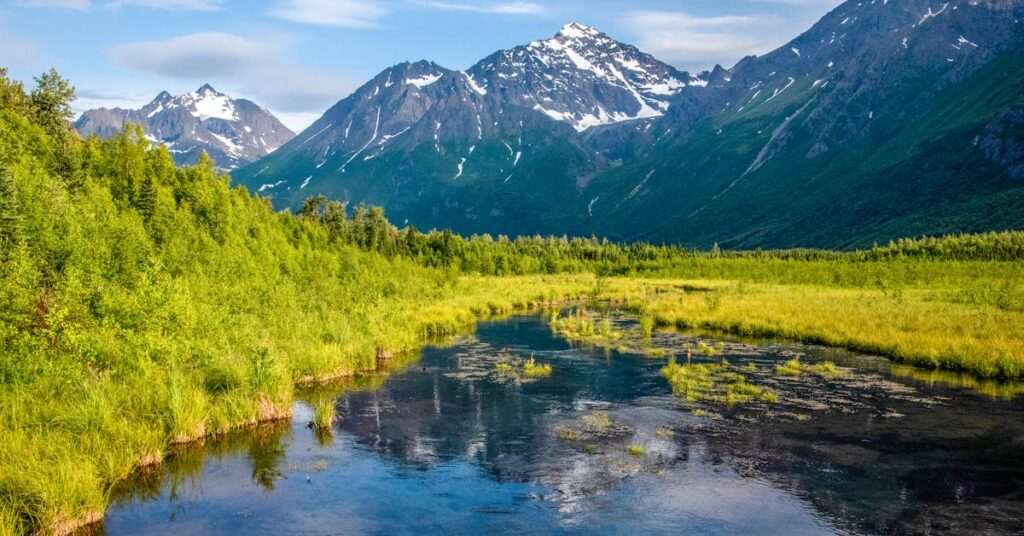
Every Anchorage local has climbed it. Most Alaska visitors add it to their list. Flattop Mountain — a broad, unmistakable flat-topped summit rising 3,510 feet in Chugach State Park — is the most-climbed peak in Alaska and one of the most accessible alpine experiences attached to any American city. On a clear summer day, the summit delivers a 360-degree panorama of Anchorage, Cook Inlet, the Alaska Range, and — on exceptional days — the distant white mass of Denali, 130 miles to the north.
This guide covers everything you need to hike Flattop in 2026: how to get to the trailhead, what to expect on each section of trail, safety considerations, and tips for making the most of the summit experience.
Trail Stats at a Glance
| Detail | Info |
|---|---|
| Distance | 3.4 miles round trip |
| Elevation gain | 1,350 feet |
| Difficulty | Moderate (summit scramble is harder) |
| Time | 2–3 hours (fit adults); 3–4 hours (families, leisurely pace) |
| Trailhead | Glen Alps Trailhead, Chugach State Park |
| Parking fee | $5 day use or America the Beautiful annual pass |
| Elevation at summit | 3,510 feet |
Getting to the Trailhead
The Glen Alps Trailhead is located in the upper Hillside neighborhood, approximately 20 minutes by car from downtown Anchorage. Take the Seward Highway south, exit at O’Malley Road, head east (uphill), then turn right on Hillside Drive and follow signs for Glen Alps. The road winds up through a residential area and ends at the parking lot. GPS coordinates: 61.0989° N, 149.6889° W.
Parking: The day-use fee is $5 per vehicle, collected via iron ranger (cash or check) at the trailhead. If you have an America the Beautiful National Parks Pass, display it on your dashboard — it covers Chugach State Park day-use fees. The lot fills quickly on summer weekends; plan to arrive before 9 a.m. or after 4 p.m. to avoid circling for a spot.
No public transit: There is no bus service to Glen Alps. Driving, rideshare, or cycling up Hillside Drive (a serious climb itself) are your options.
The Trail: Three Distinct Sections
Section 1: Lower Trail — Glen Alps to the Tundra (Easy)
The first mile from the parking lot follows a wide, well-graded gravel path through low shrub tundra. This section is gentle and accessible to most fitness levels, including families with older children. The tundra on either side comes alive with wildflowers from late June through July — lupine, fireweed, and wild geranium color the hillside in purple and pink.
This is also the best wildlife-watching section. Marmots — large, golden-brown ground squirrels related to woodchucks — are common along the lower slopes and will often sit upright on rocks observing hikers. Ptarmigan (Alaska’s state bird) frequently feed on the tundra vegetation. Look for Dall sheep on the steeper ridgelines to the north and east, particularly in early morning. Bears are present throughout Chugach State Park; carry bear spray and make noise, especially in areas of dense brush.
Section 2: Middle Slopes — Tundra Ridgeline (Moderate)
Above the lower shrub zone the trail transitions to rocky alpine tundra with increasingly expansive views. The path narrows and becomes less groomed, requiring basic route-finding as you follow rock cairns and well-worn boot tracks. Anchorage spreads out below you and Cook Inlet appears to the west. On clear days the Alaska Range — including Denali — becomes visible across the inlet.
The middle section has a few steeper pitches where trekking poles help with balance, but nothing that requires hands. This is a good turnaround point for hikers who don’t want to tackle the summit scramble, especially those with young children or anyone less comfortable with heights. The views from approximately 2,800 feet are already remarkable.
Section 3: Summit Scramble — The Final Push (Strenuous/Technical)
The final 0.3 miles to the summit is where Flattop earns its reputation as a peak rather than just a hike. The maintained trail ends and gives way to a steep, loose-rock scramble on angular scree and large boulders. This section requires the use of both hands for balance and pulling yourself upward. There is some exposure — you can see significant drop-offs to your sides — and a slip on the loose rock could mean a serious fall.
Who should attempt the summit scramble:
- Reasonably fit adults and older teenagers comfortable with heights
- Children who are confident, agile climbers (parental discretion strongly advised — the drop-offs are real)
- Anyone wearing sturdy hiking boots with ankle support
Who should stop at the tundra ridgeline:
- Young children or nervous children who panic in exposed positions
- Hikers with a fear of heights or vertigo
- Anyone in trail runners or casual shoes (the loose rock is unforgiving)
- Anyone with knee problems (the descent on scree is hard on joints)
The scramble is not technically difficult by mountaineering standards — there are no ropes, no technical moves, no equipment required. But it is serious terrain, and Chugach Mountain Rescue responds to Flattop incidents regularly. Take it seriously.
The Summit Experience
Step onto the flat summit plateau and the payoff is immediate. Anchorage lies below in full panorama, its grid of streets, the airport runways, and the docks of Cook Inlet forming a surprisingly dense cityscape against the backdrop of wilderness on every other side. The Chugach Range stretches north and south in both directions. To the southwest, Denali — on clear days — floats above the horizon as an impossibly large white mass despite being 130 miles distant.
The flat summit gives you room to walk around and choose your vantage point. Most hikers spend 20–30 minutes on top. There’s no shelter from wind, so have a layer ready — it’s commonly 10–15°F colder on the summit than at the trailhead, and the wind can bite even in summer.
Safety and Conditions
Weather
Flattop’s summit is exposed and weather changes rapidly. Afternoon thunderstorms are common in summer, particularly July and August. Clear skies at the trailhead do not guarantee clear skies at the summit. Check the National Weather Service forecast for Anchorage and look for cloud buildup before beginning the summit scramble. If a storm rolls in while you’re on the upper slopes, descend immediately — the exposed ridge becomes dangerous in lightning.
Snow and Ice
The summit holds snow from October through May, and the scramble section becomes a sheet of ice in shoulder season. Microspikes (traction devices that strap to hiking boots) are essential for spring and fall visits — without them, the scree slope becomes a genuine slip hazard. Many locals hike Flattop year-round and find it stunning in snow, but only with proper footwear. Don’t attempt the summit scramble in icy conditions wearing trail runners.
Bears and Wildlife
Brown and black bears are present throughout Chugach State Park. Carry bear spray — accessible, not in your pack — and make noise on the trail. The lower tundra section sees heavy traffic which tends to keep bears away, but early morning solo hikers should remain alert. Bear encounters on Flattop are relatively rare given the crowd levels, but they do occur.
Altitude and Fitness
At 3,510 feet Flattop is not high enough to cause altitude sickness, but the 1,350-foot gain in 1.7 miles will challenge visitors who aren’t acclimatized to exercise at elevation. Take your time. Rest on the tundra ridgeline before attempting the summit. Carry at least a liter of water per person — there are no water sources on the route.
Photography Tips
The best light on Flattop’s summit arrives in early morning, when the low-angle sun illuminates the Chugach peaks to the east with warm golden tones and Anchorage below is still partially in shadow. Afternoon haze from the city builds as the day progresses and can flatten the views from the summit. Aim for a pre-9 a.m. start for peak photography conditions.
A wide-angle lens (16–35mm equivalent) captures the full panoramic sweep of the view — the flat summit plateau is wide enough to back up and frame the entire Anchorage skyline. A short telephoto (85–135mm) lets you isolate Denali on the horizon when it’s visible. For wildlife on the lower trail, bring a 70–200mm for marmot portraits.
Alternatives from the Same Trailhead
The Glen Alps Trailhead accesses more than just Flattop. If you want a longer, less-crowded experience, consider these alternatives:
- Powerline Pass Trail: A flat, wide trail that follows a power line corridor 11+ miles through the heart of Chugach State Park. Popular with trail runners, mountain bikers, and anyone wanting big scenery without a summit push.
- Near Point: A 7-mile round trip to a subsidiary summit with excellent Anchorage views and far fewer crowds than Flattop.
- Wolverine Peak: A serious 10-mile round trip to a higher, more remote summit (4,455 ft) requiring full-day commitment and good fitness. Recommended only for experienced hikers.
- The Ballpark / Tundra Loop: A 2-mile loop through the lower tundra that’s suitable for families with small children, offering the tundra experience and wildlife viewing without the summit scramble.
What to Bring
- Sturdy hiking boots (ankle support strongly recommended for the scramble)
- Bear spray, accessible on your hip
- At least 1 liter water per person
- Snacks or lunch — a summit lunch is a rite of passage
- Wind layer and rain shell (weather changes fast)
- Trekking poles (helpful on descent)
- Microspikes (May, September–November)
- Sunscreen (UV intensity increases significantly with elevation)
- Camera or phone charged
Plan Your Flattop Hike
Flattop Mountain is one of those rare places where urban convenience meets genuine wilderness. You can drive from downtown Anchorage, hike to an alpine summit with panoramic views of an entire mountain range, and be back in time for lunch — all within a morning. It’s a rite of passage for Alaska visitors, a workout for locals, and a reminder that this city is unlike any other on Earth. Pack your layers, charge your camera, and start early. The summit is worth every step of that scramble.
No comments yet.