
Denali National Park Day Trip from Anchorage 2026 — What to Know Before You Go
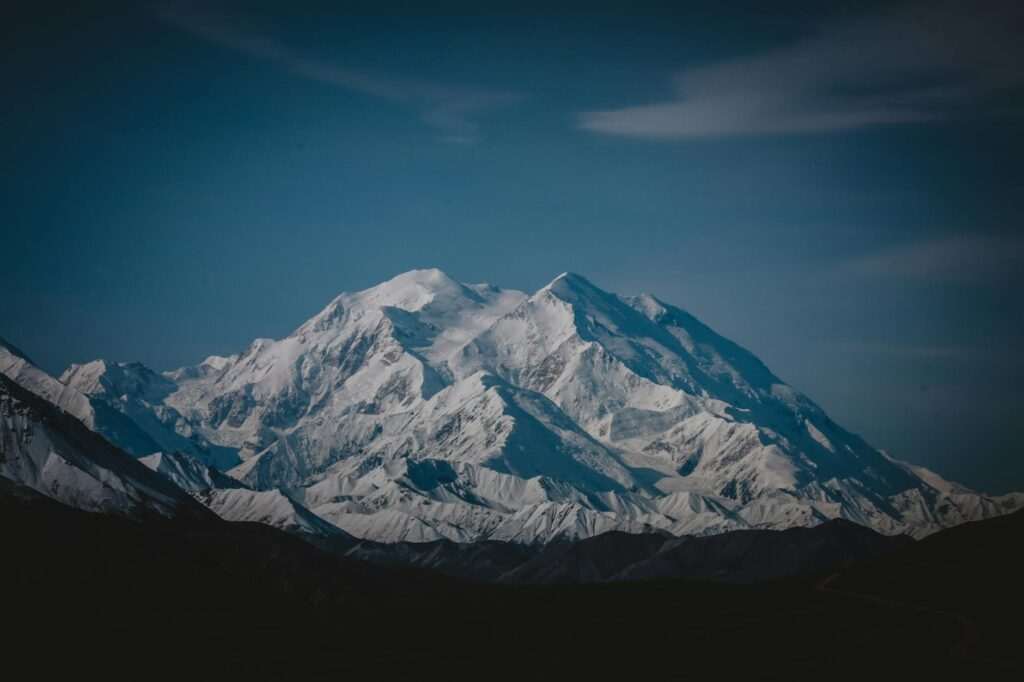
Denali stands at 20,310 feet — the highest peak in North America — and on a clear day it dominates the skyline 150 miles from Anchorage. The mountain is visible from the city on the roughly one in three days when the Alaska Range clears. Denali National Park surrounds it: six million acres of tundra, boreal forest, glaciers, and river braids with one road cutting 92 miles into the wilderness. Making that park the destination for a long day from Anchorage is ambitious but entirely doable, and the payoff on a clear day is one of the defining Alaska experiences.
Here’s what to know before you go.
Getting There: The Parks Highway
Denali National Park entrance sits 237 miles north of Anchorage on the Parks Highway (Hwy 3) — roughly a four-hour drive in normal conditions. The highway is well-maintained and passes through some of the finest scenery in southcentral Alaska. Leave Anchorage no later than 6 a.m. for a day trip, which puts you at the park entrance around 10 a.m. and allows time inside before the return drive.
Two stops worth building into the northbound drive:
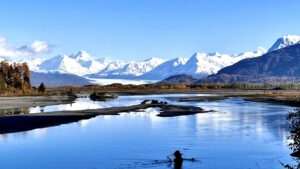
Talkeetna, about 100 miles from Anchorage via a short spur off the highway, is the base camp hub for Denali mountaineering expeditions and one of Alaska’s most characterful small towns. The view of Denali from Talkeetna’s waterfront on a clear morning is extraordinary — the peak rises above the Alaska Range from here in a way that photographs rarely capture. The detour adds 45 minutes to the drive but rewards it.
The Alaska Wildlife Conservation Center at Portage (45 min south of Anchorage) makes a compelling stop on the return leg — bears, musk ox, wood bison, and moose in open habitat beside the road. Visiting it after the park rather than before keeps the morning drive clean.
Inside the Park: The Bus System
Denali’s road access operates unlike any other national park in the country. Private vehicles are permitted only on the first 15 miles, as far as Savage River. Beyond that, all access is by park bus — either transit buses (first-come, reservable seats at $35–$40 round trip) or guided tour buses with naturalist narration.
The key destination buses reach:
- Savage River (Mile 15): The limit for private vehicles. Good views of the Alaska Range when clear, reliable caribou and Dall sheep habitat. Accessible without bus reservation.
- Toklat River (Mile 53): Primary grizzly bear viewing corridor. Most guided bus tours include extended time here.
- Eielson Visitor Center (Mile 66): The best unobstructed view of Denali on the road system. On a clear day, the mountain fills the horizon. On an overcast day, you see tundra and patience. This is the target for most day trip visitors.
- Wonder Lake (Mile 85): The classic reflection-shot location, with Denali reflected in the lake surface. Too far for a comfortable day trip from Anchorage — best suited for overnight stays.
Reserve bus seats in advance through the Denali National Park reservation system (recreation.gov). Early summer slots for Eielson-bound buses fill quickly — book the moment your travel dates are confirmed, ideally months ahead for July departures.
Wildlife in the Park
Denali National Park protects a complete subarctic ecosystem, and the wildlife density along the road corridor is exceptional. On a typical bus ride to Eielson, encounters with multiple species are the norm rather than the exception.
Grizzly bears are the marquee sighting — Denali’s population is healthy and the bears forage openly on tundra slopes visible from the road. Sightings near Sable Pass and Toklat River are frequent in summer. Caribou appear in scattered herds throughout the corridor, sometimes crossing the road directly in front of the bus. Moose favor the brushy river bottoms and are frequently seen in the first 30 miles. Dall sheep occupy rocky ridgelines above the road — white specks on dark rock that binoculars resolve into full herds. Wolves are present but elusive; sightings are genuine events celebrated by everyone on the bus.
Bring binoculars. The distances involved make good optics the difference between a dot on a hillside and a grizzly sow with cubs.
Guided Tour Options from Anchorage
Driving independently gives flexibility; joining a guided tour eliminates navigation and adds interpretation. Several operators run Denali day trips from Anchorage:
907 Tours Alaska and Alaska Tours both offer guided Denali day trips with van or coach transport from Anchorage, park entrance access, and naturalist guides for the road corridor. These eliminate the logistics of driving four hours each way and can be combined with other Anchorage activities on arrival and departure days.
Greatland Adventures runs multi-format Alaska tours including Denali experiences, with options ranging from day trips to multi-day itineraries for visitors who want to spend more time in the park than a single day allows.
The Alaska Railroad: Scenic Alternative
The Alaska Railroad runs daily service from Anchorage to Denali Park station through summer. The Denali Star departs Alaska Railroad Depot Anchorage at 8:15 a.m. and arrives at Denali around 3:45 p.m. — too late for a true day trip but ideal for an overnight stay, with return service the following day. The train travels through the Susitna Valley and Talkeetna Mountains in glass-domed cars, making the journey itself a major feature of the trip. Tickets start around $109 one way.
Flightseeing: Seeing Denali from the Air
The clearest and most dramatic perspective on Denali doesn’t come from the road at all — it comes from a small plane. Rust’s Flying Service operates Denali flightseeing from Anchorage, circling the peak and the surrounding glacier systems at close range. On a clear day the flight reveals the mountain’s full scale in a way that ground-based viewing never quite matches. Flightseeing tours run $350–$500 per person and last 2–3 hours round trip from Anchorage. Worth combining with the park road experience for visitors who have time for both.
Best Time to Visit
June through August is the primary visitor window. June offers long daylight (near 24 hours near solstice), active wildlife as animals move after winter, and generally good road conditions. July is peak season — maximum visitors, maximum wildlife activity, warmest temperatures, highest demand for bus reservations. August brings the first hints of fall color on the tundra, fewer crowds, and continued good wildlife viewing as bears fatten for winter.
Denali is visible roughly one day in three on average. No forecast reliably predicts visibility a month ahead. Accept the uncertainty, bring binoculars and layers, and treat a clear-day summit view as a gift, not a guarantee.
What to Pack
Temperatures in the park can range from 40°F to 70°F on the same July day depending on elevation and cloud cover. Pack: warm mid-layers, a waterproof shell, waterproof boots or trail runners (the tundra is wet underfoot), sunscreen, sunglasses, binoculars, and snacks for the bus ride. There’s a café at the Wilderness Access Center and a small one at Eielson — don’t count on them for a full meal.

No comments yet.