
Denali Day Trip from Anchorage 2026: How to Visit the Park in a Day
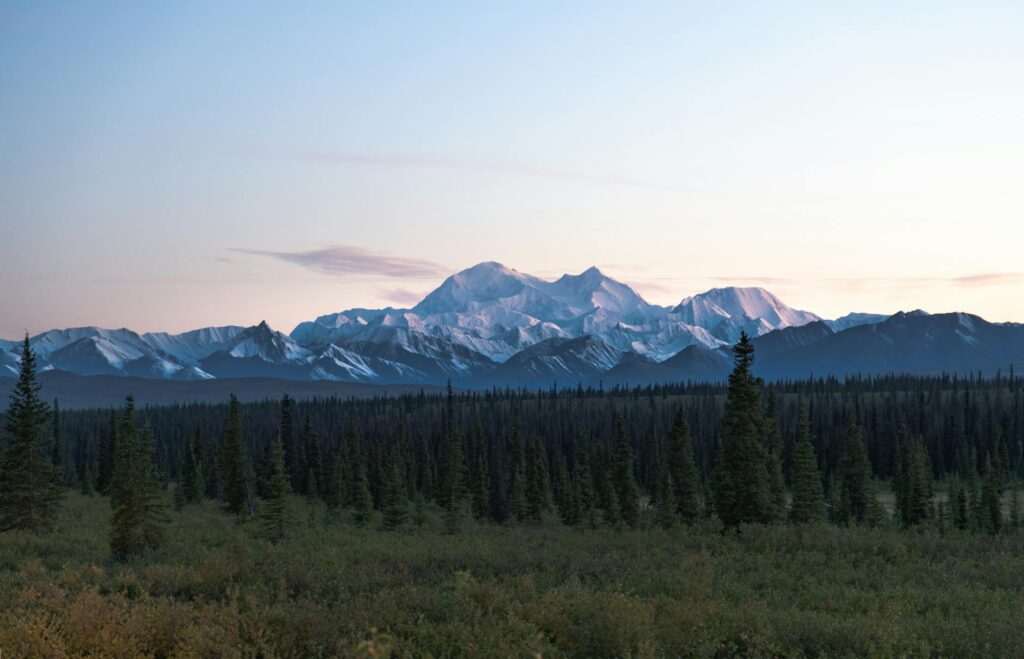
Denali National Park is a 6-million-acre wilderness centered on the highest mountain in North America. Visiting it as a day trip from Anchorage requires a genuine commitment — the drive is 4.5 hours each way, the park bus system has its own logic, and the mountain itself is visible only about a third of the time due to cloud cover. That said, the day-trip format delivers a legitimate wilderness experience and wildlife encounters that few other drives in North America can match. Here’s how to make it work.
Getting There: Drive or Train
The drive from Anchorage to Denali National Park’s entrance area takes 4 to 4.5 hours via Parks Highway (Alaska Route 3), a well-maintained divided highway through the Mat-Su Valley and Talkeetna corridor. The drive itself is scenic — particularly the stretch north of Talkeetna where Denali first comes into view on clear days — and requires no special vehicle. Leave Anchorage by 6 a.m. to reach the park entrance by 10:30 a.m. with time for the bus system and a full afternoon in the park before the return drive.
The Alaska Railroad runs the Denali Star service between Anchorage and the park entrance, departing Anchorage early morning and arriving at the park mid-day. The Alaska Railroad Depot in Anchorage handles ticketing and boarding. The train option eliminates driving fatigue and offers unobstructed views through dome observation cars, but the one-way schedule means you’ll need to book the return train and manage your park time accordingly. For a day trip, driving gives more schedule flexibility; the train suits visitors who want to extend the trip into an overnight.
The Bus System: How It Works
Denali National Park has only one road — the 92-mile Denali Park Road — and private vehicles are restricted beyond mile 15 at Savage River. To go deeper into the park, visitors board one of two bus types:
Transit buses (green) are the day-use option. They run to specific destinations along the road — Toklat River at mile 53 is the most common day-trip terminus — and allow passengers to get on and off at any point to hike or view wildlife, then reboard the next bus. A Toklat round trip covers over 100 miles of road and takes 6–8 hours including stops. Tickets cost around $35–$45 per adult and must be reserved in advance, particularly for summer departures.
Camper buses (blue) serve overnight backcountry campers and aren’t relevant for day trippers.
Reserve transit bus tickets through the park’s reservation system (recreation.gov) as soon as they open — typically in December for the following summer. July and August buses, especially 8 a.m. departures, sell out fast. If you arrive without a reservation, standby tickets are sometimes available at the Wilderness Access Center starting at 7 a.m., but this isn’t reliable on peak summer days.
Wildlife: What You’ll Actually See
Denali’s wildlife density is extraordinary by any standard. On a typical bus journey to Toklat, visitors see Dall sheep on the high ridges above the road, caribou on the open tundra, grizzly bears (the park’s brown bear population) feeding on vegetation and ground squirrels in the mid-road sections, and moose in the willow thickets of the lower valleys. Wolves are present and occasionally spotted, particularly in the Toklat River drainage. Golden eagles soar along the ridge systems above the road.
Wildlife spotting tips that make a real difference:
- Sit on the right side of the bus going in, left side coming back — this puts you on the mountain-facing slope side in both directions
- Bring 8–10x binoculars; many of the best sightings are animals on distant slopes that the naked eye can’t resolve clearly
- Watch other passengers — when someone spots something, the bus stops and everyone benefits
- Early morning buses (7–9 a.m.) catch bears and wolves while they’re still active in the cooler part of the day
The Mountain: Managing Expectations
Denali (20,310 feet) generates its own weather and sits hidden in clouds roughly two-thirds of the time during summer. Visitors who build their entire trip around a clear summit view will sometimes be disappointed. A better framing: the mountain is a gift when it appears, not a guarantee. The wildlife, the tundra landscape, and the sheer scale of the park are worth the trip on any weather day. When Denali does reveal itself — particularly at Eielson Visitor Center near mile 66 — it dominates the horizon in a way that photographs can’t fully convey.
Check the 907 Tours Alaska offerings for guided programs that include naturalist interpretation alongside park access — a useful option for visitors who want structured context for what they’re seeing rather than navigating the bus system independently.
Road Lottery
In mid-September, the park holds a road lottery that lets a limited number of private vehicles drive the full park road for four days. This is the only time private vehicles can access the road beyond mile 15. Applications open in May through the Alaska Department of Natural Resources recreation system. For visitors with flexibility in September, a road lottery win produces a dramatically different park experience — driving your own vehicle at your own pace through open tundra with no bus schedule constraints.
What to Pack
Dress in layers regardless of the Anchorage forecast — conditions at Eielson Visitor Center (3,900 feet elevation) can be 20°F cooler than at the park entrance, and afternoon weather in the Alaska Range is unpredictable. A waterproof shell is non-negotiable. Bring snacks and lunch; there’s limited food service in the park beyond the entrance area. Motion-sickness medication taken the night before helps on the bus — the road is gravel and occasionally rough, and the views out the window can make some passengers queasy. Sunscreen performs better than expected on clear days at altitude.
Is the Day Trip Worth It?
The honest answer depends on the day. On a clear morning with Denali visible from the highway before you even reach the park, and a bus ride that produces three grizzly bears and a wolf, the day-trip format delivers one of the great North American wilderness experiences. On an overcast day with no mountain views and wildlife limited to distant caribou, it’s still a scenic ride through extraordinary country — just not the headline experience.
If your schedule allows only one day for Denali, do it. Book the earliest available bus, pack for full Alaska mountain conditions, and hold the outcome loosely. The park will deliver something — the question is only how much.
Featured photo by John De Leon on Pexels.


No comments yet.