
Cross-Country Skiing in Anchorage 2026: Nordic Trails, Lessons & Best Routes
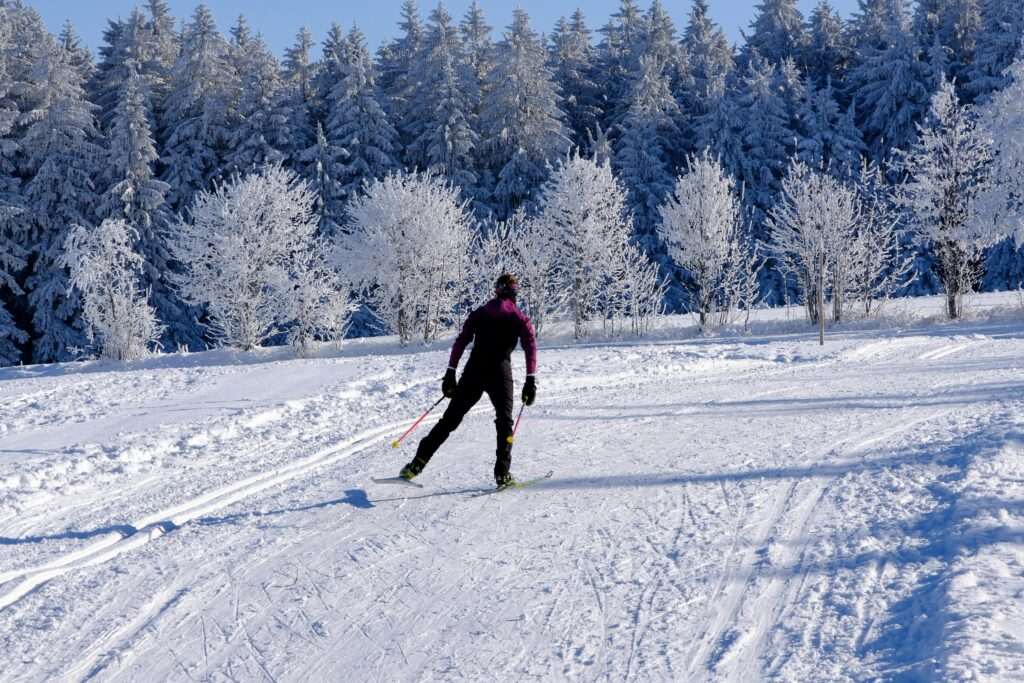
Cross-country skiing in Anchorage operates at a scale that surprises even experienced Nordic skiers from other cities. The city maintains 147 kilometers of groomed trails through its parks and green belt corridors — a trail network comparable to dedicated Nordic skiing destinations in Scandinavia — and grooms them daily during the ski season using professional equipment. Anchorage has hosted World Cup Nordic skiing events and produced Olympic athletes because the infrastructure supports that level of training year-round. For visiting skiers, this means access to genuinely world-class groomed trails within city limits, without driving to a remote resort or paying lift ticket prices.
Kincaid Park: The Crown Jewel of Anchorage Nordic Skiing
Kincaid Park on the west side of Anchorage is the centerpiece of the city’s Nordic trail network — 45 kilometers of groomed trails through forested terrain overlooking Cook Inlet, maintained by the Nordic Skiing Association of Anchorage to standards that meet international competition requirements. The trail system includes courses designed for World Cup competition (Kincaid hosted the 2011 IBU Biathlon World Championships) alongside beginner and intermediate loops accessible to first-time skiers. The trails are groomed for both classic and skate technique, with clearly marked difficulty ratings. The terrain rolls through birch and spruce forest with periodic views over the inlet and the Alaska Range on clear days. On weekday mornings the trails are typically quiet; weekend afternoons bring the full Anchorage Nordic community out, which creates an energetic atmosphere but requires comfort with sharing busy trails.
Russian Jack Springs Park: Midtown Access for Beginners
Russian Jack Springs Park in Midtown Anchorage provides the most centrally located groomed Nordic skiing in the city — a smaller trail system than Kincaid but significantly more accessible for visitors staying in the downtown and Midtown hotel corridor. The loops are primarily beginner and intermediate difficulty, with gentle terrain through the park’s forested areas. Russian Jack is the right starting point for first-time cross-country skiers who want to try the technique without committing to Kincaid’s more demanding terrain or the drive to the park’s western location. The trails here are also groomed by NSAA and follow the same quality standards, at a more manageable scale.
Far North Bicentennial Park: Wooded Intermediate Terrain
Far North Bicentennial Park in East Anchorage provides a longer and more challenging intermediate experience than Russian Jack, with wooded trails through boreal forest that feel more remote than the park’s urban location suggests. The trail network here connects into the broader Hillside trail system and can be linked with other groomed sections for longer distance days. Far North Bicentennial is where Anchorage Nordic regulars go when they want a quieter, more nature-focused ski than Kincaid’s competition-scale environment provides. Wildlife sightings — moose, snowshoe hare, occasional fox — are common along the wooded sections.
The Hillside Trail System
The Hillside trail system connects multiple Anchorage parks into a network that extends from the lower Chugach foothills through neighborhood green belts to the groomed park systems. Skiers who want longer continuous distance on a single outing use the Hillside connections to link Far North Bicentennial, the Abbott Loop trails, and other segments into multi-hour routes. The connected system makes point-to-point skiing practical with vehicle shuttles, and the varied terrain provides both flat groomed corridors and more rolling natural terrain. Chugach State Park trails at the upper end of the Hillside system offer ungroomed backcountry Nordic skiing for skiers comfortable with natural snow conditions and route-finding.
The Nordic Skiing Association of Anchorage (NSAA)
The Nordic Skiing Association of Anchorage grooms and maintains the city’s trail network under contract with the municipality. Their website (anchoragenordicski.com) publishes daily grooming reports with trail-by-trail condition updates — the most reliable source for current conditions before any ski day. NSAA also organizes racing events, youth programs, and the annual grooming season calendar. A season pass for groomed trail access is available through NSAA and represents significant value for visitors staying in Anchorage for a week or more; day passes are available at trailhead kiosks at major parks. The organization’s trail condition app is worth downloading before your first ski day.
Ski Rental in Anchorage
Cross-country ski rentals are available through several Anchorage outfitters. Alaska Outdoor Adventures and Alaska Outdoor Gear Rental both carry classic and skate ski setups for daily rental, including boots and poles. REI Anchorage rents Nordic ski packages and offers staff who can help with sizing and technique basics — useful for first-time skiers who need equipment guidance alongside the gear. Book rentals in advance for holiday weekends and the January-February peak season; demand exceeds supply during extended clear-weather periods when the entire city turns out.
Lessons for Beginners
The Nordic Skiing Association of Anchorage runs group lessons for beginners through the winter season — typically offered on weekend mornings at Kincaid Park and Russian Jack Springs. These lessons cover the classic technique fundamentals (diagonal stride, weight transfer, poling) in a structured format that gets beginners moving efficiently within a few hours. Private instruction is available through NSAA coaches and independent instructors who advertise through the club. Hilltop Ski Area on the Anchorage hillside primarily serves alpine skiing but offers beginner ski infrastructure and instruction that provides an introduction to ski mechanics for visitors new to any ski discipline. For Nordic-specific private lessons, contacting NSAA directly for instructor referrals is the most reliable path.
Classic vs. Skate Skiing: What’s the Difference
Cross-country skiing runs on two distinct techniques that use different equipment and different physical movements. Classic skiing — the traditional technique — involves a diagonal striding motion similar to walking, with kick-and-glide wax (or grip-zone scales on waxless skis) providing traction on each stride. Classic is easier to learn and uses narrower skis with more flex. Skate skiing is a more athletic technique modeled on ice skating — the skier pushes off diagonally alternating feet while poling in coordinated rhythm. Skate skiing is faster, requires groomed firm snow (the “skate lane” on groomed trails), and demands more fitness and coordination to execute. Most beginners start with classic technique; skate skiing typically requires several days of instruction and practice before it becomes efficient. Anchorage groomed trails maintain dedicated lanes for both techniques on the same trail surface.
Season and Trail Conditions
The Nordic skiing season in Anchorage typically runs from late November through mid-March, depending on snowfall and temperatures. Early season (November–December) conditions vary significantly year to year — some seasons open with excellent snow by Thanksgiving, others require patience into January. February is historically the most reliable month for consistent conditions: stable cold temperatures, established snowpack, and long enough days to ski without a headlamp. The trail systems have no snowmaking capability, so early and late-season availability depends entirely on natural snowfall. Checking the NSAA grooming report the morning of any planned ski day is essential — conditions can shift significantly with temperature changes or new snowfall overnight.
Night Skiing and Winter Events
Several Anchorage trail systems maintain lit sections for evening skiing during the dark winter months — Kincaid Park and Russian Jack Springs both have illuminated loops that extend the ski day well after sunset. Night skiing on lit groomed trails has a distinctive atmosphere; the forest goes quiet, the tracks are freshly set, and the experience is genuinely different from daytime skiing. Anchorage hosts several winter Nordic events through the season: the Tour of Anchorage (a long-distance classic race in early March), weekly NSAA time trials, and youth racing events that draw competitive skiers from across Southcentral Alaska. Spectating at Kincaid during a race weekend gives visitors a window into the depth of Anchorage’s Nordic culture — the city takes cross-country skiing more seriously than almost anywhere else in North America.
Planning Your Nordic Ski Day
A practical approach for visiting Nordic skiers: rent gear the afternoon before your ski day (to avoid morning lines), check the NSAA grooming report that evening, and head to Russian Jack Springs for a first session to learn the basics before advancing to Kincaid’s more demanding terrain. For experienced skiers, go directly to Kincaid — the trail system is large enough that a half-day skate session barely scratches the network. Parking at Kincaid is free at the main lot off Raspberry Road; arrive before 9 a.m. on weekends to secure a spot without a walk. The chalet at Kincaid provides warming space, restrooms, and occasionally hot drinks — a genuine asset on the coldest days.

No comments yet.