
Chugach National Forest 2026: Hiking, Camping & Recreation Near Anchorage
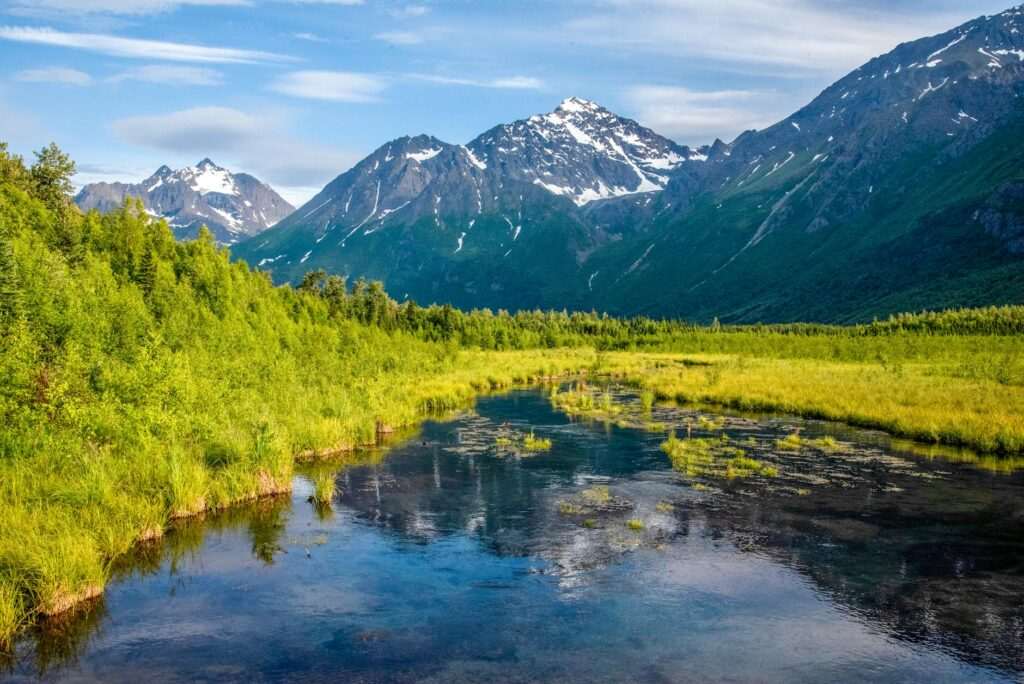
The Wilderness That Surrounds Anchorage
Chugach National Forest is the second-largest national forest in the United States — 5.6 million acres of coastal rainforest, mountain glacier, tidal estuary, and alpine wilderness spreading across the Kenai Peninsula, Prince William Sound, and the Copper River Delta. Most of it sits within two hours of downtown Anchorage. For visitors who arrive expecting a northern city and discover they’re surrounded by one of the largest wild places in North America, the scale is usually the first surprise. The second: how much of that wilderness can be reached by foot, paddle, or small plane.
Portage Valley and Byron Glacier
The Portage Valley entrance to Chugach National Forest sits about 50 miles south of Anchorage on the Seward Highway, where the valley cuts toward Prince William Sound through a corridor of glaciers and hanging peaks. The Byron Glacier Trail is one of the most rewarding short hikes in the forest — a 1.5-mile round trip through alder and cottonwood to the base of Byron Glacier itself, where visitors can walk across the ice in late summer. Portage Glacier fills the view from the visitor center across the lake, and the valley’s campgrounds make it a natural base for exploring the surrounding terrain. The road through Portage also connects to the Whittier Tunnel, gateway to Prince William Sound by boat.
Bird Creek and the Bird-to-Girdwood Trail
The Bird Creek Trail and the Bird-to-Girdwood corridor along Turnagain Arm offer some of the most accessible day hiking in Chugach National Forest, with dramatic views of the Arm and the surrounding peaks throughout. The Bird-to-Girdwood trail follows the old Iditarod route along the shoreline, passing through spruce forest and avalanche meadows with Dall sheep visible on the cliffs above. Trailheads sit directly on the Seward Highway, making this stretch easy to reach as a day trip or a stop on the way south.
Resurrection Pass Trail
The 38-mile Resurrection Pass Trail runs through the heart of the Kenai Peninsula from Hope to Cooper Landing, crossing alpine passes and river valleys through some of the most remote terrain in the forest. It’s a multi-day backpacking route, typically done in three to five days, and one of the most popular backcountry trails in Alaska. A series of USFS public-use cabins spaced along the trail can be reserved through recreation.gov for roughly $35–$65 per night — a practical option that eliminates the need to carry a tent. The trailheads are roughly a two-hour drive from Anchorage.
USFS Cabins
Chugach National Forest maintains a network of remote cabins available for reservation through recreation.gov. Many are accessible only by floatplane or boat — fly-in cabins on remote lakes in Prince William Sound, tucked into terrain that sees almost no foot traffic. For visitors who want a genuinely remote Alaska night without a major expedition, the cabin system offers a practical path. Advance booking is essential for summer; popular cabins fill months ahead of peak season.
Dispersed Camping
Most of Chugach National Forest allows free dispersed camping with no permit required in areas without developed campgrounds or posted restrictions. The standard limit is 16 consecutive days in one location. Campfire regulations vary by season and fire conditions — check with the Chugach National Forest ranger districts before a trip, particularly in dry summers. Bears are present throughout the forest; standard Alaska precautions apply: carry bear spray, store food properly, and make noise in dense vegetation or near creek drainages.
Getting There
The Chugach National Forest scenic drives — the Seward Highway, Hope Highway, and Sterling Highway — serve as the primary access routes from Anchorage. The forest boundary begins less than 30 miles from downtown, and most major trailheads and campgrounds fall within 90 minutes of the city. Cell service is limited to none beyond developed areas; download offline maps and check trail conditions before leaving the road.
Combining Chugach with an Anchorage Day
The most practical Chugach National Forest day from Anchorage combines the Portage Valley and Byron Glacier sections. Drive the Seward Highway south, stop at the Potter Marsh boardwalk near the forest’s northern edge for shorebirds, continue to Portage Valley for glacier views and a short hike, then stop at the Bird Creek trailhead on the return for a second terrain type. The full loop takes five to seven hours including driving and covers representative terrain from the tidal corridor to the glacier valley. Pull off at the Beluga Point viewpoint on Turnagain Arm for a chance at spotting beluga whales that move through the estuary in summer. July and August offer the best combination of accessible terrain, open trails, and wildlife activity throughout the corridor.
Frequently Asked Questions
How close is Chugach National Forest to Anchorage?
Chugach National Forest’s western boundary begins roughly 25–30 miles from downtown Anchorage, and major recreation areas like Portage Valley, Bird Creek, and the Seward Highway corridor are 30–50 miles away — typically 45 minutes to an hour under normal traffic.
Do I need a permit to camp in Chugach National Forest?
No permit is required for dispersed camping in most of Chugach National Forest. The standard limit is 16 consecutive days per location. Developed campgrounds have nightly fees. Check current fire regulations with the Chugach National Forest ranger districts before your trip, as restrictions can apply in dry conditions.
How do I reserve a USFS cabin in Chugach National Forest?
USFS cabins in Chugach National Forest are reserved through recreation.gov. Costs typically run $35–$65 per night. Many cabins require floatplane or boat access, and popular locations fill quickly — booking several months in advance is the standard approach for summer visits.
What wildlife might I see in Chugach National Forest?
Brown bears and black bears are present throughout the forest and are the primary wildlife safety consideration — carry bear spray on all backcountry trips. Dall sheep appear regularly on rocky ridgelines above treeline. Moose inhabit valley floors and wetland margins. Marine mammals including sea otters, harbor seals, and whales are common in Prince William Sound on the forest’s eastern boundary.


No comments yet.