
Best Photography Spots in Anchorage 2026
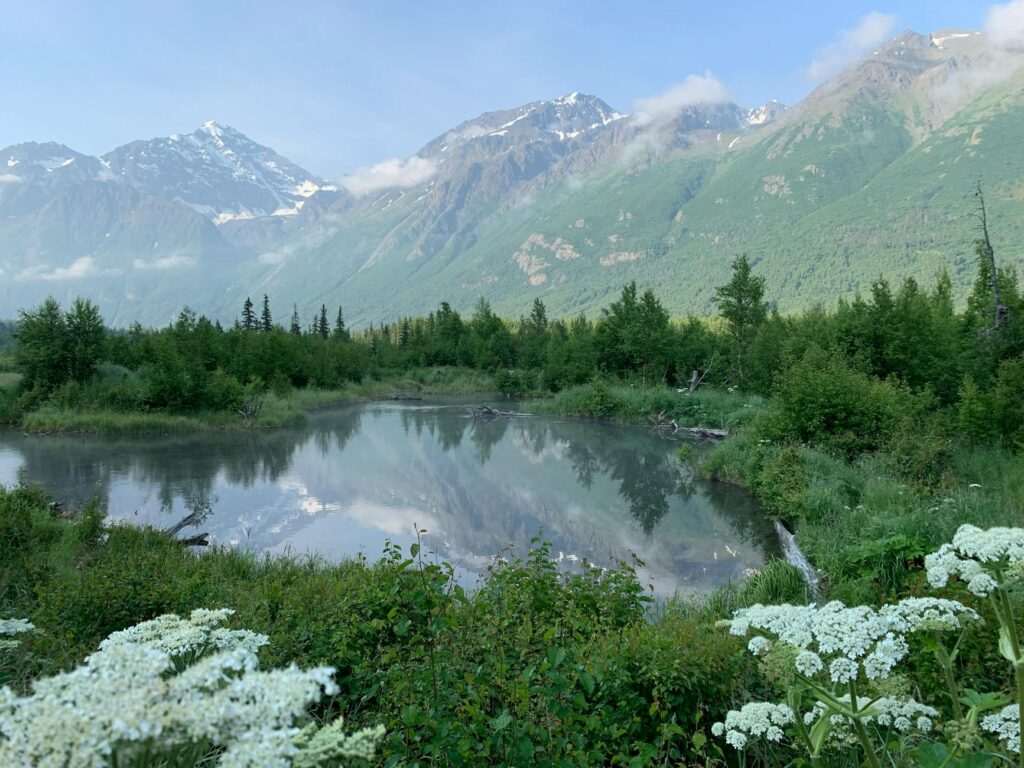
Anchorage sits at the intersection of tidal inlet, mountain range, and urban infrastructure, which produces photography conditions that most cities can’t replicate: beluga whales in the inlet, moose on the trail, Denali on the horizon, and floatplanes landing at dusk. The best photography here doesn’t require a backcountry permit or expensive guide — it requires knowing where to be and when. Here’s a location-by-location breakdown of Anchorage’s best photography spots in 2026, with best times of day, best seasons, and what gear matters most.
Flattop Mountain Summit
Flattop is the most popular summit hike in Alaska, and its photography appeal is clear from the top: a 360-degree panorama that takes in Cook Inlet, the Kenai Mountains across the water, Denali to the north on clear days, and the entire Anchorage bowl spread below. The summit plateau is wide and flat — no need to crowd a narrow ledge — and multiple compositions are available without moving far. Best conditions: late afternoon on clear summer days when the light turns the inlet surface golden and Denali’s silhouette is sharpest on the northwest horizon. Plan to reach the summit by 7–8 p.m. in June and July for evening alpenglow. The full hike is 3.4 miles round trip with 1,350 feet of gain — see our Flattop Mountain guide for logistics and trailhead access from Glen Alps.
Point Woronzof: Sunset and Denali Views
Point Woronzof is a Cook Inlet bluff at Mile 7 of the Tony Knowles Coastal Trail, accessible by a short paved spur off the main trail or by car via Point Woronzof Road off Minnesota Drive. The view from the bluff extends northwest across the inlet — and on the roughly 30–40% of summer days when Denali is visible, the mountain appears on the northwest horizon in line with the inlet, giving a long-distance composition of 20,310 feet of peak framed by water. The best Denali photography window from Point Woronzof is June and July before 9 p.m., when the peak catches low-angle light while the inlet surface glows below. The bluff is also a reliable sunset location when there’s cloud structure on the western horizon — the alpenglow on the Alaska Range behind the city makes for dramatic cityscape backdrops.
Turnagain Arm: Bore Tides and Beluga Whales
Turnagain Arm is the tidal inlet south of Anchorage on the Seward Highway — one of the world’s few locations where bore tides produce a visible wave front advancing up the inlet. Bore tide photography requires timing: the wave arrives at predictable intervals 2–3 hours after the Anchorage low tide, advancing from the south end of the arm toward the north. Anchorage Waterways Council publishes bore tide timing; local weather apps carry it. The Beluga Point and Indian pullouts on the Seward Highway give the best bore tide camera angles, with the wave front visible against the mudflats and the Kenai Mountains behind.
The same Turnagain Arm pullouts are prime beluga whale photography locations in July and August, when pods of white whales push up the arm chasing salmon runs at high tide. The contrast of white whales against grey mud or dark blue water is striking even at 200–300mm shooting distance. Bring a telephoto — belugas surface unpredictably and a wide lens won’t close the distance.
Potter Marsh: Waterfowl and Bald Eagles
Potter Marsh is a constructed wetland at the south edge of Anchorage along the Seward Highway, accessible via a free boardwalk that extends over the marsh for unobstructed water-level bird photography. The marsh holds nesting Arctic terns, Canada geese, red-necked grebes, trumpeter swans, and various duck species through summer. Bald eagles are regular overhead — the open marsh provides clear sightlines for eagle flight shots that are harder to get in wooded terrain. Best light: morning hours from June through August, when low-angle sun illuminates the birds and the Chugach peaks behind the marsh. The boardwalk puts you above standing water with clear backgrounds, which makes cleaner compositions than most lakeside birding spots.
Lake Hood: Floatplanes at Dusk
Lake Hood adjacent to Anchorage International Airport is the world’s busiest seaplane base — a daily procession of Cessnas, de Havillands, and Beavers landing and taking off from the lake surface. The best photography window is late evening in summer, when low-angle light catches the floatplane hulls and the mountains behind provide a dramatic backdrop. The Millennium Hotel on the lakeshore provides public viewing access with strong sightlines across the lake toward the Chugach. Departures and arrivals are most frequent on calm mornings and evenings — wind grounds floatplanes and disrupts takeoff conditions.
Ship Creek: Urban Salmon Photography
Ship Creek flows directly below downtown Anchorage and carries king salmon (June–July) and coho (August–September) past the urban skyline. The Ship Creek viewing platform at the end of 3rd Avenue gives a clear view into the creek at the salmon holding in the current. This is a compelling nature-in-the-city composition — wild salmon in a working urban waterway with the Chugach peaks visible behind the downtown buildings. Morning hours before the Anchorage CBD fills are quieter; the light is also better for the east-facing creek in the morning. A 70–200mm lens at the platform can fill the frame with individual fish when the run is thick.
Earthquake Park and Tony Knowles Coastal Trail
Earthquake Park at Mile 3.5 of the Tony Knowles Coastal Trail sits on a bluff above Cook Inlet and gives a clean westward view of the inlet, the Alaska Range beyond it, and the ground-level remnants of the 1964 Good Friday Earthquake damage visible in the landscape below. The trail between Westchester Lagoon and Earthquake Park through the wooded section along the bluff edge is where moose are most reliably photographed on the urban trail network — early morning with low-angle sidelight through the trees is the typical winning condition.
Eklutna Flats and Kincaid Park: Aurora Photography
Aurora photography near Anchorage requires getting away from city light — Eklutna Flats (along the Glenn Highway north of the city) and Kincaid Park on the southwest edge of Anchorage are the standard nearby options. Kincaid Park’s coastal section facing the dark western horizon of Cook Inlet gives the best low-light-pollution sky access within the city boundary. Eklutna Flats, 26 miles from downtown on the Glenn Highway, adds distance from the city glow and puts the dark sky above the Palmer-Hay Flats wetlands, giving foreground interest with the aurora above. Aurora season in Southcentral Alaska runs September through March — summer’s continuous daylight prevents aurora visibility regardless of solar activity.
Best Photography Seasons at a Glance
| Subject | Best Months | Best Time of Day |
|---|---|---|
| Denali views (Flattop, Point Woronzof) | June–August (clearest air) | Evening, 7–10 p.m. |
| Beluga whales (Turnagain Arm) | July–August | High tide windows (check tide charts) |
| Bore tide (Turnagain Arm) | Year-round, best May–August | 2–3 hrs after Anchorage low tide |
| Waterfowl (Potter Marsh) | May–August | Morning, 6–9 a.m. |
| Salmon (Ship Creek) | Late June–September | Morning light on east-facing water |
| Floatplanes (Lake Hood) | May–September | Evening, 7–9 p.m. |
| Aurora | September–March | Midnight–3 a.m. (peak darkness) |
The Alaska Public Lands Information Center on 4th Avenue carries current wildlife activity reports and can advise on bore tide timing and beluga viewing conditions. Our Anchorage in summer guide covers the seasonal daylight windows and golden hour timing month-by-month, which directly affects the photography conditions at every location above. For photographers who want to access the full length of the Coastal Trail and Kincaid Park, Downtown Bicycle Rental provides bikes near the trail’s downtown trailhead.
For guided photography instruction and tour options around Anchorage, Alaska Photo Treks leads small-group shoots at the city’s best landscape and wildlife locations throughout the season.
Photo by Sara Loeffler on Pexels.

No comments yet.