
Best Free Things to Do in Anchorage 2026
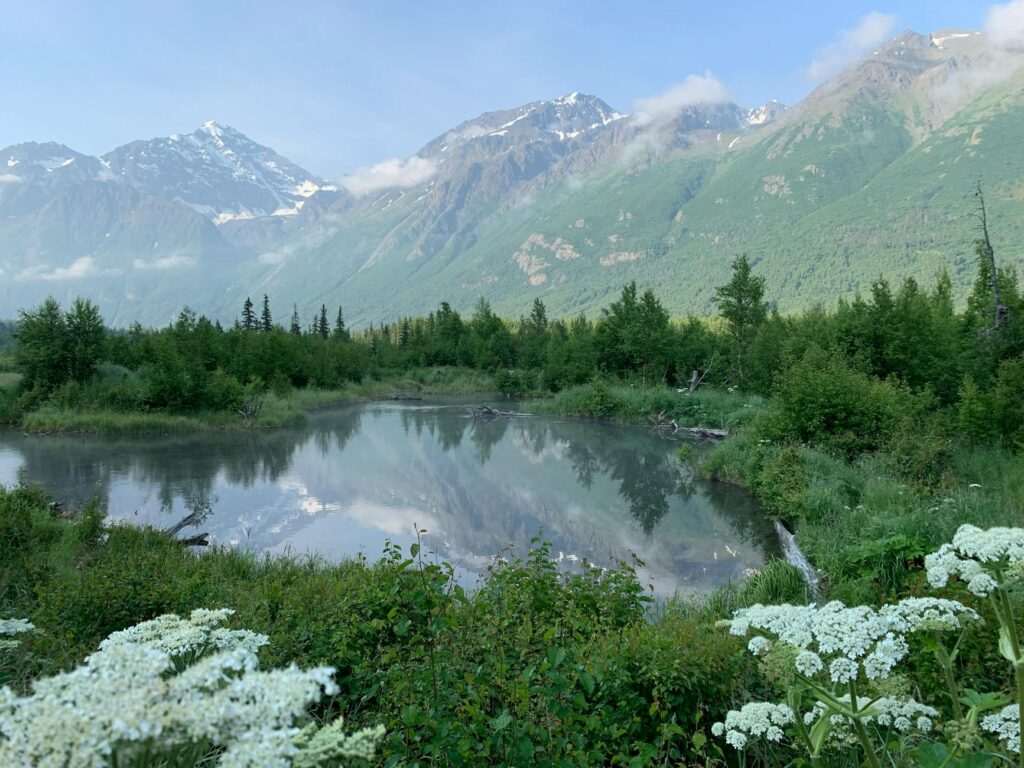
Anchorage isn’t cheap. A grocery run costs twice what you’d pay in Seattle, and most tour operators charge accordingly. But the city’s real draws — the ones that keep people coming back — don’t charge admission. The trails, the tides, the bears that show up in July, the light that starts doing strange things in late May — all of it’s free, and most of it’s within a short drive of downtown.
Here’s where to start if you’re watching your spending on an Anchorage trip.
Tony Knowles Coastal Trail
The 11-mile Tony Knowles Coastal Trail is the single best free activity in Anchorage, full stop. It runs along Cook Inlet from downtown to Kincaid Park, passing Earthquake Park, the coastal wetlands, and several spots where moose feed in the brush close enough to the path that you’ll want to give them room. The trail is paved and accessible for bikes, strollers, and wheelchairs. On a clear day — and you’ll want to check the forecast, because clouds sit low in this drainage — the views across the inlet to the Alaska Range are the kind that make visitors stop mid-stride.
Plan for two to three hours if you’re walking end-to-end. Rental bikes are available downtown if you’d rather cover it faster. The Westchester Lagoon section, about halfway, is particularly good for bird watching in spring migration and early summer.
Earthquake Park and the 1964 Bluff
You can access Earthquake Park directly from the coastal trail. It sits on a section of bluff that dropped fifteen feet during the 1964 Good Friday earthquake — the most powerful ever recorded in North America — and the land still reads wrong if you know what you’re looking at. Interpretive signs explain the geology. The view of the inlet from the overlook is excellent, especially in the afternoon when the light hits the Susitna Flats. There’s parking on the road, so it works as a standalone stop too.
Wildlife Viewing Without Paying for a Tour
Most guided wildlife tours in Anchorage will run $100 to $200 per person. You don’t always need them. The city has one of the highest densities of urban moose in North America, and you’re likely to see one without trying — in Bicentennial Park, along Campbell Creek, or just wandering a residential street in the lower hillside. Stay well back; a cow with a calf in May is genuinely dangerous.
Beluga Point, about 30 miles south on Seward Highway, is the best free wildlife viewing outside the city. Pull off at the marked turnout around Mile 110 in July or August and you’ll often see beluga whales in Turnagain Arm, riding the incoming bore tide. The tidal bore itself — a visible wave front that rolls through the arm twice daily — is worth the drive on its own. Check tide tables before you go.
Potter Marsh, a few miles south of the city at the junction of Huffman Road and Seward Highway, is a boardwalk wetland with interpretive signs, good shorebird and duck observation in spring and summer, and the occasional sandhill crane stopover in August.
Free Walks Through Downtown and Midtown
The Anchorage Market and Festival runs weekends from mid-May through mid-September at 3rd Avenue and E Street. No admission. Vendors sell local produce, smoked fish, crafts, and a reasonable amount of Alaska-branded gear you probably don’t need. It’s crowded on summer Saturday mornings, which makes it feel the way a real market should feel.
The 4th Avenue Theater block, now partly occupied by small shops, is worth a slow walk if you’re interested in mid-century architecture. The theater itself opened in 1947, survived the earthquake (barely), and closed as a theater in the 1980s. The facade with its terrazzo and neon is one of the few remaining examples of its kind in Alaska.
Town Square Municipal Park, at 6th Avenue and G Street, runs free programming in summer including concerts and outdoor events. Check the Municipality of Anchorage’s events calendar before you arrive — the scheduling changes year to year but there’s usually something happening on summer evenings.
Free Days and Low-Cost Culture
The Anchorage Museum isn’t free, but it offers free admission on the first Friday of every month from 5 to 9 PM as part of the city’s First Friday arts walk. That event draws a lot of people, so expect crowds — but the museum’s Alaska history and art collections are genuinely good, and the rooftop terrace has a clear view of the Chugach on a decent day.
The Z.J. Loussac Public Library is free and worth a stop even if you’re not checking out books. It has an excellent Alaska collection, a comfortable reading room, and public terminals if you need to catch up on anything. The architecture is late-1980s civic, which is to say not beautiful, but the staff are helpful and the Alaska Room has materials you won’t find anywhere else.
The Alaska Native Heritage Center charges admission, but if you’re connecting with family or doing research, the grounds and outdoor exhibits are sometimes accessible without paying the main fee — worth calling ahead to confirm current access policies.
Free Outdoor Activities a Short Drive Out
Flattop Mountain in Chugach State Park is the most hiked peak in Alaska. The trailhead is 11 miles from downtown and the summit hike takes two to three hours round trip, with a scramble at the top that’s manageable for most fit adults. Parking at the Glen Alps trailhead costs $5 (or $60 for an annual pass). The trail itself, the summit, and the 360-degree views of Anchorage and the Inlet are free.
The Eagle River Visitor Center, about 20 miles northeast of the city, offers free access to trails into Chugach State Park and interpretive programs on Alaska wildlife and ecology. The river itself draws salmon in July and August, and the walk to Dew Mound gives you a solid alpine day without committing to a major summit.
Little Campbell Lake, in south Anchorage, is a calm spot for free shoreline fishing or just sitting near water. It’s accessible, stroller-friendly at the lake margins, and one of those places that feels quieter than you’d expect given its proximity to the road. The Little Campbell Lake Fishing listing has current access details and what you’re likely to catch in season.
Practical Notes for Budget Visitors
The Anchorage International Hostel and several budget lodging options run cheaper in the shoulder seasons — May and September — when the weather’s still workable. The summer solstice window (late June) is the most crowded and most expensive period; you’ll pay a premium for everything and compete for parking at every trailhead.
If you’re renting a car — and in Anchorage, you probably are — the main costs that aren’t optional are fuel and parking downtown. Most trailheads and parks outside downtown are free to park at except Chugach State Park’s developed trailheads. Gas is expensive by Lower 48 standards; fill up in the city rather than on Seward Highway.
The best free thing about Anchorage in summer is the light. It stays light until nearly midnight in June, which means you can hike or bike after dinner without a headlamp. That extra margin is worth planning around — schedule your bigger outdoor days to end late, not early, and you’ll get the best of it without the midday crowds.


No comments yet.