
Anchorage to Seward Road Trip 2026: The Ultimate Scenic Drive Guide
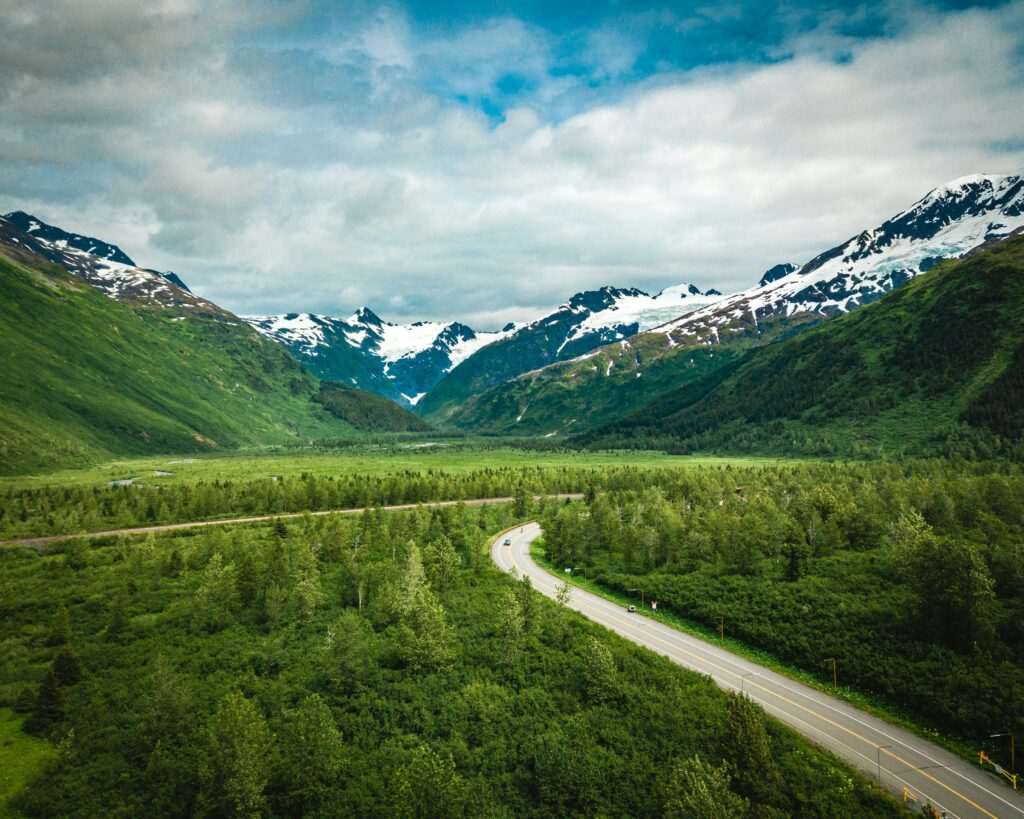
The Seward Highway is 127 miles of road that most visitors to Alaska consider the best drive of their lives. It leaves Anchorage and immediately begins tracking the edge of Turnagain Arm — a fjord flanked by 4,000-foot peaks on both sides, where bore tides surge, beluga whales surface, and Dall sheep pick their way across cliffsides directly above the road. By the time you reach Seward, you’ve crossed a mountain range, driven through Kenai Fjords National Park’s gateway, and arrived at a small harbor town on one of the most dramatic coastlines in North America.
This route has the highest federal scenic designation in the United States — an All-American Road. This guide covers every major stop on the southbound drive, what to do in Seward, and how to decide between a day trip and an overnight stay.
The Drive at a Glance
- Distance: 127 miles, Anchorage to Seward
- Non-stop drive time: approximately 2.5 hours
- With stops: 5–8 hours southbound
- Best season: June through September (highway open year-round)
- Day trip departure: Leave Anchorage by 7–8am to have time at both stops and Seward
Leaving Anchorage: Potter Marsh & the Arm (Miles 115–110)
Exit Anchorage southbound on the Seward Highway and your first worthwhile stop is Potter Marsh Bird Sanctuary at Mile 117 — a boardwalk over a wetland that hosts nesting sandhill cranes, trumpeter swans, and shorebirds through summer. It’s a 10-minute stop that often produces more wildlife than longer hikes.
From there the highway narrows to two lanes and begins following Turnagain Arm. The beluga whale viewing area at Beluga Point (Mile 110) is the most reliable spot on the drive. Belugas frequent the Arm from May through July, often moving in pods of 5–30 animals following the tide. The Arm is also a bore tide corridor — the incoming tide can push a visible wave of water up to several feet high. Check the bore tide schedule before leaving Anchorage, as the timing varies daily.
The mountain walls above the road shelter a resident Dall sheep population. White dots on the cliffs are almost always sheep. Binoculars help — bring them.
Portage Valley Junction (Miles 79–75)
At Mile 79, the Portage Glacier Road turnoff leads 5 miles east into one of the most accessible glacier valleys in Alaska. The detour is strongly recommended — plan 1.5–2 hours for a full stop.
The Byron Glacier trail (Byron Glacier Trail) is a flat 1-mile walk through a glacially carved valley to a snowfield at the glacier’s base. No special gear required, and the surrounding peaks are dramatic regardless of season.
The Begich Boggs Visitor Center sits at the edge of Portage Lake and offers boat tours to Portage Glacier face via the MV Ptarmigan — the only way to see the glacier close-up since it has retreated behind the lake. Tours run through Portage Glacier Cruises (MV Ptarmigan) and depart from near the visitor center. Tickets are around $35 per adult.
Moose are reliably seen in Portage Valley, especially in the morning. The flats between the road and the treeline are prime habitat year-round.
Hope Road Junction (Mile 56)
At Mile 56, a turnoff leads 18 miles west to Hope, a gold rush town of around 150 people on the south shore of Turnagain Arm. Hope is worth the side trip if you have time: a tiny historic district, excellent salmon fishing at Resurrection Creek in late summer, and a distinct character that’s completely different from anything else on the highway. The drive along the north shore of the Arm from this angle gives a different perspective on the terrain you drove through earlier.
Summit Lake (Mile 45)
Summit Lake Lodge at Mile 45 sits at 1,000 feet elevation alongside an alpine lake, and is the traditional coffee-and-pie stop for anyone who makes this drive regularly. The views of the surrounding Kenai Mountains are excellent, the lodge interior is warm and historic, and the pie is genuinely good. If you’re doing a long day, this is where to refuel — human and vehicle both.
Moose Pass (Mile 29)
The small community of Moose Pass is a quiet highway stop worth knowing for one reason: its summer solstice festival, held the weekend closest to June 21, is one of the more unusual small-town Alaska events — music, games, and an overnight bonfire at an altitude where it never gets fully dark in late June.
Exit Glacier & Kenai Fjords NP (Mile 3.7 from Seward)
Three miles before reaching Seward, Exit Glacier Road leads to Kenai Fjords National Park’s only road-accessible glacier. The walk to the glacier face is short and flat (under 1 mile round trip). For a longer experience, the Harding Icefield Trail climbs 8 miles and 3,000 vertical feet to the vast icefield that feeds the park’s glaciers — one of the best long day hikes in Southcentral Alaska on a clear day.
Seward
Alaska SeaLife Center
The only public aquarium in Alaska, and one of the few in the world that functions simultaneously as a research and wildlife rehabilitation facility. The SeaLife Center houses Steller sea lions, harbor seals, puffins, and sea otters in naturalistic exhibits. Budget 1.5–2 hours. Adult admission around $25.
Kenai Fjords Glacier Cruises
Seward’s main attraction beyond the road is its boat tour industry. Six- to eight-hour cruises operate from the Small Boat Harbor into Resurrection Bay and Kenai Fjords National Park, reaching tidewater glaciers and wildlife-rich waters. Humpback whales, orcas, sea otters, and thousands of seabirds are routine sightings from late May through September. Cook Inlet marine wildlife viewing from Anchorage provides context for what you’ll see in the fjords.
Mount Marathon Trail
Starting from the corner of Monroe Street and Lowell Canyon Road in downtown Seward, this trail climbs 3,022 feet in under 2 miles to the summit above town. The site of an annual Fourth of July race since 1915, the route is steep, loose, and completely worth it for anyone in reasonable shape. The view of Resurrection Bay from the summit is one of the defining Alaska panoramas.
Day Trip vs. Overnight
A pure day trip — Anchorage by 7am, Seward by 10am, SeaLife Center through lunch, afternoon stroll of the harbor, drive back by 7pm — is doable but rushed. You’ll see the highway and the town but won’t have time for a boat tour, which is the most compelling experience Seward offers.
The overnight option is clearly better. Arriving in Seward by mid-afternoon, booking a 6am boat tour the next morning, and returning to Anchorage after the cruise gives you the full picture. Hotels book early for summer weekends — reserve 3–4 weeks ahead for July and August.
Driving Tips
- Pullout discipline: Wildlife stops are common on the Seward Highway. Use designated pullouts — do not stop on the highway shoulder. State law prohibits stopping on the highway in many sections, and moose can appear without warning.
- Fuel: Fill up in Anchorage before leaving. Fuel is available in Girdwood, Seward, and (limited) in Hope — but not along the core Turnagain Arm section.
- Weather variability: The Portage area is one of the rainiest in Alaska. The summit section can have snow through June. Check conditions and pack layers regardless of the Anchorage forecast.
- Driving south means better Arm views: On the northbound return trip, Turnagain Arm is on your right (east). The southbound drive puts it on your right as well — both directions offer roughly equivalent views, but afternoon light on the return trip is excellent.
Featured photo by Andrew Hanson on Pexels.


No comments yet.