
Anchorage to Fairbanks Road Trip 2026: The Parks Highway Guide
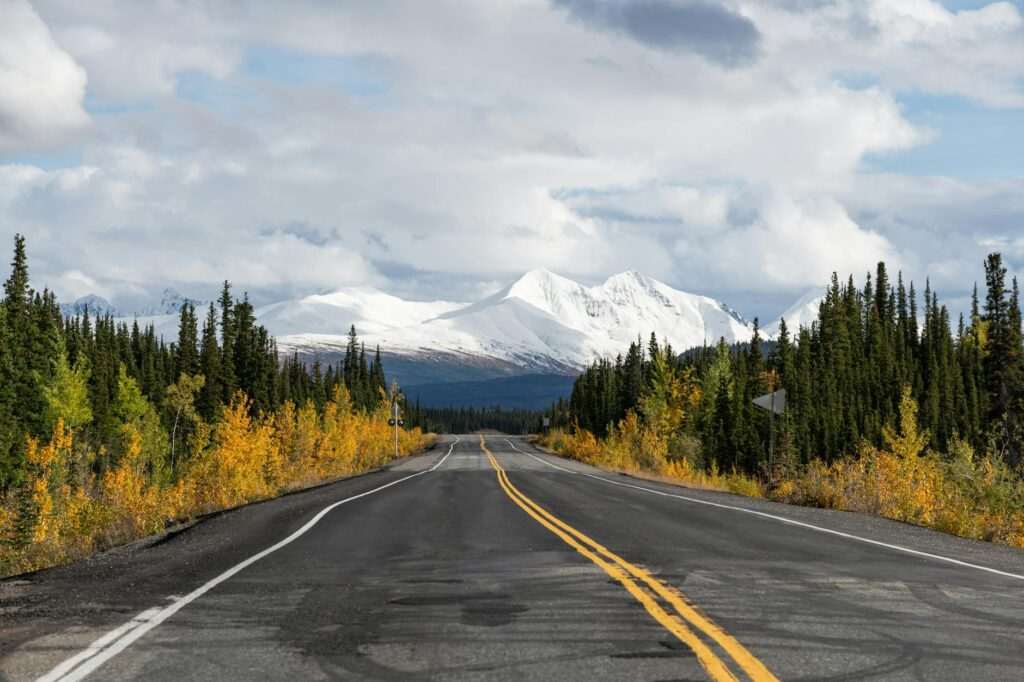
The Parks Highway — Alaska Route 3 — runs 358 miles from the Mat-Su Valley north through the Alaska Range to Fairbanks. It’s one of the great American road trips: a two-lane highway that climbs past glacier-fed rivers, skirts the flanks of Denali, and deposits you in Alaska’s second city with the feeling that you’ve crossed a genuine frontier. Most visitors drive it in two days and feel like that wasn’t quite enough. Here’s how to do it right.
The Route at a Glance
Anchorage sits at the southern end. You’ll head north on the Glenn Highway (AK-1) for about 35 miles to where the Parks Highway begins near Wasilla. From there it’s a straight shot north: Wasilla, Willow, Talkeetna junction, Denali State Park, the Denali National Park entrance at roughly mile 237, and then another 125 miles of boreal forest and rolling hills into Fairbanks. Total driving time without stops is around seven to eight hours. With stops — and there are good ones — plan for two days.
Stop 1: Wasilla and the Mat-Su Valley (Mile 35–50)
Wasilla is the first real town north of Anchorage, about 45 minutes up the Glenn Highway. It’s a sprawling commuter hub without much to detain you, but the Mat-Su Valley around it has genuine appeal: wide farmland framed by the Chugach and Talkeetna Mountains, the largest agricultural district in Alaska. If you’re an early starter, grab coffee and fuel here — services thin out considerably further north.
Palmer, a few miles east on the Glenn Highway, is worth a quick detour for its historic 1930s New Deal townsite if you’re interested in Alaska’s agricultural history. But for most road trippers, Wasilla is simply a fuel stop before the scenery begins.
Stop 2: Talkeetna (Mile 98 Junction + 14-Mile Spur)
Turn left at the Talkeetna Spur Road junction around mile 98 and drive 14 miles to one of Alaska’s most distinctive small towns. Talkeetna (population around 900) sits at the confluence of three rivers — the Susitna, Talkeetna, and Chulitna — and has served as the base camp hub for Denali climbers since the mountain became a serious objective. The town has a famously eccentric character: historic log buildings, a strip of bars and outfitter shops, excellent views of Denali on clear days, and a collective refusal to be anything other than itself.
Flightseeing: Talkeetna is the premier base for Denali flightseeing. Several operators run glacier landings and summit flyovers — if conditions are clear and budget allows, this is the single most spectacular optional activity on the Parks Highway. Book ahead in summer. Even a basic flyaround (no glacier landing) gives you a perspective on Denali’s size that no ground viewpoint can match.
Eat and stay: The Talkeetna Roadhouse is the local institution for breakfast — sourdough pancakes, hearty portions, communal tables. Several small lodges and B&Bs operate in town. If you’re doing the trip in two days, Talkeetna is a reasonable overnight stop, though most continue to the Denali area.
Allow two to three hours in Talkeetna minimum. Budget more if you’re flying.
Stop 3: Denali State Park Viewpoints (Miles 135–170)
Back on the Parks Highway heading north, the Alaska Range begins to dominate the western skyline. Denali State Park — distinct from Denali National Park — runs along the highway here and offers some of the best roadside Denali views in Alaska. The mountain is 20,310 feet tall and sits about 30 miles west of the highway; on clear days it fills the entire western horizon in a way that’s genuinely disorienting in scale.
Byers Lake Campground (around mile 147) has a small boat launch and easy hiking trails with unobstructed views. The Princess Wilderness Lodge at mile 133 has a deck specifically positioned for Denali viewing. Even without stopping, slow down through this section — the roadside pull-offs give some of the trip’s best photography.
Denali visibility: The mountain creates its own weather and is obscured by clouds roughly 70% of the time in summer. Sunrise and early morning often offer the clearest conditions. If you see it, pull over immediately.
Stop 4: Denali National Park Entrance (Mile 237)
The Denali National Park entrance is at mile 237 of the Parks Highway. The main visitor center is just inside the park boundary and is worth a stop even if you’re not planning a full park day. The exhibits cover the park’s ecology, wildlife, and climbing history; rangers can advise on road and wildlife conditions for the day.
The park road stretches 92 miles into the wilderness. Private vehicles are restricted past mile 15 (Savage River) without a permit — beyond that, you’re on the park’s bus system. If you want to go deep into the park and see the classic Denali wildlife (grizzly bears, caribou, wolves, Dall sheep), that requires a separate day and advance bus reservations. See the Anchorage to Denali Day Trip post for that itinerary.
For the Parks Highway road tripper, the entrance area and Savage River are the appropriate stops. There’s a coffee shop and small store at the visitor center. The Camp Denali area, deeper in the park, offers wilderness lodge options for those staying multiple nights.
The small town of Healy, five miles north of the park entrance, has the closest gas station and several restaurants. It’s also where many park workers and guides live. Fuel up here — it’s the last reliable stop before Fairbanks.
The Final Stretch: Denali to Fairbanks (Miles 237–358)
The last 120 miles into Fairbanks are the least dramatic of the drive but still deeply Alaskan. The highway runs through boreal forest — black spruce, birch, and aspen — with the Alaska Range gradually receding in the rearview mirror. Nenana, at mile 304, sits at the confluence of the Nenana and Tanana Rivers and has a small historic district worth a 20-minute stretch stop.
Fairbanks itself is a functional interior Alaska city rather than a scenic destination. It’s worth an overnight for the experience — especially if you visit in summer and want to see the midnight sun from this far north (Fairbanks is above 64° latitude), or in August when the aurora begins to appear on dark nights. The riverfront area downtown has restaurants and a walkable strip.
Two Days vs. One Day: The Honest Assessment
You can drive Anchorage to Fairbanks in one very long day — leave by 6am, skip Talkeetna, limit yourself to roadside stops, and arrive in Fairbanks by 7 or 8pm. It’s doable but you’ll feel like you rushed past the best parts.
The better version: overnight in Talkeetna or near the Denali entrance, take the morning slowly, and arrive in Fairbanks by early afternoon on day two. This gives you time to fly over Denali, walk the State Park trails, and actually absorb the scale of what you’re driving through. The Alaska Railroad also runs a scenic service between Anchorage and Fairbanks if one person in your group wants to skip the return drive.
Wildlife, Road Conditions, and Practical Tips
Wildlife: Moose are common along the highway at all times of year, especially at dawn and dusk — slow down and expect them around curves. Bears (black and grizzly) cross the road in the Denali area. Dall sheep are sometimes visible on rocky slopes near the Alaska Range. Scan the treeline rather than the road center when you’re looking.
Road conditions: The Parks Highway is paved its full length and generally well-maintained. Winter driving (October–April) requires studded tires and preparation for whiteout conditions — the stretch through the Alaska Range is particularly exposed. Summer construction is common and can cause 30–60 minute waits at flag stops.
Fuel: Fill up in Wasilla, Talkeetna (if stopping), and Healy. Don’t rely on finding fuel between these points. Cards are accepted at most pumps but carry cash as a backup in smaller communities.
Cell service: Spotty to nonexistent north of Wasilla until you approach Fairbanks. Download offline maps before you leave. The Chugach Adventures team and most Anchorage-based tour operators can advise on current road conditions before departure.
Photo by John De Leon via Pexels

No comments yet.