
Anchorage Events & Festivals 2026: Annual Highlights & Must-Attend Celebrations
Anchorage’s events calendar follows the rhythms of an extreme climate — winter festivals that make the most of cold and darkness, a compressed summer packed with outdoor celebrations, and a fall that transitions the city back indoors before most of the country feels autumn. If you’re planning a trip to Anchorage and want to time it around something specific, this guide covers the major annual events from January through December, with practical notes on what to expect and how to plan.
Fur Rendezvous (Fur Rondy) — Late February
Fur Rendezvous, universally called Fur Rondy, is Anchorage’s oldest major festival and one of the largest winter festivals in North America. Running for ten days in late February, it evolved from the 1930s as a gathering for bush trappers and traders to sell furs during the slow season — the market function has faded, but the celebration has only grown. The event now encompasses a full carnival on downtown streets, the World Championship Sled Dog Race (a sprint race on a downtown course, distinct from the Iditarod), outhouse racing, running of the reindeer, fireworks, a blanket toss demonstration, and the kind of organized chaos that comes from a city collectively deciding that the coldest month of the year deserves a party.
For visitors, Fur Rondy is one of the best windows into what Anchorage actually is, as opposed to what it looks like in summer brochures. The sled dog sprint races on 4th Avenue draw serious spectator crowds. The carnival midway is cheerfully absurd. Plan on cold weather — highs in the 20s°F are typical — and dress in multiple layers. Most of the action is outdoors and pedestrian-friendly. Downtown hotels book up for the core weekend.
Iditarod Ceremonial Start — First Saturday in March
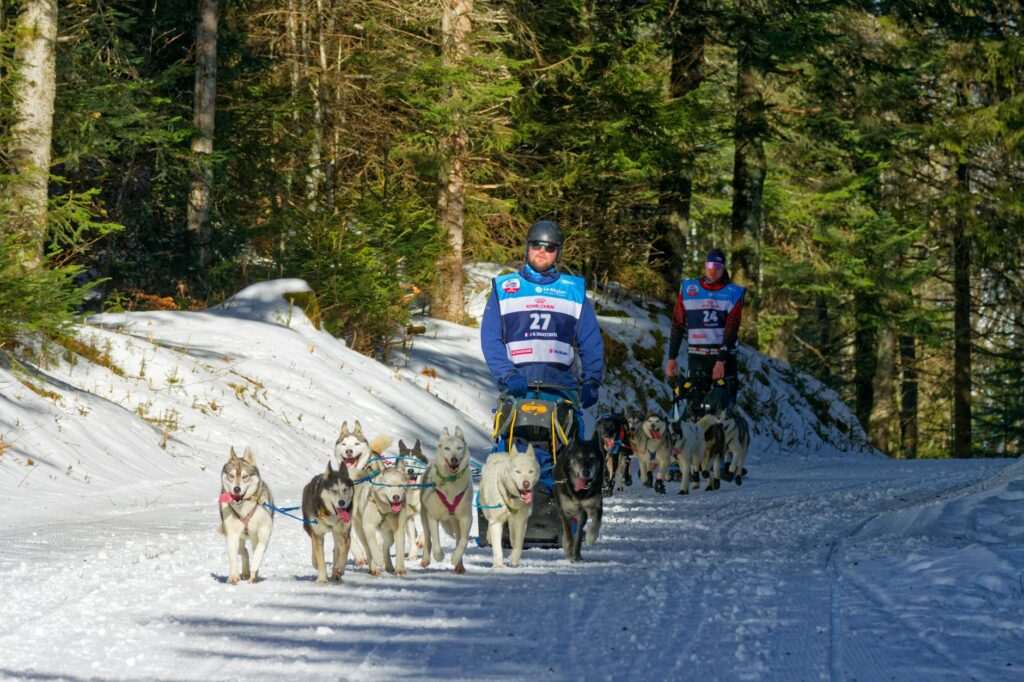
The Iditarod Trail Sled Dog Race is the most famous race in Alaska and one of the most famous sporting events in North America. The race itself covers over 1,000 miles to Nome, but the ceremonial start runs right through downtown Anchorage on the first Saturday in March — a four-mile course on a packed snow trail through city streets, with the mushers and their teams running in sequence through massive crowds lining the route.
The ceremonial start is free to watch and genuinely extraordinary to witness in person — sixty or more teams of dogs, each one bristling with the specific energy of working huskies at the start of something big, running through the middle of a city while thousands of spectators pack the sidewalks. The dogs are the story: their condition, their behavior in the chute, the relationship between musher and team that becomes visible in a few seconds as they pass. If you can only attend one Anchorage event in your lifetime, make a strong case for this one. Downtown hotels book out months in advance for this weekend.
For year-round Iditarod context — history, memorabilia, and sled dog demonstrations outside race season — the Iditarod Trail Headquarters in Wasilla offers the most complete experience. It’s worth the 45-minute drive from Anchorage on any trip to the Matanuska Valley. The facility is open year-round and makes a good addition to a day trip that also covers Palmer and the Matanuska Valley.
Spring: Transitional Season Events
March through May is Anchorage’s transitional season — the race calendar winds down, daylight returns fast (gaining about six minutes per day in March), and the city begins shifting from indoor culture to outdoor anticipation. The shoulder season has fewer signature events but is increasingly popular with visitors who want lower prices and smaller crowds than summer. The Anchorage International Film Festival (AIFF) typically runs a spring programming selection in addition to its main December run, and various arts venues pick up programming as the city shakes off winter.
Anchorage Market & Festival — Mid-May Through Mid-September
The Anchorage Market & Festival is the city’s flagship outdoor market, running every Saturday from mid-May through mid-September at the corner of 3rd Avenue and E Street downtown. Vendor counts routinely exceed 300 — Alaska-made goods, crafts, food, produce, and local businesses alongside regional artisans who travel to Anchorage specifically for the market. It’s the most concentrated version of Anchorage’s summer public life in a single location, and worth a visit on any Saturday you happen to be in town.
The market’s food section is particularly strong: reindeer sausage sandwiches, fresh halibut tacos, birch syrup products, wild berry preserves, and an assortment of international food vendors that reflects Anchorage’s genuinely diverse population. Arrive before noon for the best vendor availability; the most popular booths sell out by early afternoon on peak days.
Summer Solstice Celebrations — Late June
Anchorage receives about 19.5 hours of daylight on the summer solstice, June 20 or 21 depending on the year. The city marks the longest day with a cluster of events that lean into the midnight sun rather than treating it as background. The Sundown Solstice Festival gathers downtown for an evening that technically never gets dark — live music, outdoor vendors, and the collectively disorienting experience of watching a crowd enjoy what feels like mid-afternoon at 11 PM.
The Anchorage Mayor’s Midnight Sun Run is a 5K and 10K race that starts at midnight on the Saturday closest to the solstice, with thousands of runners taking the course in full daylight. No headlamps required. Spectators line the route, and the post-race energy has a celebratory quality that a normal Saturday morning race simply can’t replicate. Registration opens months in advance and fills quickly.
Fourth of July in Anchorage
Fourth of July in Anchorage is complicated by the midnight sun: fireworks at 10 PM are still competing with a bright sky, which reduces the visual impact. Some communities in the region time their displays for the latest feasible window or lean into the daylight as part of the aesthetic. The city’s primary celebration centers on downtown events, parades, and the general outdoor culture of a city at its warmest and most active. If fireworks are important to your Fourth of July experience, check what specific schedule local organizers have announced for 2026 — the timing varies.
Bear Paw Festival — Eagle River, July
The Bear Paw Festival in Eagle River, just north of Anchorage, is a four-day community celebration in mid-July that has been running since 1975. The format is classic summer festival: parade, carnival rides, live music, food vendors, a car show, kids’ activities, and the kind of low-key community energy that makes small-town festivals worth seeking out. Eagle River is 15 minutes from downtown Anchorage, easily accessible as a day trip.
The festival draws heavily from Eagle River’s family-oriented demographic, which makes it a good option for visitors traveling with children. The Saturday parade through Eagle River’s main commercial corridor is the high-attendance anchor event of the four days. Plan for parking challenges near the festival grounds on peak days — rideshare or arriving early are the practical solutions.
Girdwood Forest Fair — Late July
The Girdwood Forest Fair is a three-day arts and music festival held in Girdwood, about an hour south of Anchorage on the Seward Highway, in late July. The fair occupies a forest clearing near the Alyeska Resort village with an arts-and-crafts market, multiple stages, local and regional musical acts, and food vendors. The forest setting — hemlock and spruce at the base of the Chugach Mountains — gives it a character that’s distinct from the urban festivals and genuinely specific to Southeast Alaska’s rainforest environment.
The Forest Fair skews toward the arts community and draws a creative-leaning crowd from across Southcentral Alaska. It’s not a massive commercial festival; vendor selections tend toward handmade goods, original art, and local makers rather than mass-produced goods. If you’re driving the Seward Highway — which you should be, as it’s one of the most scenic drives in North America — timing it for the Forest Fair weekend adds a natural stop to what might otherwise be a pure driving day. The Alyeska Resort village in Girdwood is within walking distance and makes a good base for the weekend.
Alaska State Fair — Palmer, Late August Through Labor Day
The Alaska State Fair runs for twelve days from late August through Labor Day weekend in Palmer, 45 minutes northeast of Anchorage via the Glenn Highway. It’s the largest annual event in the state by attendance, drawing over 300,000 visitors across its run. The fair covers the classic spectrum — giant vegetables (the Palmer valley’s long summer daylight hours produce cabbages that routinely exceed 100 pounds), livestock competitions, midway rides, fair food, rodeo events, and major national music acts on the headline stage.
The giant vegetable competition is worth seeking out specifically: 100-pound cabbages, 1,000-pound pumpkins, and oversized root vegetables on display as proof of what Alaska’s extreme summer daylight can do to plant growth. The fairgrounds are walkable from the Palmer transit center, and the Glenn Highway drive from Anchorage passes the Matanuska Glacier overlook, making it natural to combine the fair with a drive-by glacier stop.
Anchorage International Film Festival — December
The Anchorage International Film Festival runs for ten days in early December, screening independent, documentary, and short films from Alaska and around the world at multiple downtown venues. AIFF is the serious arts film event in Anchorage’s calendar — not a blockbuster showcase but a curated selection that emphasizes Alaska-made work and films without major distribution. It’s one of the few events that positions Anchorage as a cultural destination rather than a wilderness gateway, and it draws an arts-engaged local audience alongside visiting filmmakers.
December in Anchorage means about five and a half hours of daylight, temperatures that hover around 20°F, and a city that has shifted fully into indoor cultural mode. The festival fits the season well: evenings that are dark by 4 PM are natural film-watching conditions. Hotel prices drop significantly in December versus summer, making it one of the more economical windows to visit.
Planning Your Visit Around the Events Calendar
A few practical notes for timing a trip around Anchorage events:
- Fur Rondy and the Iditarod Start (February–March): Downtown hotels book fast for these weekends. Reserve three to six months in advance if either is your primary reason for visiting. Cold weather is guaranteed; pack accordingly and plan for outdoor time regardless.
- Summer festival season (June–August): This is the most competitive window for accommodation pricing and availability. The Anchorage Summer Festival and Anchorage Market overlap with the city’s peak visitor season — booking lodging in advance is essential for any weekend in July.
- Alaska State Fair weekend (Labor Day): Book early and plan for Glenn Highway traffic on the approach to Palmer on peak fair days. Midweek visits to the fair avoid the worst of the weekend crowds.
- December film festival: The best value window in Anchorage’s event calendar. Fewer visitors, lower prices, and an event program worth building a trip around for film enthusiasts.
- Verify dates annually: Event dates shift year to year. This guide reflects 2026 schedules as understood at time of writing. Always confirm current dates and logistics directly with event organizers before booking travel.
Featured photo by olivier chevriault on Pexels.

No comments yet.