
Alaska Wild Foraging 2026: Mushrooms, Berries & Plants Near Anchorage
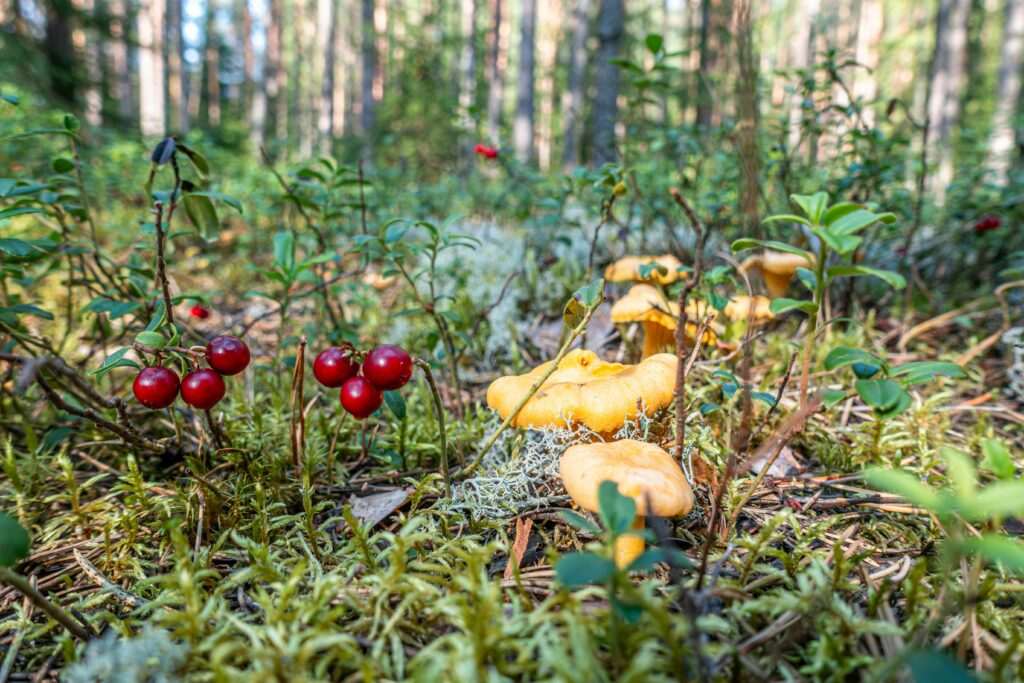
In late July, the hillsides around Anchorage turn blue. Low-bush blueberries ripen across the tundra slopes, filling the air with a fermented sweetness that attracts bears, birds, and people in roughly equal numbers. A few weeks later, the forests begin to offer something else: golden chanterelles pushing through the moss in spruce stands, king boletes appearing along trail edges, lobster mushrooms glowing orange in the leaf litter. Alaska’s foraging season is short, concentrated, and extraordinary — and much of it is accessible within an hour of downtown Anchorage.
The Foraging Ethics: Before You Pick a Thing
Wild foraging in Alaska is legal for personal use on most national forest and many state lands, but it comes with responsibilities. A few rules that serious foragers follow:
- Don’t take more than you’ll use. The berries and mushrooms you pass by feed birds, bears, squirrels, and voles. Harvest what you genuinely intend to eat or preserve.
- Don’t denude a patch. Leave at least half of any concentrated find. Mycelium networks take years to produce a fruiting body; cleaning out a mushroom spot can suppress it for seasons.
- Verify before you eat. Dangerous mushrooms exist in Alaska. Amanita species (including the deadly Amanita phalloides and Amanita muscaria) grow in Alaska forests. False morels are present. Positive identification from multiple sources — not just a photo on your phone — is essential for any mushroom you plan to eat. When in doubt, don’t.
- Check regulations for your specific location. Chugach State Park, Chugach National Forest, and Mat-Su Borough lands all have slightly different rules. Personal use foraging is widely permitted but commercial harvesting often requires permits.
Wild Berries: Alaska’s Most Abundant Wild Food
Alaska’s berry season runs from early July through September, with peak harvests varying by species and elevation:
Low-bush blueberries are the most abundant and beloved wild fruit in the state. They’re smaller than commercial blueberries but far more flavorful — intensely sweet-tart, with a concentrated berry character that commercial farming has bred out in favor of size. Peak ripeness in the Anchorage area is typically late July through mid-August. Find them on open hillsides, tundra benches, and forest edges in Chugach State Park and along most trails in the region. The Girdwood Blueberry Festival in August celebrates the season with foraging walks, cooking demonstrations, and the social ritual of comparing who found the biggest haul.
Crowberries (black, slightly bitter, best cooked) share terrain with blueberries on tundra hillsides and are often found together. Nagoonberries are a prize find — small raspberry relatives with an extraordinary flavor, growing in wet meadows and forest openings, ripening in July. They’re rare enough that finding a productive nagoonberry patch is worth keeping to yourself. High-bush cranberries ripen in late August and September, turning brilliant red on tall shrubs near water; they’re extremely tart fresh but excellent in jams and syrups. Cloudberries (known locally as “salmonberries” in some areas, though salmonberry is also used for a separate orange species) grow in boggy tundra above about 1,500 feet and ripen in late July — a delicacy that requires elevation and luck to find in quantity.
Wild Mushrooms: The Golden Season
Golden chanterelles are the crown of Alaska’s mushroom season — large, meaty, golden-yellow fungi with a fruity aroma and a flavor that holds up to butter and heat in ways that few wild mushrooms can. They fruit in spruce and birch forests from late July through September, typically after wet periods. Look for them in areas with good soil moisture, old-growth canopy, and moss ground cover. The Kenai Peninsula, Chugach State Park forested areas, and Hatcher Pass are all productive chanterelle habitats.
King boletes (porcini) are the other major prize — fat-stemmed, brown-capped fungi with a rich, nutty flavor that intensifies on drying. They appear in similar habitats to chanterelles but are less consistently abundant. Lobster mushrooms are visually unmistakable: brilliant orange-red, they’re technically a parasitic mold that colonizes other mushrooms, producing a firm, seafood-flavored result that stands up well in soups and sautés. They’re one of the few Alaska wild mushrooms that can be identified by color alone, which makes them a good beginner’s target.
A hard warning on mushroom safety: the Amanita genus is present in Alaska forests. Amanita muscaria (the classic red-with-white-dots fairy tale mushroom) is toxic; other Amanita species are deadly. False morels can also be present. Do not eat any mushroom you can’t identify with complete confidence. The best approach for beginners is to go out with someone experienced — local foraging groups in Anchorage organize seasonal walks specifically for this purpose. The Anchorage chapter of the North American Mycological Association holds periodic events; check locally for current schedules.
Wild Plants: Spring and Summer Harvests
Fireweed is the most versatile plant in the Alaska forager’s calendar. In spring (May–June), young shoots can be eaten like asparagus. The flower buds are edible and sweet. The flowers themselves can be infused into syrups and jellies. Even the leaves can be dried for tea. The Alaska Botanical Garden in Anchorage has a native plant section that identifies fireweed and other edibles in a controlled setting — a useful orientation before heading into the field.
Fiddlehead ferns emerge in May in wet lowland areas — the coiled fronds of ostrich and lady ferns, harvested before they unfurl. Cook them; raw fiddleheads contain mild toxins that are neutralized by heat. Wild chives appear in disturbed areas and along roadsides from late May onward — Alaska chives have a pungent onion flavor and work well anywhere you’d use regular chives. Spruce tips — the bright green new growth at the end of spruce branches in late May and early June — have a citrusy, resinous flavor used in gin production and also excellent in vinaigrettes, simple syrups, and fermented drinks. Harvest only the soft tips and take just a small percentage from any individual tree.
Best Foraging Areas Near Anchorage
The Chugach State Park trail systems provide access to most of the terrain types relevant to Anchorage foraging — tundra benches above the treeline for blueberries and crowberries, forested trail edges for mushrooms, and wet meadows for fireweed and ferns. Flattop Mountain Trail and the Glen Alps area are particularly productive for berries in late summer. The South Fork Eagle River area offers good forest mushroom habitat.
Hatcher Pass, about 90 minutes from Anchorage in the Talkeetna Mountains, is one of the best tundra berry locations accessible from the road — vast open hillsides of blueberries at elevation, without the crowds of the Chugach front range. The Kenai Peninsula — particularly the Sterling Highway corridor — has excellent chanterelle and bolete habitat in its mixed forests. Mat-Su Valley roadside areas are good for high-bush cranberries and blueberries through September.
Three Simple Recipes
Chanterelle pasta: Sauté fresh chanterelles in butter with garlic and thyme until golden. Toss with pasta, a splash of white wine reduced in the pan, and a handful of fresh parsley. The mushroom’s fruity aroma does all the work.
Wild blueberry jam: Simmer 4 cups of blueberries with 2 cups of sugar and a squeeze of lemon until thick. No pectin needed — Alaska blueberries have enough natural pectin to set on their own. Seal in jars. Makes an unbeatable toast topping and an outstanding gift for anyone you’re trying to impress.
Fireweed syrup: Steep 2 cups of fresh fireweed flowers (just the pink blossoms) in 2 cups of just-boiled water for 10 minutes. Strain, then simmer the liquid with 2 cups of sugar until dissolved. The result is a pale violet syrup with a floral sweetness unlike anything commercial — excellent in cocktails, lemonade, or over pancakes with local honey.
Photo by Leeloo The First via Pexels
No comments yet.